Custom furniture 6 min read
Shipping Furniture From India Abroad: Packing, ISPM 15, Customs and What Buyers Should Know
How custom solid-wood furniture is shipped from India to the US and other countries: designing for transit, kiln-dried timber, crating and ISPM 15, sea vs air freight, Incoterms, documents, customs and the US Lacey Act, and what to check as a buyer.


In short
Solid-wood furniture made in India can travel safely to homes abroad if it is designed, dried and packed for the journey. The timber should be kiln-dried so it does not crack in a dry, heated or air-conditioned destination. Large pieces are often designed to knock down. Packing protects edges and finish, and any wooden crates or pallets must meet ISPM 15 (heat treated or fumigated, and marked). Most furniture travels by sea, consolidated (LCL) or in a full container (FCL). The agreed Incoterm decides who pays for and manages each leg, and destination rules such as the US Lacey Act declaration for wood products must be met.
- Kiln-dried timber is essential; a piece made from damp wood will crack in a centrally heated or air-conditioned home.
- Design big pieces to knock down, and protect edges, corners and finish for a long journey.
- Wooden crates and pallets must meet ISPM 15: heat treated or fumigated, and stamped.
- Agree the Incoterm (for example FOB, CIF or DDP) so it is clear who handles freight, insurance, duties and delivery.
- Many countries have rules for wood products, such as the US Lacey Act declaration of species and origin.
It starts with the timber
A piece of furniture that is perfectly stable in Gujarat can crack in a centrally heated home in the US or Europe, or in a heavily air-conditioned apartment in the Gulf, if its timber was not dried enough. Kiln drying to an appropriate moisture content, and designs that allow wide tops and panels to move, are the first and most important protections. See kiln-dried wood.
Design for the journey
- Knock-down construction for large pieces (beds, big tables, wardrobes), so they pack compactly and survive handling. Joints are designed to be taken apart and reassembled without loss of strength; see our wood joinery guide.
- Fully cured finishes before packing, so wrapping does not mark them.
- Hardware packed separately and labelled, with assembly instructions.
Packing
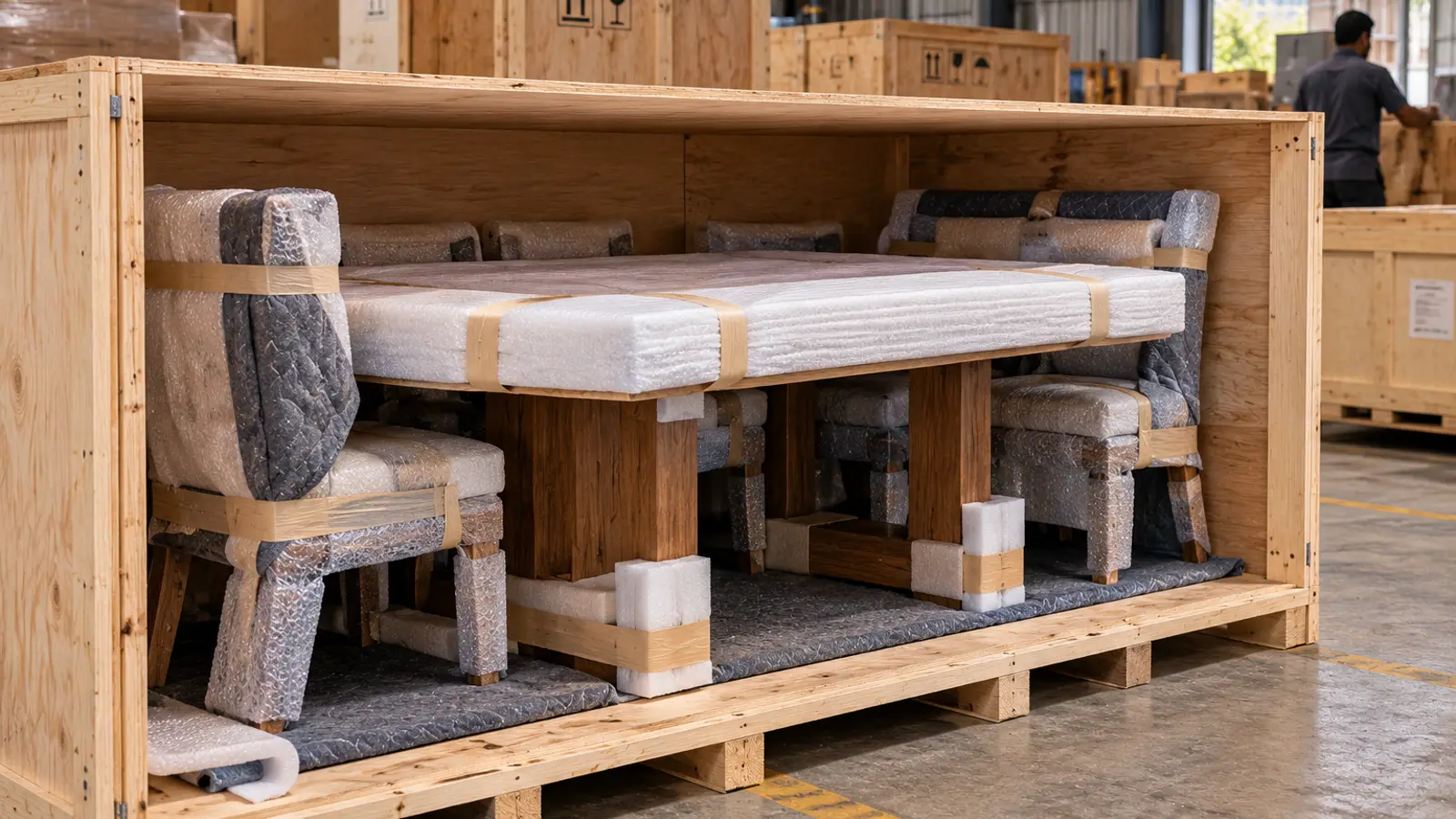
- Wrap each piece to protect the finish, then protect corners and edges with foam or card corners.
- Fill voids so nothing moves inside the box or crate.
- Use wooden crates for heavy or fragile pieces, and pallets for handling.
- Add moisture absorbers for long sea journeys, where containers can be humid.
ISPM 15: wooden packaging
Any wood packaging material (crates, pallets, dunnage) used in international trade must meet ISPM 15, the international standard for wood packaging. It must be heat treated (the wood core held at 56°C for at least 30 minutes) or fumigated, and stamped with the approved mark. Packaging without the mark can be refused, treated or destroyed at the destination at the importer's cost.
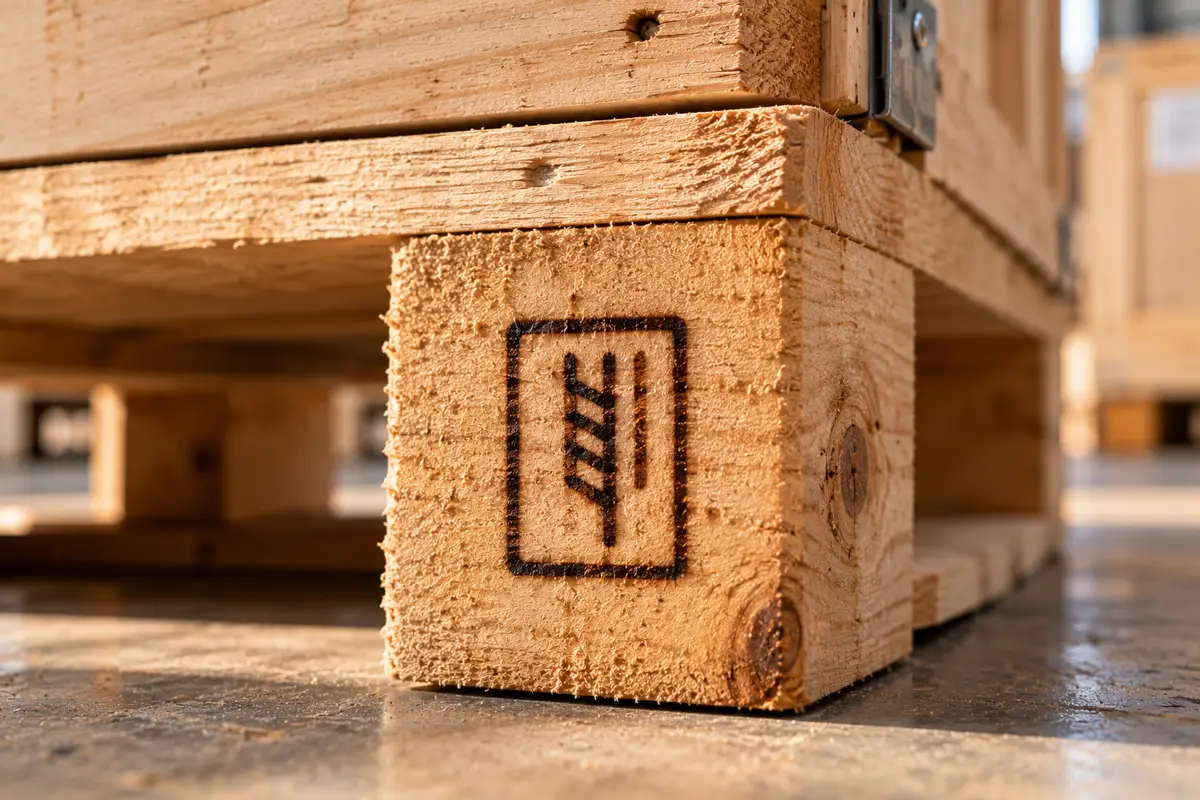
ISPM 15 applies to the packaging, not to finished furniture, which is processed wood.
Sea or air
| Sea | Air | |
|---|---|---|
| Cost | Much lower | Much higher |
| Transit | Several weeks port to port | Days |
| Suits | Most furniture, full homes | Small, urgent or high-value pieces |
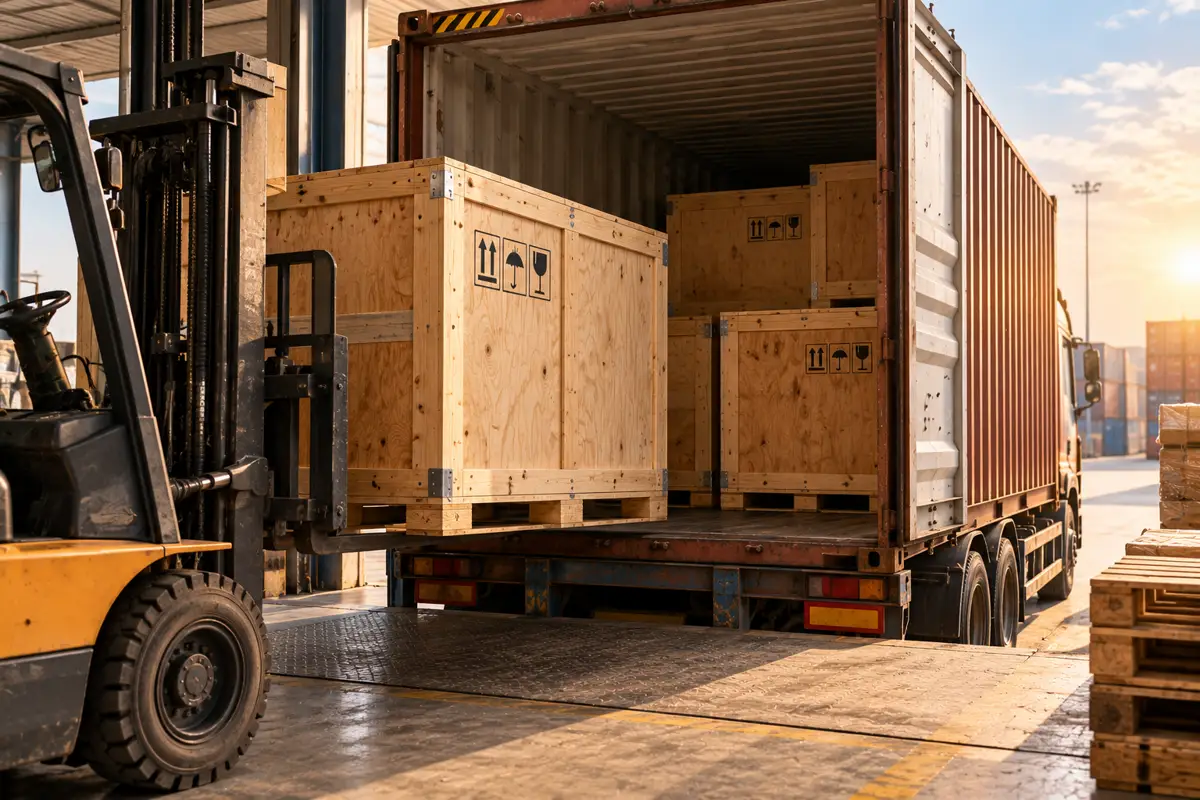
By sea, smaller orders usually travel LCL (less than container load), consolidated with other cargo; larger orders may fill a container (FCL), which means less handling.
Who does what: Incoterms
The Incoterm in the sale agreement decides who arranges and pays for each stage:
- EXW (ex works): the buyer arranges everything from the workshop.
- FOB (free on board): the seller delivers the goods onto the ship at the Indian port; the buyer handles the rest.
- CIF (cost, insurance and freight): the seller pays freight and insurance to the destination port; the buyer handles import and delivery.
- DDP (delivered duty paid): the seller delivers to the door with duties paid.
Agree this up front, along with insurance for the full value.
Documents and customs
Typical documents include a commercial invoice, a packing list, the bill of lading (sea) or air waybill, and sometimes a certificate of origin. Destination countries can have their own rules for wood products:
- United States: the Lacey Act requires many imported wood products, including furniture, to be declared with the species and country of harvest. The importer or customs broker files the declaration using details from the maker.
- Other countries may require phytosanitary checks or treatment certificates for some wooden goods.
A freight forwarder and a customs broker at the destination handle most of this; the maker supplies accurate species, materials and values.
Checklist for buyers abroad
- Confirm the timber is kiln-dried and the design allows for movement.
- Agree the Incoterm, freight mode and insurance.
- Ask how pieces will be packed and whether crates meet ISPM 15.
- Check duties and import rules for your country, including wood declarations.
- Plan delivery and access at your end: stairs, lifts, doors.
- Ask for assembly instructions and spare fittings.
SAAG furniture abroad
Savistar's furniture brand SAAG makes bespoke solid-wood furniture from kiln-dried timber, and has delivered furniture to clients in the United States as well as across India. See our furniture portfolio, or tell us where you would like your piece delivered.
Frequently asked questions
Can I buy custom furniture in India and ship it to the US?
Yes. Many Indian furniture makers ship abroad. The furniture should be made from kiln-dried timber, packed for sea freight, and shipped with the right documents. Agree in advance who handles freight, insurance, US customs clearance and duties, and final delivery.
What is ISPM 15?
ISPM 15 is the international standard for wood packaging material such as crates and pallets. It requires the packaging timber to be heat treated or fumigated to kill pests, and marked with an approved stamp. It applies to the packaging, not to the finished furniture itself.
How long does sea shipping from India to the US take?
Transit times vary with the route, ports and schedules, typically several weeks port to port, plus time for export formalities, consolidation, customs clearance and inland delivery at each end.
What is the Lacey Act declaration?
The US Lacey Act prohibits trade in illegally harvested plants and wood, and requires importers of many wood products, including furniture, to declare the species and country of harvest. The importer or customs broker files it, using information supplied by the maker.
Should I choose sea or air freight for furniture?
Sea freight is far more economical for furniture and suits most shipments. Air freight is much faster but expensive, and is usually reserved for small, urgent or high-value pieces.
About the authors
Sachi and Haripriya founded Savistar in Gandhinagar in 2020 after training at CEPT University, Ahmedabad. They run the interior design studio and its furniture brand SAAG, and have delivered 500+ interior and furniture projects across India and abroad. More about the studio
More from the journal
All articles →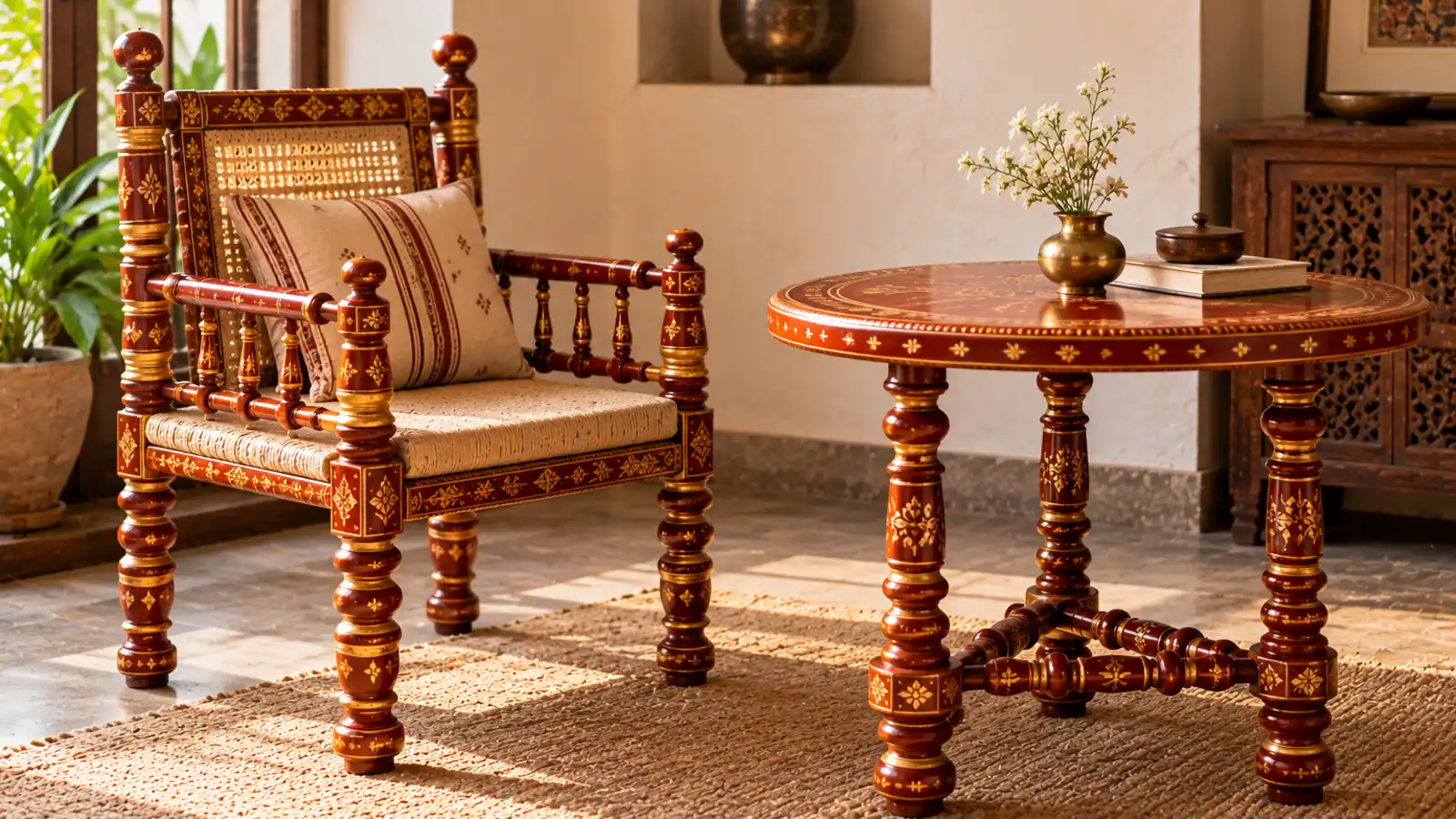 Custom furnitureSankheda Furniture: Gujarat’s Lacquered Teak and the Craft of Wood Turning4 min read
 Custom furnitureVernacular Furniture of Gujarat: Chests, Cradles, Swings and Charpoys, and What They Teach Modern Design5 min read
 Custom furnitureA Guide to Wood Joinery: Mortise and Tenon, Dovetail, Dowel and Knock-Down Joints5 min read