Custom furniture 5 min read
A Guide to Wood Joinery: Mortise and Tenon, Dovetail, Dowel and Knock-Down Joints
How the main furniture joints work, where each is used, how strong they are, and how to tell traditional joinery from screwed or cam-lock construction when you buy or commission furniture.


In short
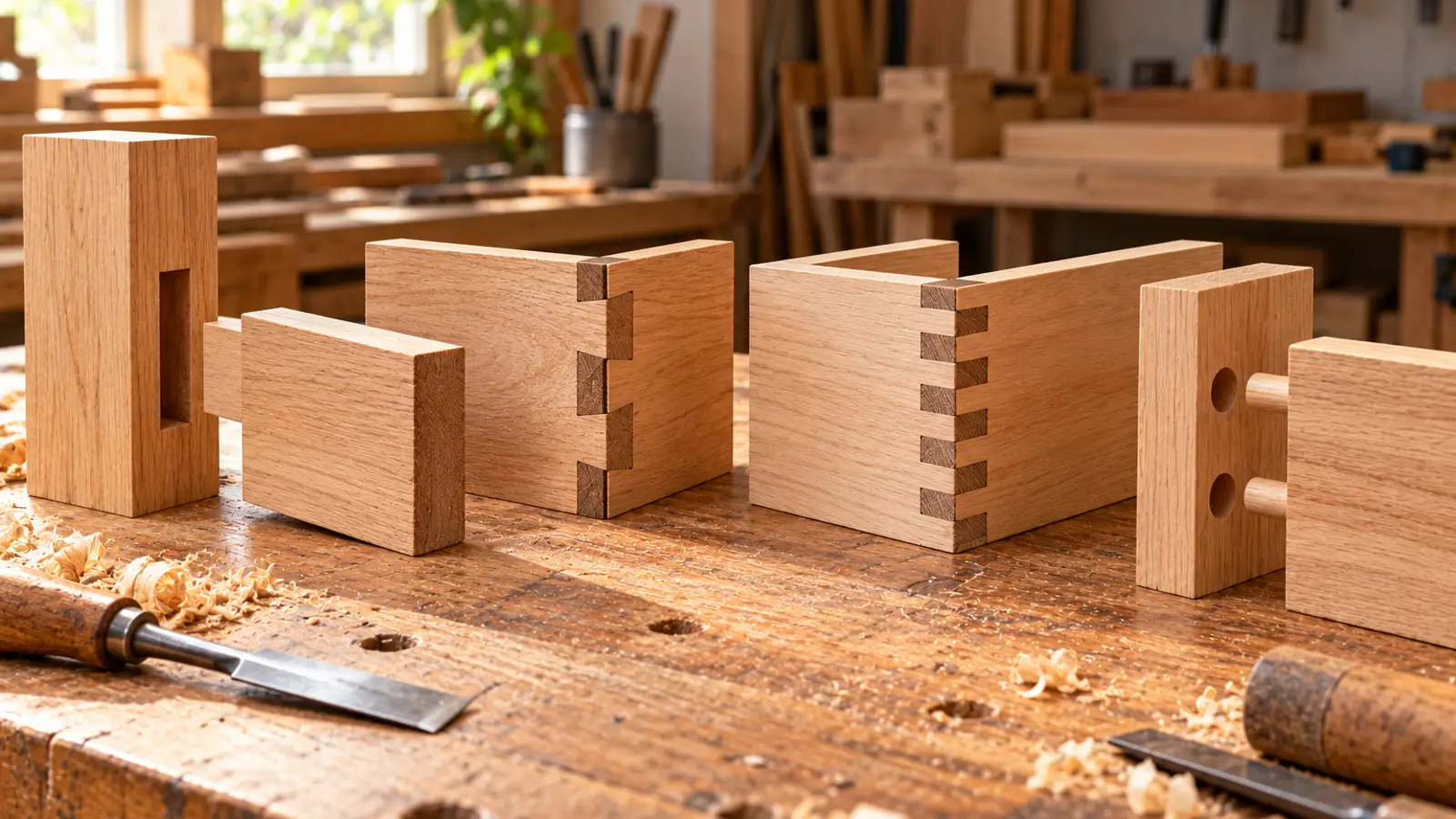
Joinery is what holds furniture together, and the right joint depends on the load and direction of force. Mortise and tenon joints connect legs and rails in tables, chairs and beds. Dovetails resist pulling apart and are the classic drawer joint. Finger (box) joints, dowels, biscuits, tongue and groove, half laps and bridle joints each have their place. Knock-down fittings let large pieces be taken apart for moving or shipping. Well-fitted traditional joints, made with seasoned timber, last for generations; screws and cam locks alone are quicker but less durable under repeated stress.
- Mortise and tenon is the backbone of frames: legs to rails in tables, chairs and beds.
- Dovetails resist pulling forces, which is why they are used for drawer fronts.
- Dowels and biscuits align and strengthen joints in panels and carcasses.
- Knock-down fittings are sensible for large pieces that must move or ship, when designed in from the start.
- Joint quality depends on seasoned timber and precise fit as much as on the joint type.
Why joinery matters
Furniture is constantly pushed, pulled, sat on, leaned on and moved. Every joint carries those forces. Good joinery spreads the load across large glued wood surfaces and mechanical interlocks, so a chair stays tight for decades. Weak joinery concentrates load on a few screws or nails, which loosen.
The main joints
| Joint | How it works | Typical use |
|---|---|---|
| Mortise and tenon | A tongue (tenon) fits into a matching slot (mortise) | Table and chair legs to rails, bed frames, doors |
| Dovetail | Interlocking flared "tails" and "pins" | Drawer fronts and boxes |
| Finger (box) joint | Interlocking square fingers | Boxes, drawers, carcass corners |
| Dowel joint | Round wooden pins glued into matching holes | Panels, carcasses, frames |
| Biscuit joint | Flat oval wafers in slots | Aligning panels and edge joints |
| Tongue and groove | A tongue along one edge fits a groove in the next | Panelling, wide tops, floors |
| Half lap | Each piece cut to half thickness and overlapped | Frames, stretchers |
| Bridle | An open mortise and tenon at a corner | Frames, trestles |
| Knock-down fittings | Bolts, threaded inserts, connectors | Beds, large tables, pieces that ship |
Mortise and tenon
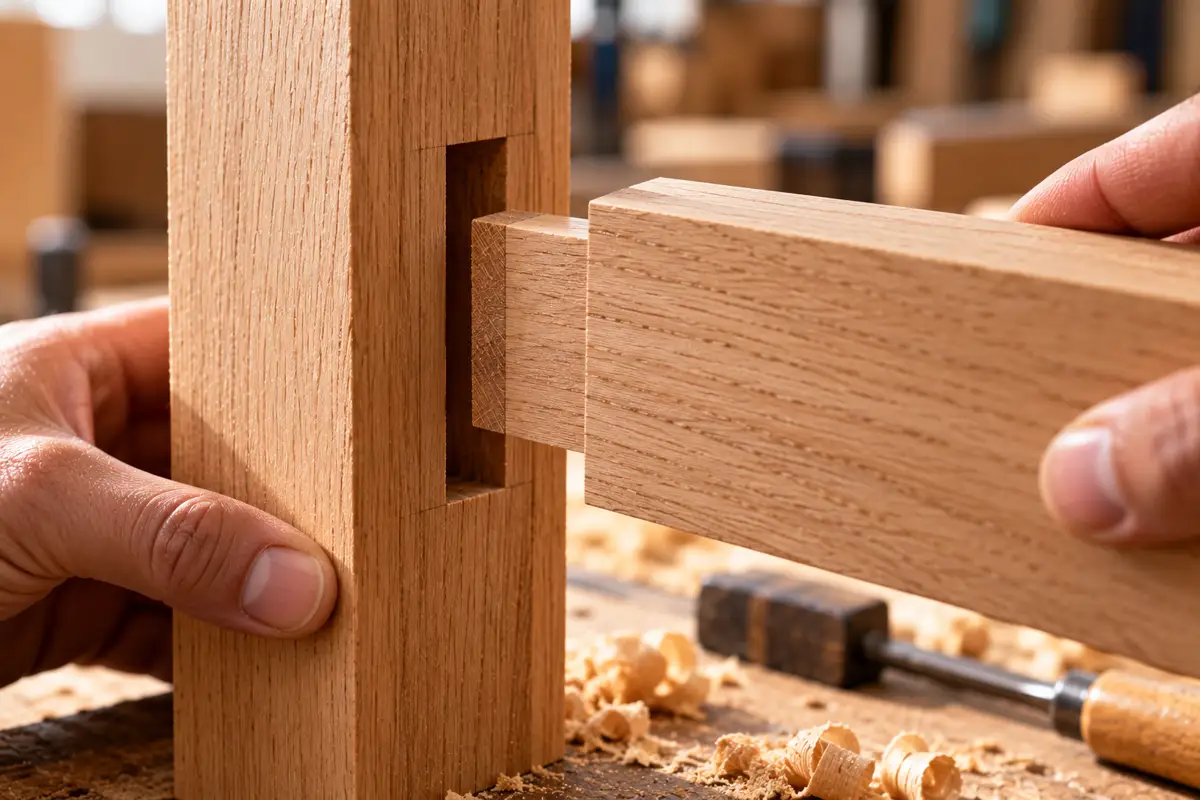
The workhorse of furniture making for thousands of years. A tenon cut on the end of a rail fits snugly into a mortise cut in a leg, and the joint is glued. Variants include through tenons (visible on the outside), wedged tenons, and draw-bored tenons pinned with a peg. Gujarat's traditional carpenters built pieces such as the majju, a wheeled chest with interlocking compartments, on careful joinery; see vernacular furniture of Gujarat.
Dovetails
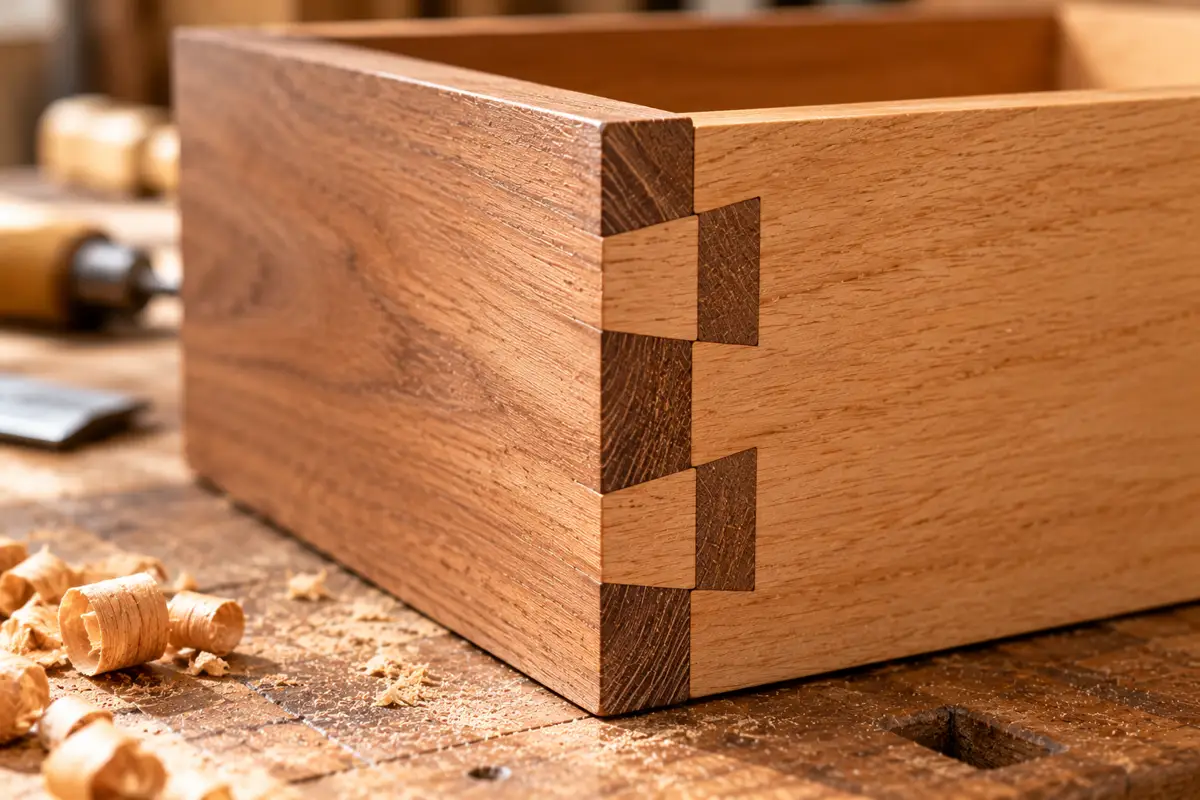
The angled shape of a dovetail resists being pulled apart in one direction, exactly the force on a drawer front every time you open it. Through dovetails show on both faces; half-blind dovetails hide the joint on the drawer front. Hand-cut dovetails are a mark of careful work.
Dowels and biscuits
Dowels are round pins glued into matching holes. They align and strengthen panel and carcass joints and are common in both solid-wood and board furniture. Biscuits are flat wafers that swell with glue, used mainly to align panels and edges.
Designing for movement
Joints must respect wood movement. A wide solid top glued rigidly across its full width to a frame will crack as it shrinks. Tops are attached with buttons or slotted fixings; panels float in grooves. See kiln-dried wood for why wood moves.
Knock-down joints
Large pieces that must travel through lifts and stairs, or be shipped abroad, can be designed to come apart. Bed bolts, threaded inserts and purpose-made connectors in solid wood give strong, repeatable joints. These must be designed in from the start. See shipping furniture from India abroad.
How to judge joinery when buying
- Open a drawer: dovetails or finger joints, or staples and glue?
- Rock the piece: tables and chairs should not rack or wobble.
- Look underneath: are metal brackets and screws doing all the work?
- Ask what joints are used for legs and rails.
Joinery at SAAG
SAAG builds bespoke solid-wood furniture in-house, choosing joints for the load each part carries, made from kiln-dried timber. See how custom furniture is made, browse our furniture portfolio, or commission a piece.
Frequently asked questions
What is the strongest wood joint?
There is no single strongest joint; strength depends on the direction of the load. For frames such as tables and chairs, a well-fitted mortise and tenon is one of the strongest and most durable. For drawers, where the front is pulled, dovetails are ideal.
How can I tell if furniture has good joinery?
Look at drawers for dovetails rather than staples or plain butt joints, check that chairs and tables do not wobble or rack, look underneath for screws and metal brackets doing all the work, and ask the maker what joints are used for legs and rails.
Are screws bad in furniture?
Not always. Screws are fine for attaching some parts and in knock-down fittings. But a chair or table whose frame relies only on screws into end grain will loosen under repeated stress, whereas a glued mortise and tenon will not.
Is knock-down furniture weaker?
Well-designed knock-down fittings, such as bed bolts and threaded inserts in solid wood, can be very strong and allow pieces to be moved and shipped. Cheap cam-lock fittings in particle board are much weaker and loosen with repeated assembly.
About the authors
Sachi and Haripriya founded Savistar in Gandhinagar in 2020 after training at CEPT University, Ahmedabad. They run the interior design studio and its furniture brand SAAG, and have delivered 500+ interior and furniture projects across India and abroad. More about the studio
More from the journal
All articles → Custom furnitureSankheda Furniture: Gujarat’s Lacquered Teak and the Craft of Wood Turning4 min read
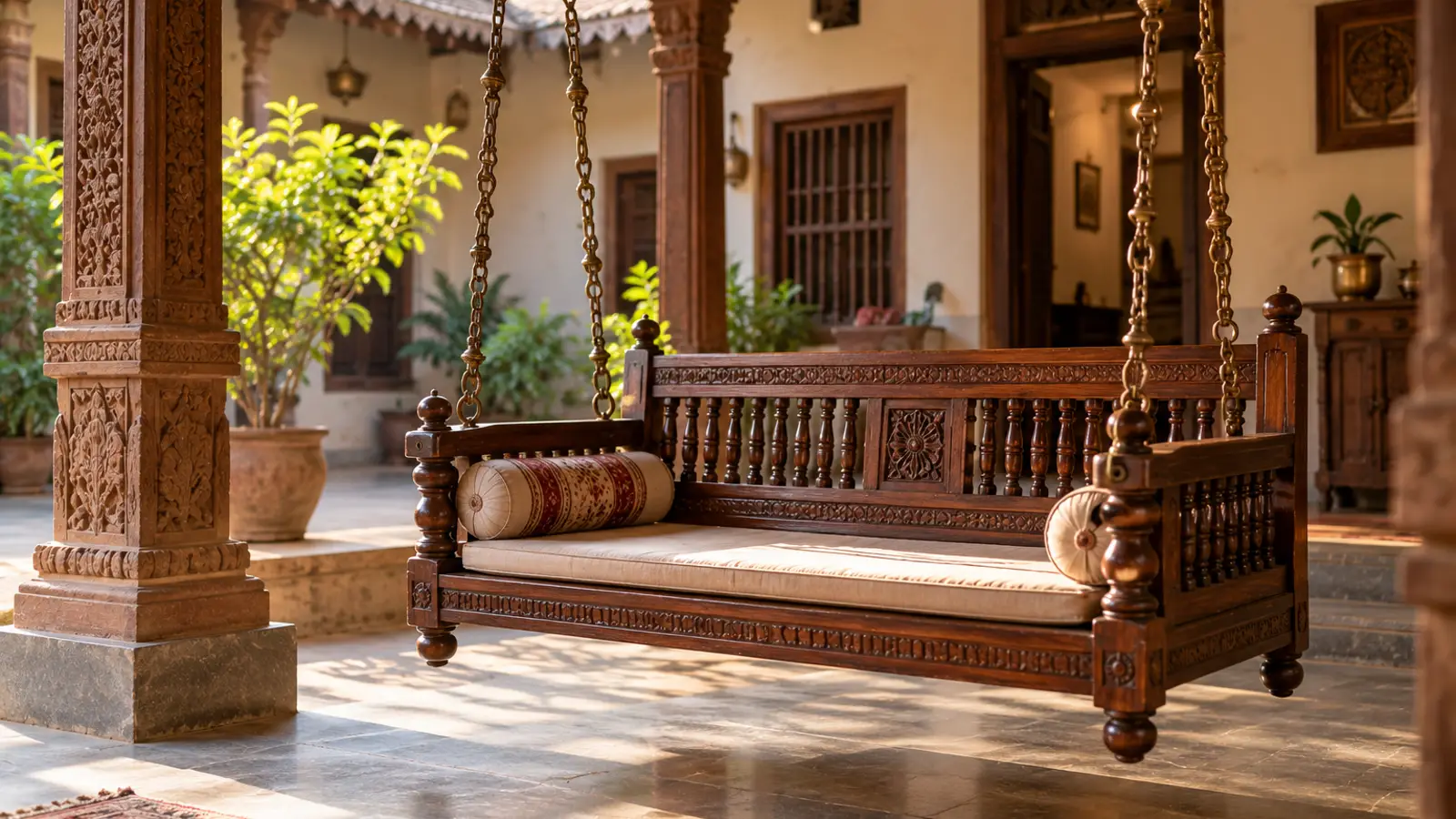 Custom furnitureVernacular Furniture of Gujarat: Chests, Cradles, Swings and Charpoys, and What They Teach Modern Design5 min read
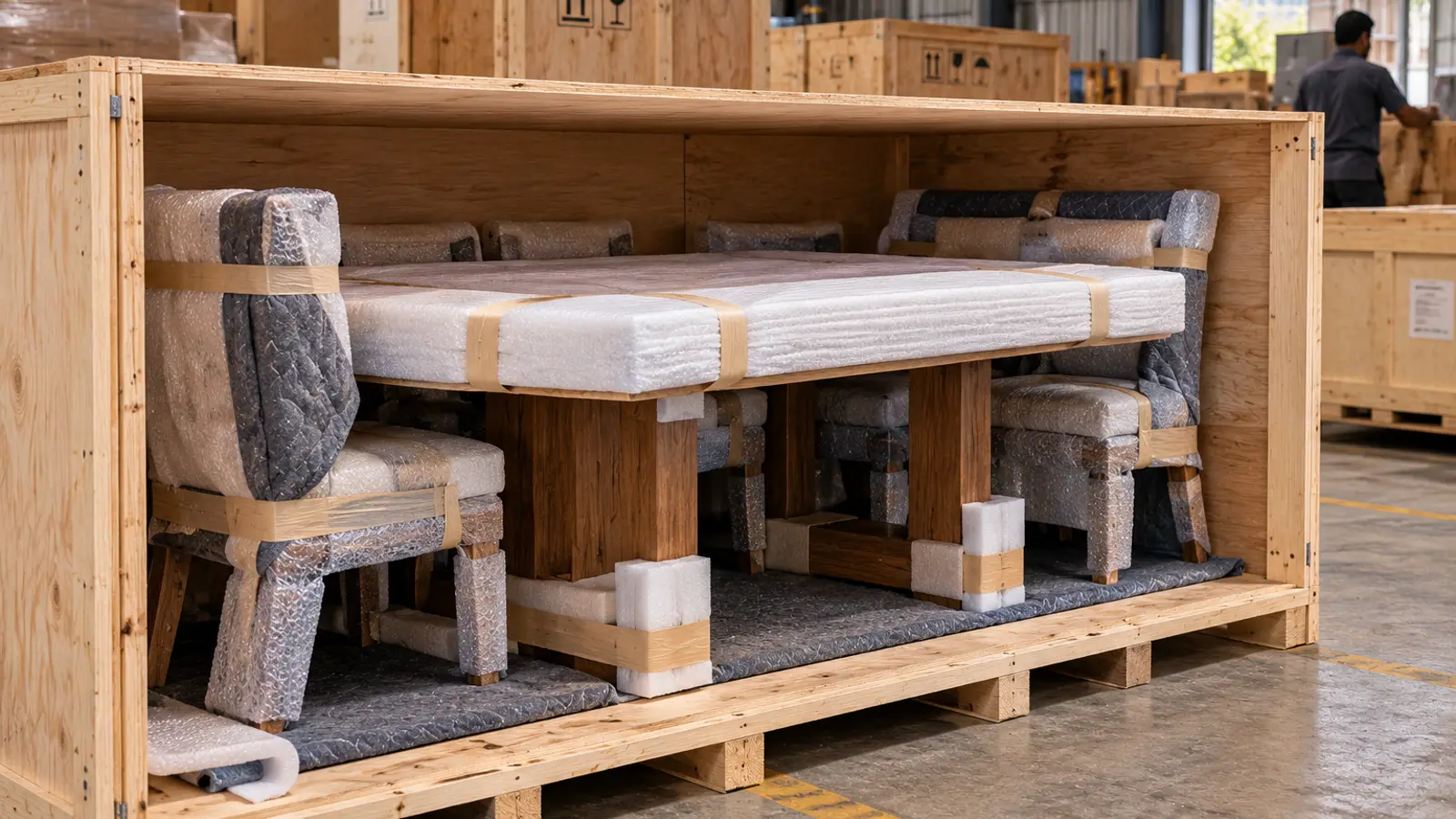 Custom furnitureShipping Furniture From India Abroad: Packing, ISPM 15, Customs and What Buyers Should Know6 min read