Custom furniture 5 min read
Vernacular Furniture of Gujarat: Chests, Cradles, Swings and Charpoys, and What They Teach Modern Design
An introduction to Gujarat’s traditional everyday furniture, from the wheeled majju chest and lacquered parnu cradle to the turned-wood dholio charpoy, drawing on CEPT University’s research, and what these pieces teach contemporary furniture.


In short
Gujarat has a rich tradition of everyday furniture made by local carpenters (suthar or mistri) and woodturners (kharadi): wheeled hope chests (majju) with interlocking compartments, lacquered cradles (parnu), charpoys with turned and lacquered legs (dholio), swings, and even mud grain stores. CEPT University’s Design Innovation and Craft Resource Centre (DICRC) has documented this furniture in the book Sahaj: Vernacular Furniture of Gujarat and the Vernacular Furniture of India collection. These pieces show principles that still make furniture last: form that follows daily use, joinery suited to the load, and materials and finishes chosen for the climate.
- Gujarat’s vernacular furniture was made by distinct crafts: carpenters (suthar, mistri) for construction and woodturners (kharadi) for turned, lacquered parts.
- CEPT’s DICRC documented it in Sahaj (CEPT University Press, ISBN 978-93-83184-16-3), covering pieces from about 1900 to the present.
- Signature pieces include the majju (wheeled hope chest), parnu (lacquered cradle) and dholio (charpoy with turned, lacquered members).
- These pieces were shaped by how families lived: storage, sleeping, rocking a child, keeping grain.
- The lessons for modern furniture: design for use, honest joinery, durable finishes, and materials suited to the climate.
Furniture made for everyday life
Long before showrooms, homes across Gujarat were furnished by local craftspeople. Carpenters (suthar or mistri) built chests, cupboards, beds and doors; woodturners (kharadi) turned legs, rails and cradles on the lathe and finished them in coloured lacquer. Households built some pieces themselves, such as mud grain stores.
This furniture was shaped by daily life: storing a dowry, rocking a child to sleep, sleeping outdoors on hot nights, keeping grain safe through the year.
How it has been documented
CEPT University's Design Innovation and Craft Resource Centre (DICRC) has studied this furniture in depth. With the South Asian Decorative Arts and Crafts Collection Trust (SADACC) in the UK, it ran the Vernacular Furniture of North-West India project, which produced:
- Sahaj: Vernacular Furniture of Gujarat by Mitraja Bais, Jay Thakkar, Samrudha Dixit and Ben Cartwright (CEPT University Press, ISBN 978-93-83184-16-3). The Gujarati word sahaj can mean "inherent" or "intrinsic". The book documents furniture made and used across Gujarat's regions and communities from about 1900 to the present, with technical information and detailed drawings.
- The online Vernacular Furniture of India collection, which records individual pieces with their region, materials and techniques.
Pieces worth knowing
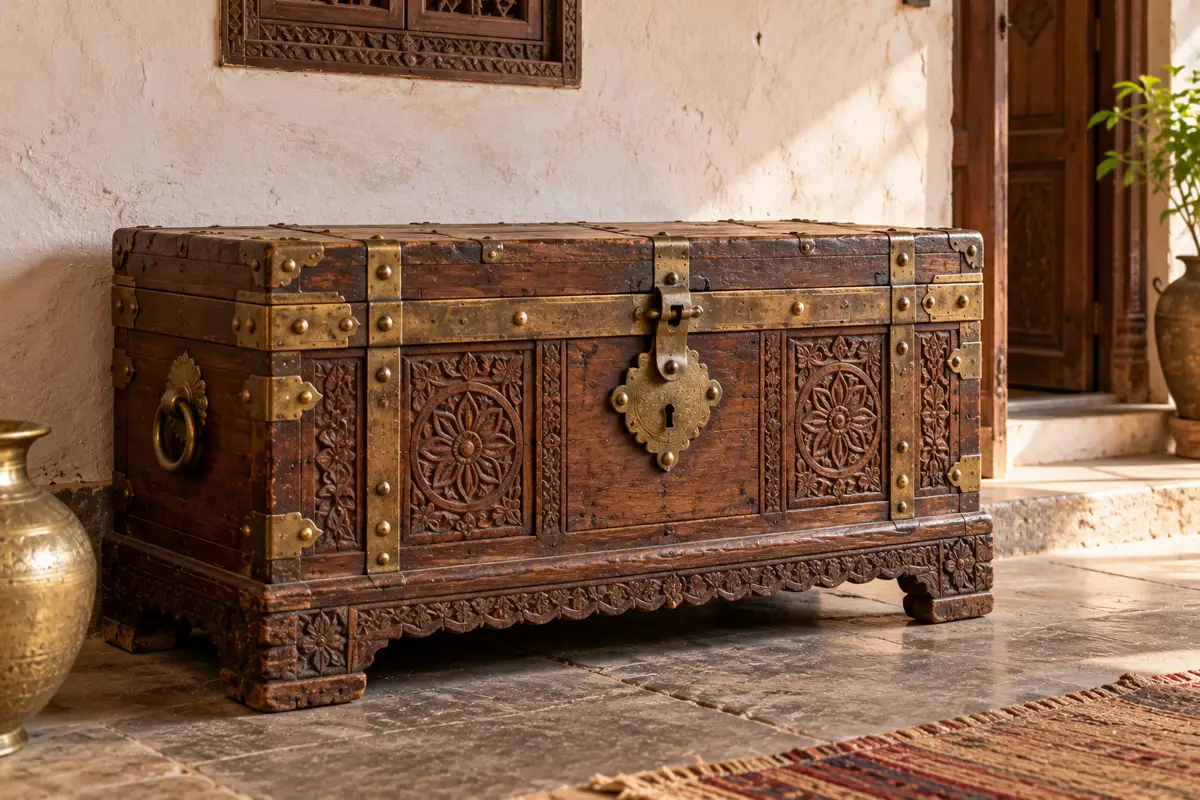
Majju: the wheeled hope chest
A large, ornate chest on wheels, made by a carpenter, with interlocking compartments. Decoration can include carved wooden grills or inset glazed ceramic tiles. The Sahaj project describes how the carpenter builds its series of joints and compartments, a feat of joinery as much as decoration.
Parnu: the lacquered cradle
A cradle with a lacquered frame, made by a kharadi. Turning on the lathe and coloured lacquer are the signature of the woodturner's craft, which lives on today in Sankheda furniture.
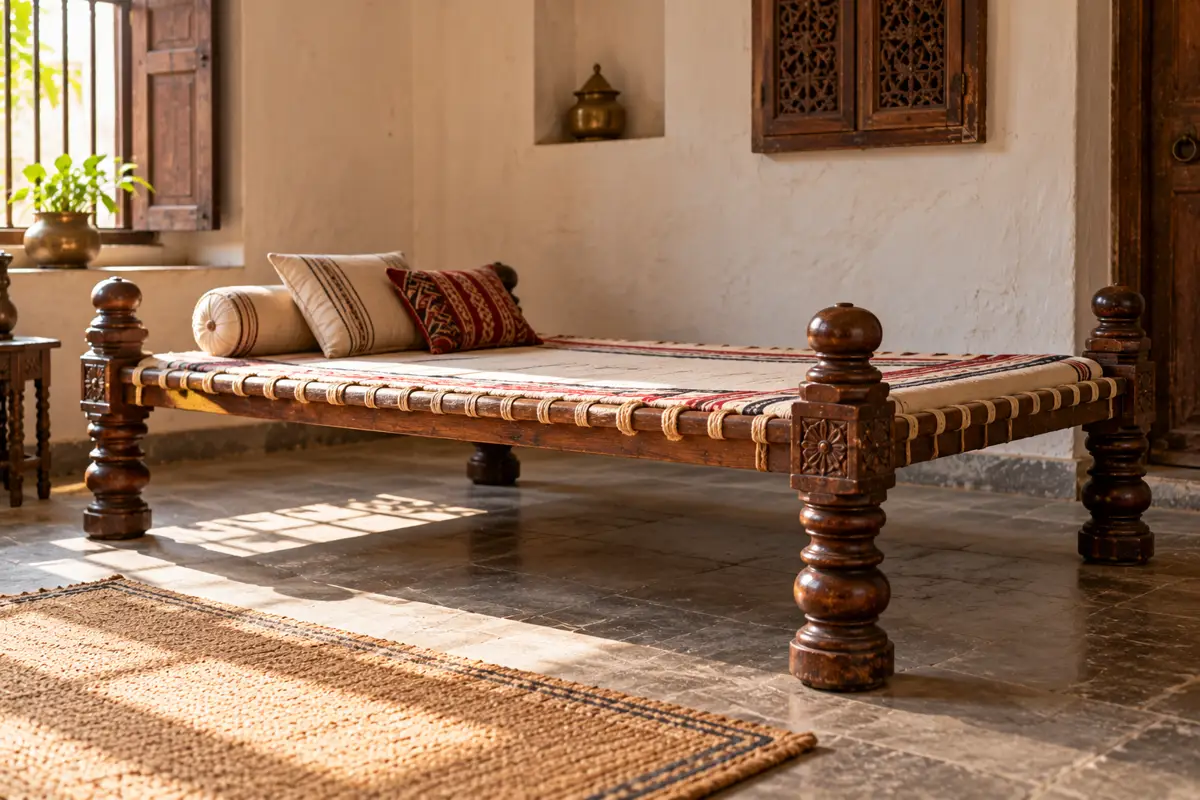
Dholio: the turned charpoy
A dholio is a charpoy whose frame and four legs are all made of turned wood. The collection describes heavily turned legs finished in red lacquer as characteristic, with yellow and green also used as auspicious colours. Documented examples come from Saurashtra, including Amreli and Porbandar districts.
Swings and seating
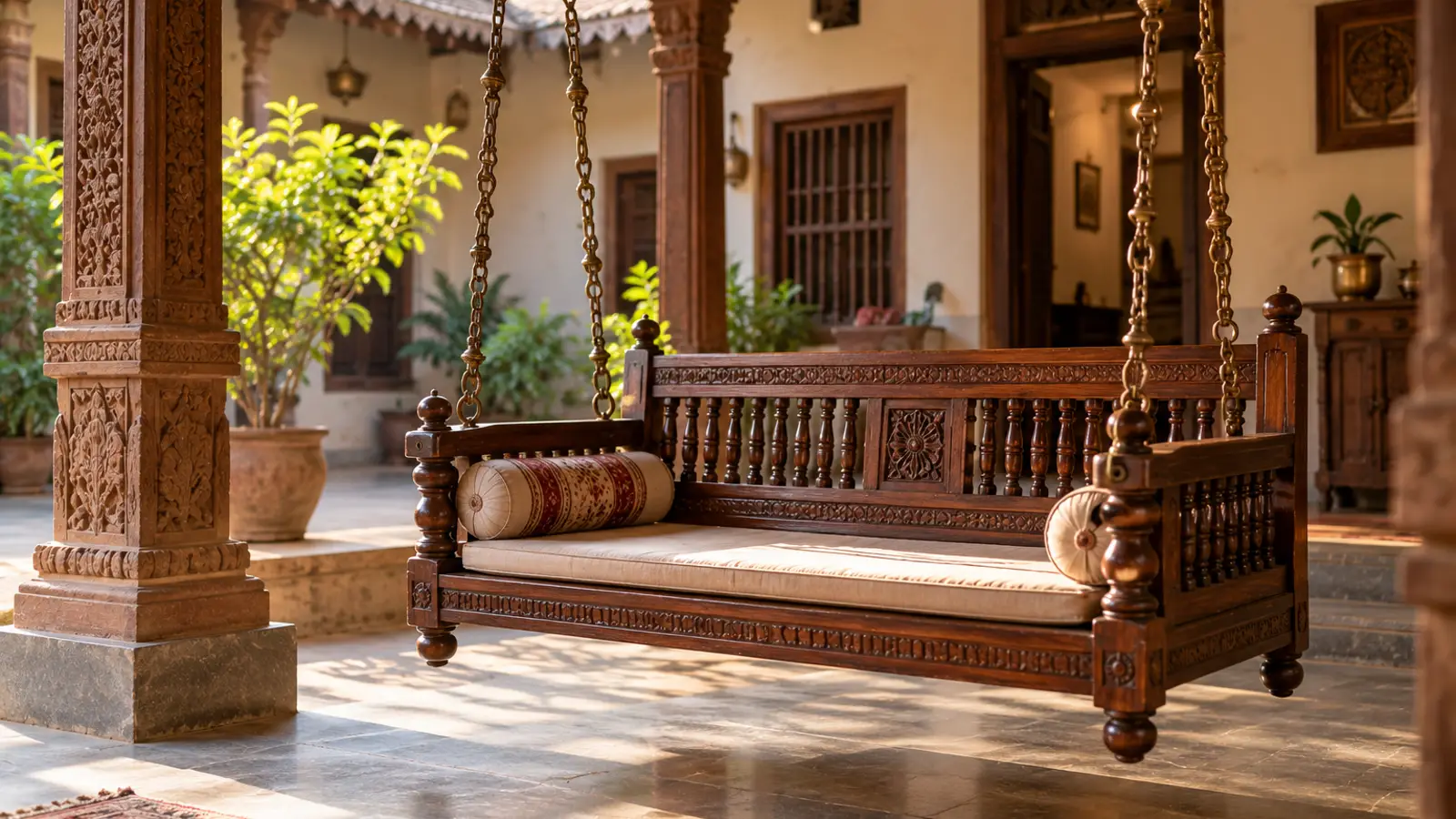
The swing (hichko or jhulo) remains a familiar sight in Gujarati homes and verandas, and low seating and platforms were common in rooms used for many purposes through the day.
What these pieces teach modern furniture
- Design for use. Every piece answered a real need. Modern furniture should start the same way: from how a family lives (see planning a 2BHK interior).
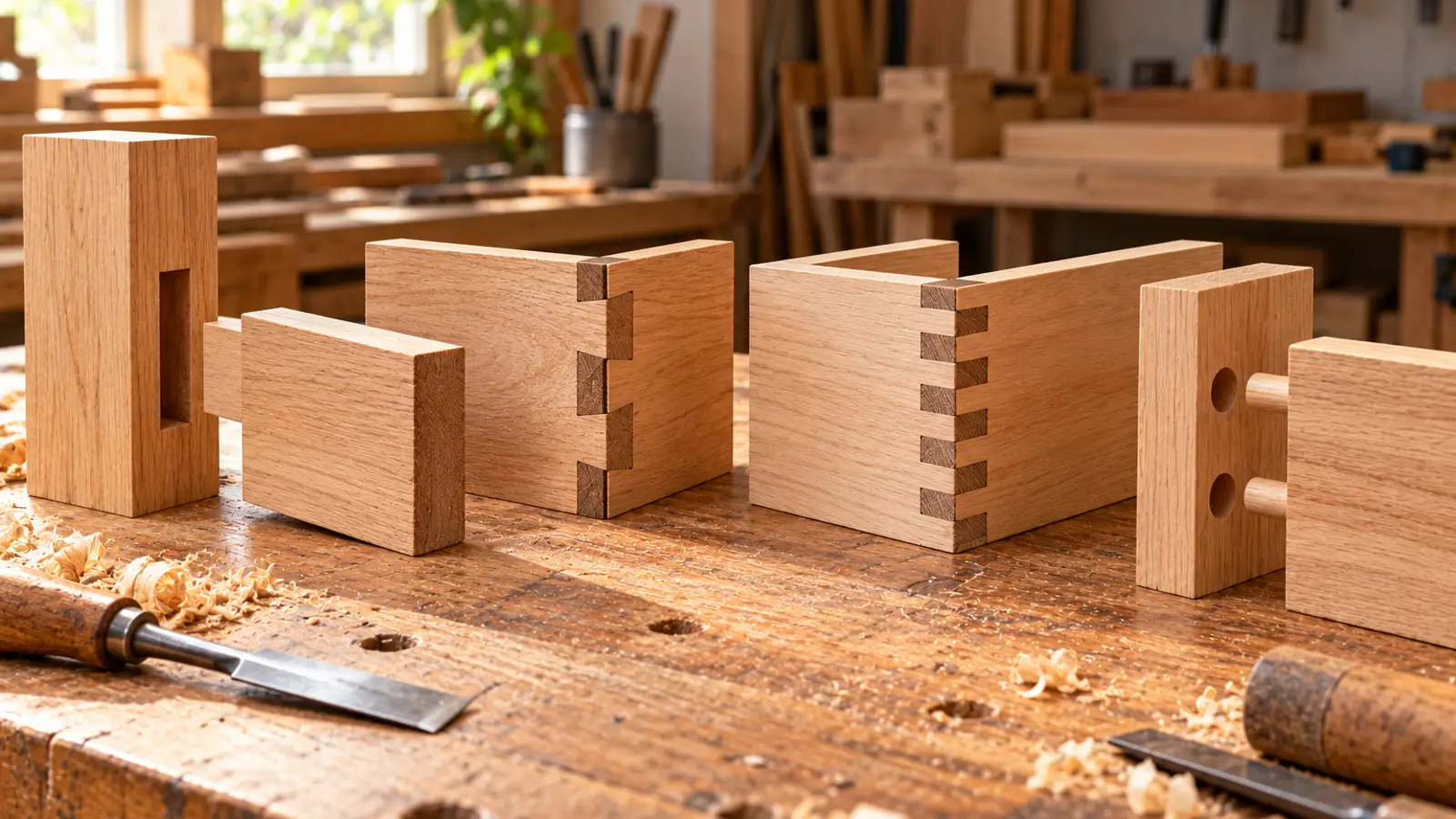
- Joinery that suits the load. Chests and charpoys survived generations because their joints were made for how they were used. See our wood joinery guide.
- Materials for the climate. Gujarat's dry summers and humid monsoons punish poorly seasoned timber. See kiln-dried wood.
- Finish as protection and identity. Lacquer protected turned wood and made it joyful.
- Repair over replacement. These pieces were mended, re-lacquered and handed down.
Bringing heritage into contemporary homes
Traditional furniture and crafts can sit beautifully in modern interiors: an old chest as a sideboard, a carved door as a headboard, turned legs on a contemporary table. See traditional Gujarati materials in modern homes and Gujarat's wood carving tradition.
About us
Savistar's founders trained at CEPT University, Ahmedabad. Through SAAG, our furniture brand, we design and build bespoke solid-wood furniture in Gandhinagar. See our furniture portfolio, or talk to us about a piece. (We reference CEPT's published research here as readers; it is not an endorsement of our studio.)
Frequently asked questions
What is a majju?
A majju is a large, ornate hope chest on wheels from Gujarat, made by a carpenter (suthar or mistri), with interlocking compartments and decoration such as carved wooden grills or inset glazed ceramic tiles. It is documented in CEPT University’s book Sahaj: Vernacular Furniture of Gujarat.
What is a dholio?
A dholio is a charpoy (woven bed) whose frame and four legs are all made of turned wood, typically with heavily turned legs finished in red lacquer. Examples documented by CEPT’s DICRC and SADACC come from Gujarat’s Saurashtra region.
Who were the kharadi?
Kharadi are woodturners. In Gujarat they made turned and lacquered furniture parts and pieces such as cradles and charpoy legs, and the community is also associated with the lacquered teak furniture of Sankheda.
Where can I learn more about Gujarat’s traditional furniture?
The book Sahaj: Vernacular Furniture of Gujarat by Mitraja Bais, Jay Thakkar, Samrudha Dixit and Ben Cartwright (CEPT University Press), and the online Vernacular Furniture of India collection created by CEPT University’s DICRC with the SADACC Trust in the UK.
About the authors
Sachi and Haripriya founded Savistar in Gandhinagar in 2020 after training at CEPT University, Ahmedabad. They run the interior design studio and its furniture brand SAAG, and have delivered 500+ interior and furniture projects across India and abroad. More about the studio
More from the journal
All articles →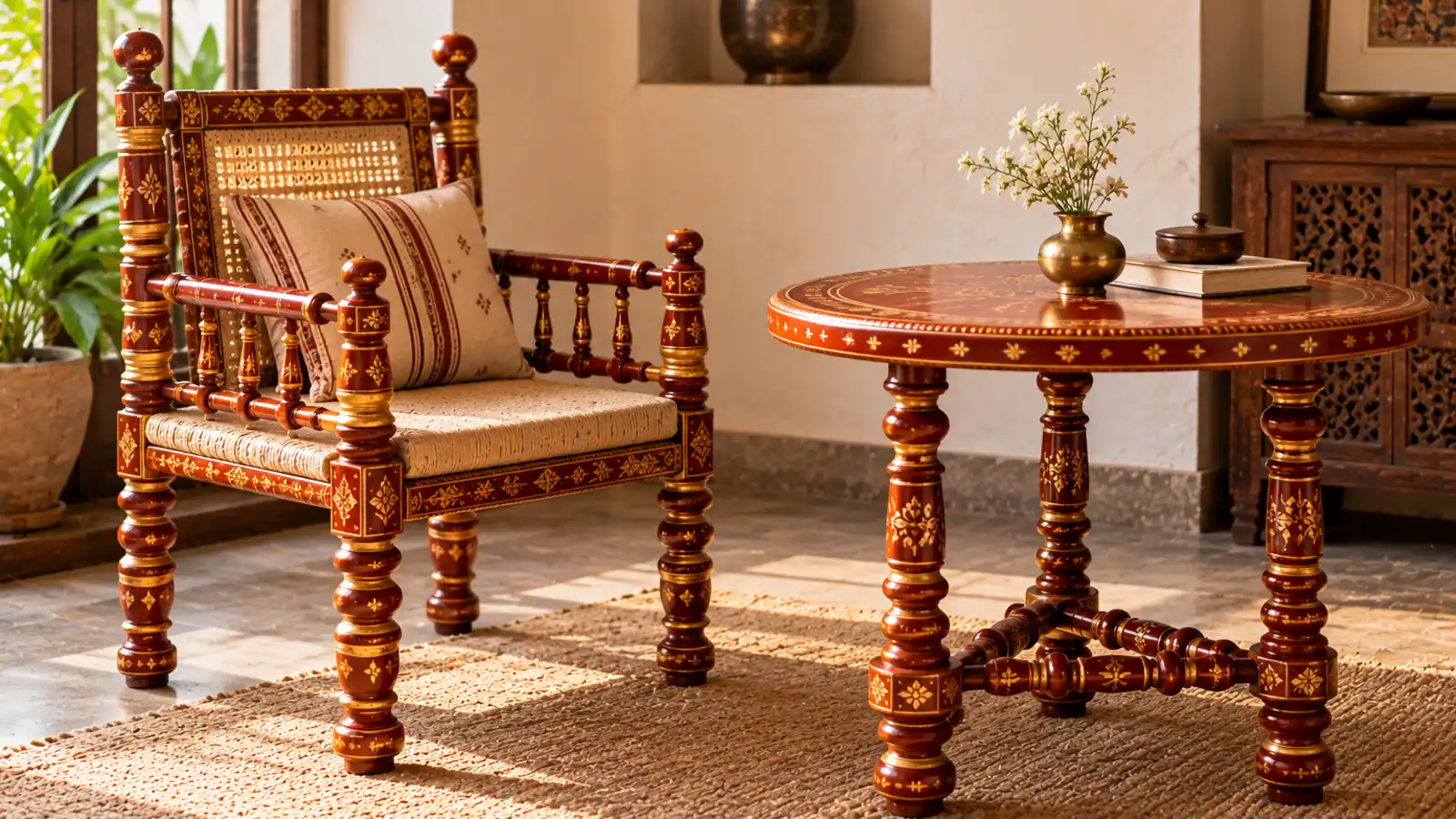 Custom furnitureSankheda Furniture: Gujarat’s Lacquered Teak and the Craft of Wood Turning4 min read
 Custom furnitureA Guide to Wood Joinery: Mortise and Tenon, Dovetail, Dowel and Knock-Down Joints5 min read
 Custom furnitureShipping Furniture From India Abroad: Packing, ISPM 15, Customs and What Buyers Should Know6 min read