Interior design 5 min read
Traditional Gujarati Materials and Crafts in Modern Homes: Limewash, Stone, Lippan, Jaali and Textiles
How limewash, Kota and other natural stone, terracotta, Kutch lippan work, jaali screens, carved wood, and textiles such as ajrakh, bandhani and patola can be used in contemporary Indian interiors, and what to know about each.


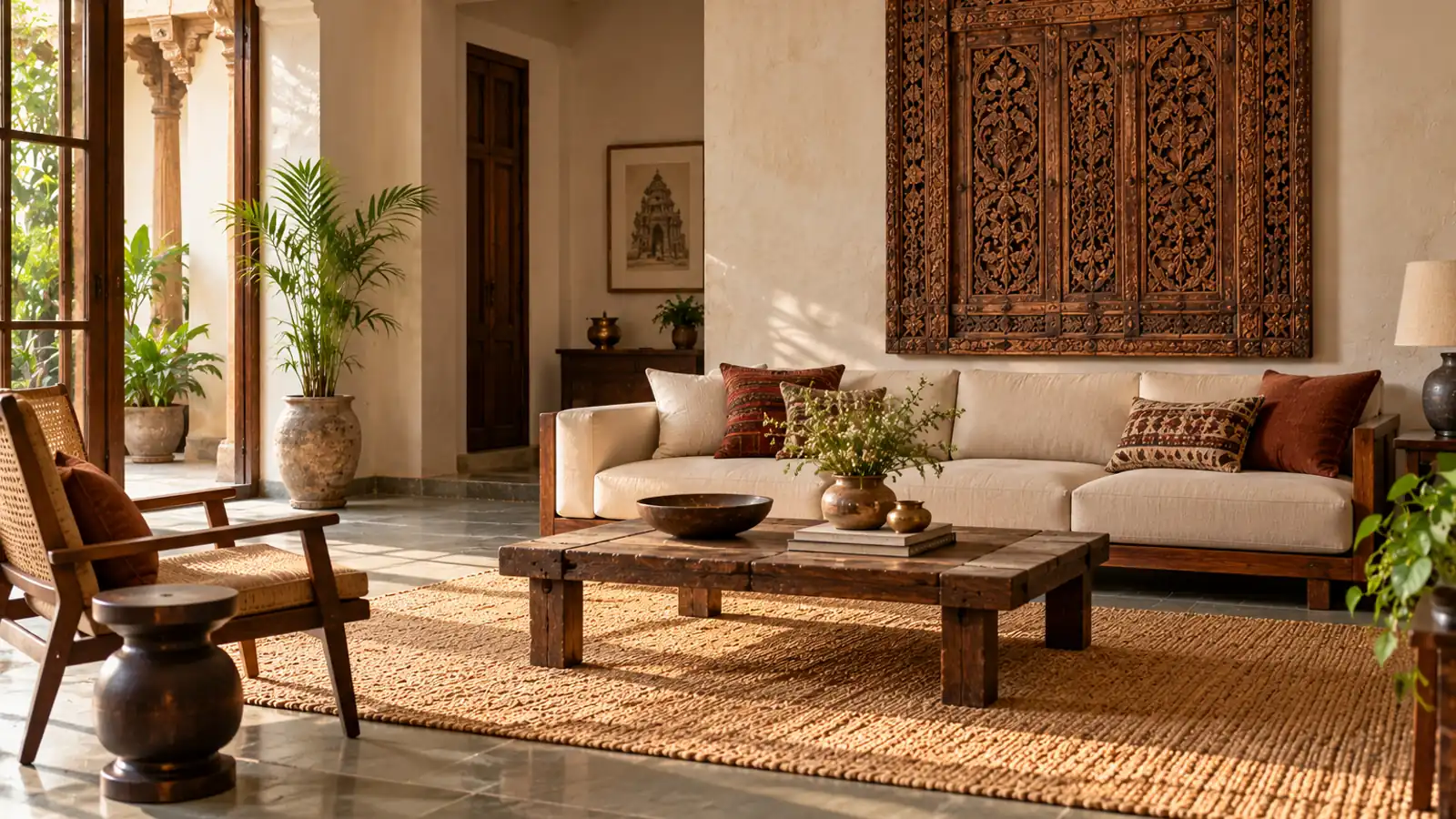
In short
Gujarat’s traditional buildings and crafts offer a palette that suits modern homes beautifully: breathable limewash walls with soft, cloudy texture; durable natural stones such as Kota; terracotta and jaali screens that filter light and air; Kutch’s lippan mud-and-mirror relief; carved timber; and textiles such as ajrakh, bandhani and patola. Used with restraint, a few of these materials make a contemporary interior feel rooted and calm. Each needs the right detailing: limewash on a compatible base, stone sealed against stains, and crafts sourced from the communities that make them.
- Limewash gives walls a soft, mottled, breathable finish; it needs a mineral base and skilled application.
- Kota stone is economical and durable underfoot but stains with oil and acids unless sealed.
- Jaali screens filter light and air and make striking partitions and façades.
- Lippan work from Kutch adds handmade texture as a feature panel, not a whole room.
- Buy textiles and crafts from artisans and cooperatives so the tradition stays alive.
A palette rooted in place
Traditional Gujarati homes were built from materials that suit the climate: thick lime-plastered walls, cool stone floors, carved timber, screens that let breezes through, and textiles made nearby. Many of these materials suit contemporary homes perfectly, and give an interior a character no catalogue can.
Limewash
Lime plasters and limewash have been used in Indian buildings for centuries. Limewash gives a soft, mottled, slightly cloudy finish that changes with the light.
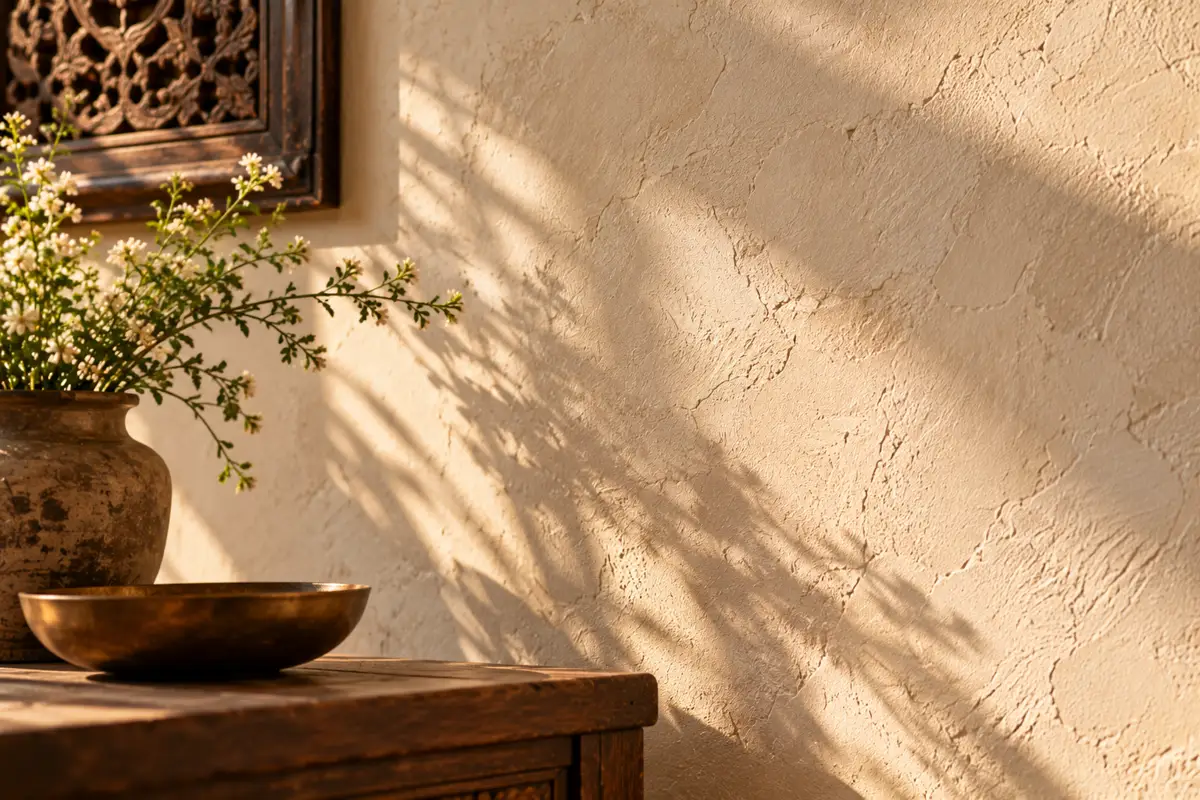
- Breathable, so walls can release moisture, and naturally alkaline, which discourages mould.
- Best on lime or mineral plasters; adhesion on modern acrylic-painted walls needs proper preparation.
- Less washable than emulsion paints: lovely for living rooms and bedrooms, less suited to kitchen splash zones.
- Needs experienced applicators; the texture comes from the hand.
Natural stone
Kota stone, a fine-grained limestone from Rajasthan, has been a staple of Gujarati homes for generations: blue-green or brown, hard-wearing, cool underfoot and economical. It can stain with oil and etch with acids, so seal it and take care in kitchens. See kitchen countertops compared.
Other stones, such as sandstone and local granites, work well for thresholds, window sills and outdoor areas.
Terracotta and jaali
Jaali, perforated screens in stone, terracotta, wood or metal, filter harsh sun and let air move. Ahmedabad has one of the most famous stone jaalis in the world, at the Sidi Saiyyed mosque. In a modern home, a jaali can:
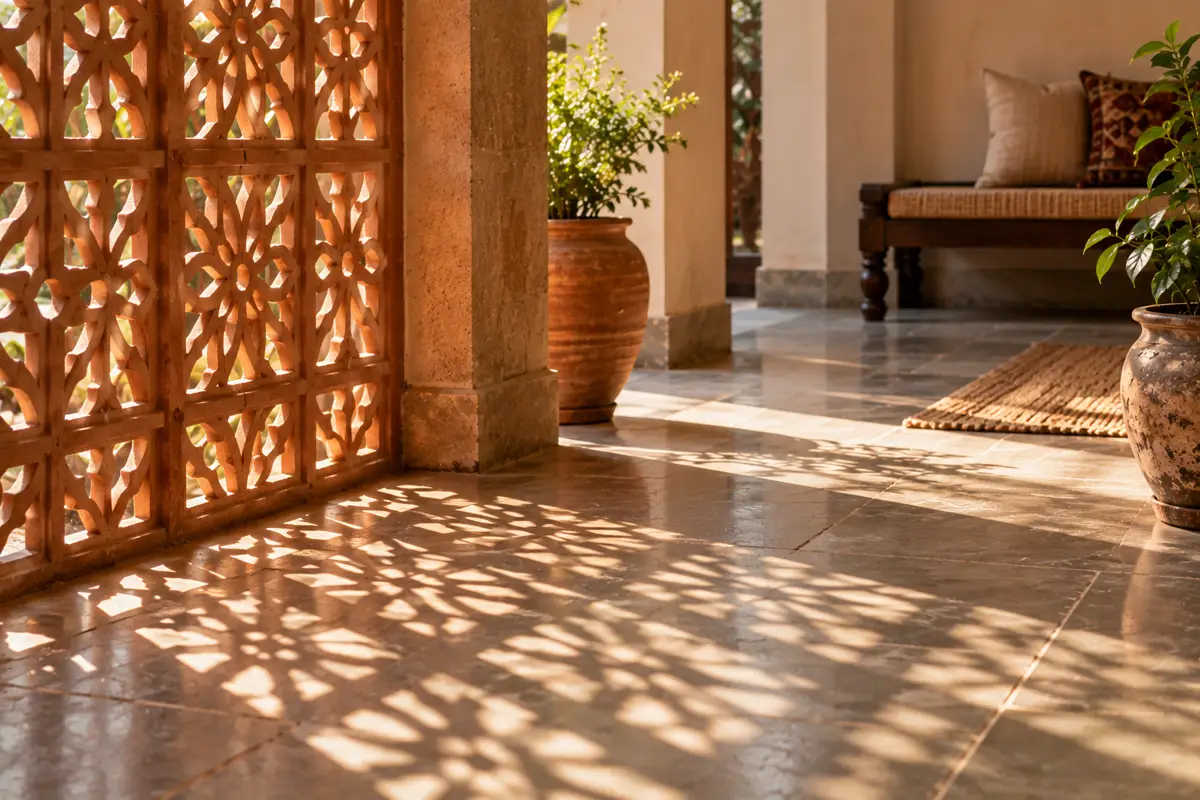
- Separate a living and dining area without blocking light.
- Screen a balcony or a staircase.
- Form a puja room door or a cabinet front.
- Cast moving patterns of light and shadow across a floor.
Terracotta tiles and screens add warmth and are naturally breathable.
Lippan kaam from Kutch
Lippan kaam is a relief craft from Kutch, made with a clay mixture and set with small mirrors, traditionally on the walls of homes such as the round bhunga houses. Artisans now make lippan panels for contemporary interiors. Use it as a single feature: a panel behind a bed, a niche or an entrance wall.
Carved wood
Gujarat's carved timber houses are among its greatest crafts (see Gujarat's wood carving tradition). A reclaimed carved door, bracket or panel, properly treated, can anchor a whole room. Lacquered turned furniture such as Sankheda adds colour.
Textiles
Gujarat is home to some of India's most celebrated textile crafts:
- Ajrakh: block-printed with natural dyes, deep indigo and madder red, made in Kutch.
- Bandhani: tie-dyed dots and patterns.
- Patola: double-ikat silk from Patan, where both warp and weft are dyed before weaving.
In interiors they work as cushions, throws, bed covers, curtains, upholstery or framed panels. Buy from artisans and cooperatives so the skills stay alive.
Using tradition with restraint
- Pick a few strong elements per room: a limewash wall, a jaali, one carved piece.
- Keep the background calm: plain plaster, stone, simple furniture.
- Mix, don't recreate: traditional materials alongside contemporary design feel fresh; a full period recreation can feel like a set.
- Detail properly: right bases for limewash, sealed stone, treated reclaimed wood.
- Respect the source: credit and buy from the communities who make these crafts.
Related reading
Designing with Savistar
Savistar's founders trained at CEPT University, Ahmedabad, and bring materials and crafts like these into contemporary interiors in Gandhinagar, Ahmedabad and beyond. See our interiors portfolio, or book a free consultation.
Frequently asked questions
Is limewash good for Indian homes?
Limewash is breathable, naturally alkaline (which discourages mould) and gives a soft, mottled finish that suits Indian light. It works best on mineral plasters and needs experienced applicators; it is less washable than modern emulsion paints, so it suits living and bedroom walls more than kitchen splash zones.
Is Kota stone good for flooring?
Yes. Kota stone, a fine-grained limestone from Rajasthan widely used in Gujarat, is hard-wearing, cool underfoot and economical. It can stain with oil and react with acids, so seal it and use it with care in kitchens.
What is lippan art?
Lippan kaam is a traditional relief craft from Kutch in Gujarat, made with a mixture of clay and dung, decorated with small mirrors, traditionally on the walls of homes. Today artisans also make lippan panels that can be mounted as features in contemporary interiors.
How do I use traditional crafts without making a home look like a museum?
Choose a few strong pieces, give them space, keep the background calm with plain plaster, stone and simple furniture, and mix crafts with contemporary design rather than layering many different traditions in one room.
About the authors
Sachi and Haripriya founded Savistar in Gandhinagar in 2020 after training at CEPT University, Ahmedabad. They run the interior design studio and its furniture brand SAAG, and have delivered 500+ interior and furniture projects across India and abroad. More about the studio
More from the journal
All articles →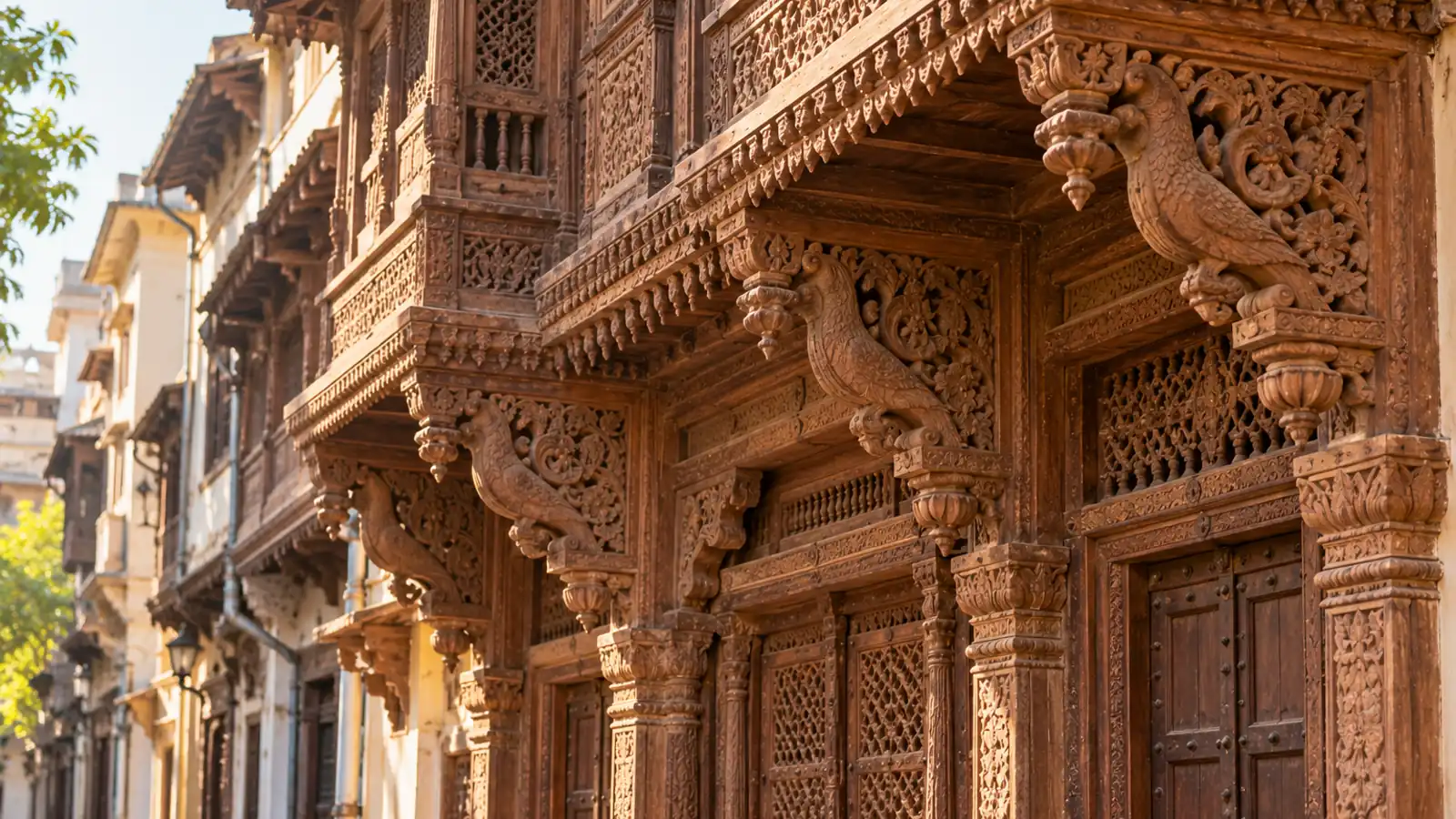 Interior designGujarat’s Wood Carving Tradition: Carved Houses of Ahmedabad’s Pols and How to Use Carving Today5 min read
 Interior designRenovating While Living at Home: How to Phase Interior Work With Less Dust, Noise and Stress5 min read
 Interior designHow to Brief an Interior Designer: What to Prepare Before the First Meeting5 min read