Interior design 5 min read
Renovating While Living at Home: How to Phase Interior Work With Less Dust, Noise and Stress
How to plan an interior renovation while you still live in the house or flat: phasing rooms, dust and noise control, keeping water and power running, society rules, safety for children and elders, and realistic timelines.



In short
Renovating an occupied home is possible, but it takes longer and needs more planning than working in an empty one. Split the work into phases so at least one bedroom, one bathroom and a way to cook stay usable at all times. Seal work areas against dust, protect floors and furniture, agree working hours with your society and neighbours, keep water and power running, and keep children, elders and pets away from tools and debris. Do the noisiest and dustiest work, such as demolition and tiling, in one concentrated phase, and expect the overall timeline to stretch.
- Phase the work so a bedroom, a bathroom and a way to cook remain usable throughout.
- Dusty and noisy work (breaking, chasing walls, tiling) should be grouped and done first, ideally while you are away.
- Seal off work areas with plastic sheeting and protect floors and furniture you are keeping.
- Check society rules on working hours, debris removal and deposits before you fix the schedule.
- Expect an occupied-home renovation to take longer than the same work in an empty flat.
Decide: stay, or move out for part of it?
Living through a renovation is cheaper than renting elsewhere, but it is slower and harder on everyone. A middle path works well for many families: move out for the dustiest one or two weeks, then live at home for the cleaner stages.
Plan the phases
The aim is that, at every stage, you still have:

- A bedroom to sleep in.
- A working bathroom.
- A way to cook or at least to make tea and heat food.
- A safe route through the home.
A typical phasing:
- Phase 1 (dusty): demolition, civil changes, waterproofing, wall chasing for wiring and plumbing, tiling. Group it, finish it, clean up.
- Phase 2: false ceilings and electrical work, room by room.
- Phase 3: carpentry installation. Much of the making can happen in a workshop, which reduces noise and dust at home.
- Phase 4: painting and polishing, room by room.
- Phase 5: fixtures, lights, hardware, deep cleaning, snag list.
See what a turnkey interior project includes for the full sequence.
Keep dust where it belongs
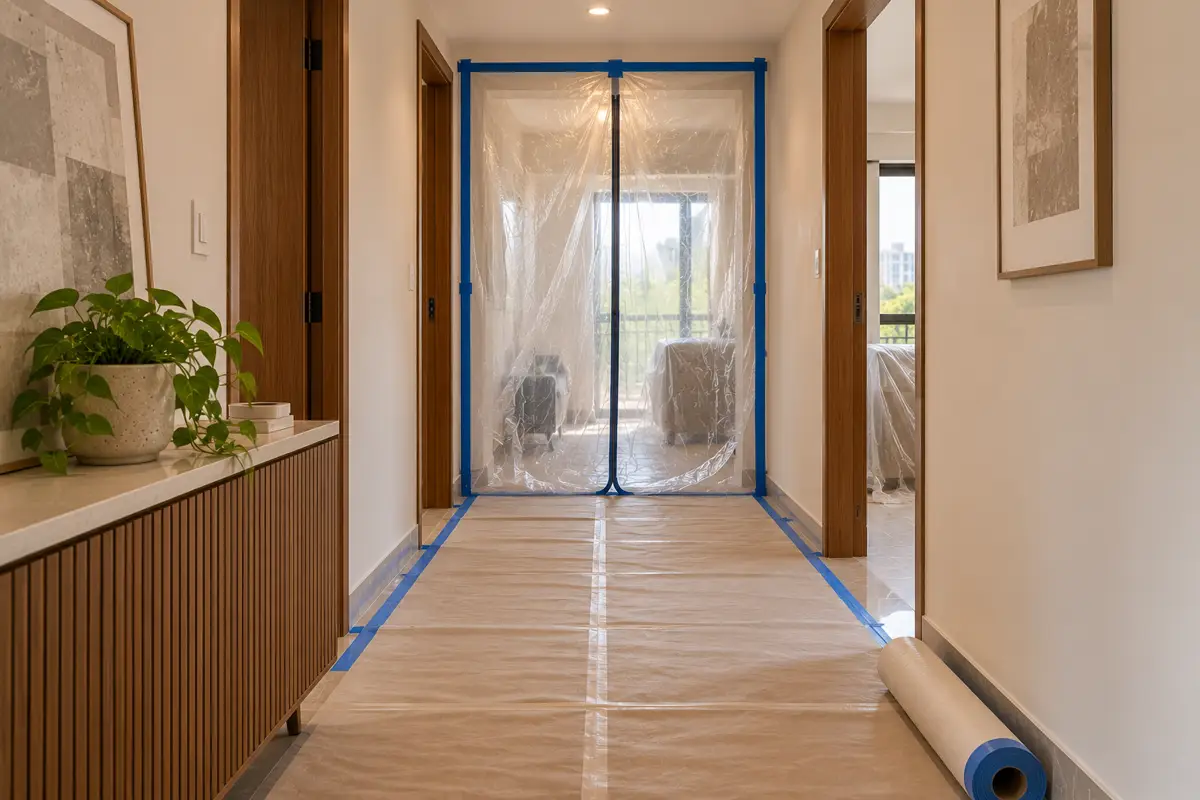
- Seal work areas with plastic sheeting and tape over doorways; use zip doors if possible.
- Protect floors with sheets or boards along the routes workers use.
- Cover or move furniture, electronics, clothes and books.
- Wet cutting where possible, and vacuum rather than dry sweeping.
- Daily clean-up of the work area before evening.
- Ventilate work areas to the outside, not into the rest of the home.
Noise and neighbours
- Agree working hours with the society and stick to them.
- Tell neighbours about noisy days in advance.
- Schedule drilling and breaking for the middle of the day.
Water, power and safety
- Keep at least one bathroom and the main water supply working; plan shutdowns in advance.
- Make sure temporary wiring is safe, and that switchboards are covered.
- Keep children, elders and pets away from tools, debris and wet paint.
- Store paints, solvents and adhesives safely, and ventilate when they are in use.
Society rules
Before fixing your schedule, check with your housing society about:
- Permitted working hours and days.
- Use of lifts and the route for debris.
- Debris removal and where it can be stored.
- Any refundable deposit.
- Permissions needed for structural changes, balcony enclosures or changes to plumbing stacks.
Expect it to take longer
Working around a family, phasing rooms and daily clean-ups add time compared with an empty flat. Decisions made early (on paper and in 3D) help keep things moving: see how to brief an interior designer.
Renovations with Savistar
Savistar coordinates contractors and manages installation from start to finish, which matters most when you are living in the home during the work. Read about our interior design service, see our interiors portfolio, or talk to us about your renovation.
Frequently asked questions
Can I live at home during an interior renovation?
Yes, if the work is phased so that essential rooms stay usable and dusty work areas are sealed off. Many families move out for a week or two during demolition, wall chasing and tiling, then move back for the carpentry and painting stages.
How do I keep dust under control during renovation?
Seal the work area with plastic sheeting and tape, keep doors to other rooms closed, cover furniture and floors, ask for wet cutting where possible, clean up daily, and run work-area ventilation to the outside. Electronics and wardrobes should be covered or moved.
Which renovation work should be done first?
Demolition, civil work, waterproofing, wall chasing for electrical and plumbing, and tiling come first, because they are the dustiest and everything else depends on them. Carpentry, painting, fixtures and cleaning follow.
Does a housing society need to approve interior work?
Most societies require you to inform them, follow set working hours, use designated lifts and debris routes, and sometimes pay a refundable deposit. Structural changes and work affecting common areas or plumbing stacks usually need explicit permission. Check before the schedule is fixed.
About the authors
Sachi and Haripriya founded Savistar in Gandhinagar in 2020 after training at CEPT University, Ahmedabad. They run the interior design studio and its furniture brand SAAG, and have delivered 500+ interior and furniture projects across India and abroad. More about the studio
More from the journal
All articles → Interior designTraditional Gujarati Materials and Crafts in Modern Homes: Limewash, Stone, Lippan, Jaali and Textiles5 min read
 Interior designGujarat’s Wood Carving Tradition: Carved Houses of Ahmedabad’s Pols and How to Use Carving Today5 min read
 Interior designHow to Brief an Interior Designer: What to Prepare Before the First Meeting5 min read