Interior design 5 min read
Gujarat’s Wood Carving Tradition: Carved Houses of Ahmedabad’s Pols and How to Use Carving Today
The carved timber houses of Gujarat, from the facades of Ahmedabad’s pols to houses in Patan and Siddhpur, what the carving shows, how CEPT research documented it, and how carved wood can be used respectfully in contemporary interiors.


In short
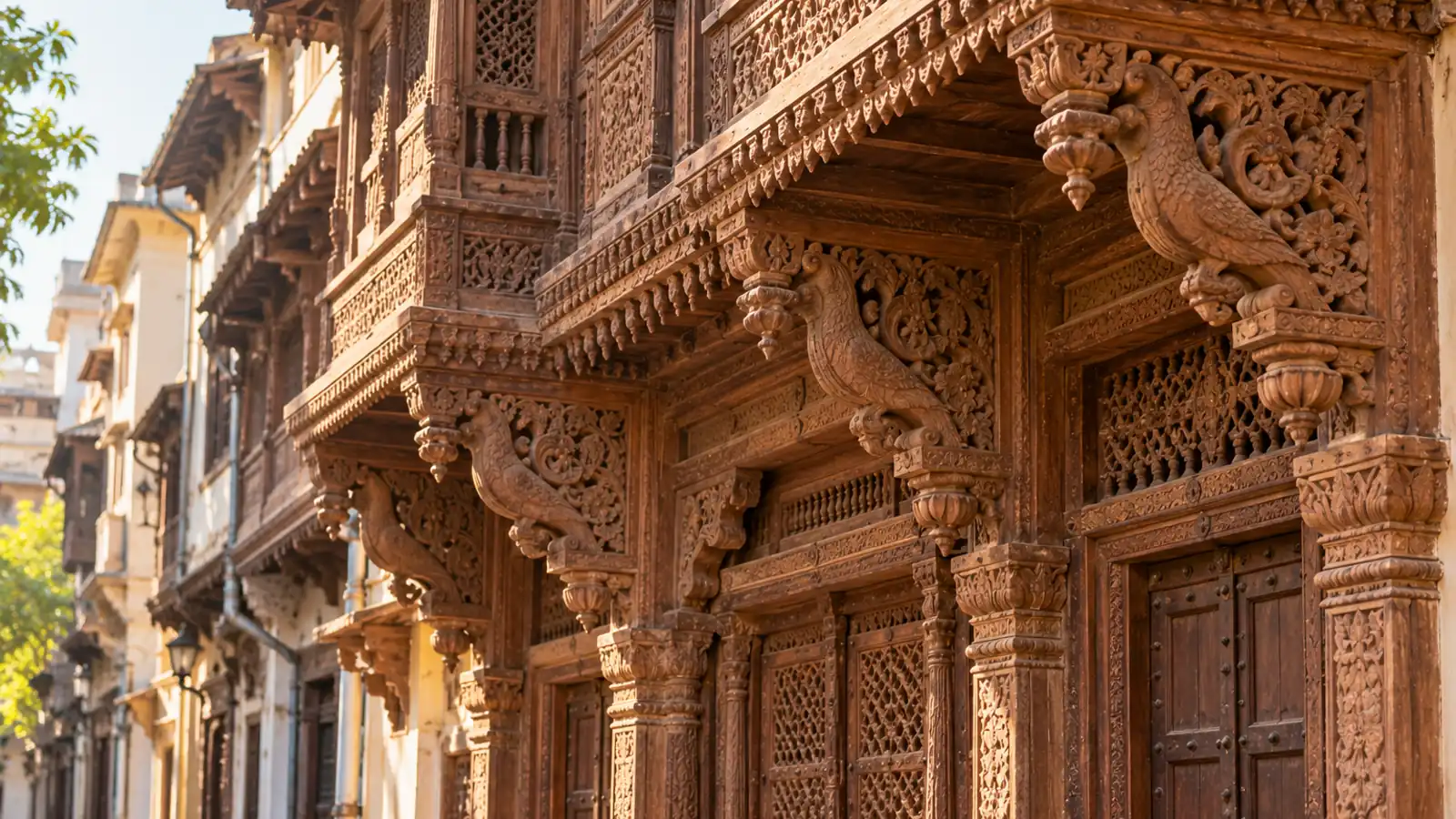
Traditional houses in Gujarat, most famously in the pols of old Ahmedabad and in towns such as Patan and Siddhpur, were built with richly carved timber facades, brackets, balconies, columns and doors. The carving was the work of skilled craftsmen organised in trade guilds, and its motifs carried aesthetic and symbolic meaning. CEPT University researcher Jay Thakkar documented this tradition in Naqsh: The Art of Wood Carving in Traditional Houses of Gujarat (2004). Today carved wood can be brought into contemporary homes as reclaimed panels, doors or brackets, or as new carving used sparingly, so the craft is the focus rather than decoration everywhere.
- Old Ahmedabad’s pols are known for timber houses with carved facades; the historic city was inscribed as India’s first UNESCO World Heritage City in 2017.
- Carving covered brackets, balconies, columns, doors and windows, often in teak.
- CEPT’s Jay Thakkar documented the motifs, tools and techniques in Naqsh (2004).
- Reclaimed carved pieces should be sourced responsibly, checked for insects and stabilised before use.
- In modern interiors, one well-placed carved element says more than carving on every surface.
Houses of carved timber
Walk through a pol in old Ahmedabad and you see houses of a kind found in few other cities: attached homes whose fronts are timber frames carved with brackets, balconies, columns, window frames and doors. Towns such as Patan and Siddhpur have their own carved houses. In 2017 the Historic City of Ahmedabad was inscribed as a UNESCO World Heritage Site, India's first World Heritage City, and its pol houses are part of that story.
What was carved
- Brackets supporting projecting floors and balconies.
- Balconies and window frames facing the street.
- Columns and beams at the entrance and in courtyards.
- Doors and door frames, often the most elaborate element.
- Interior elements such as wall cabinets and niches.
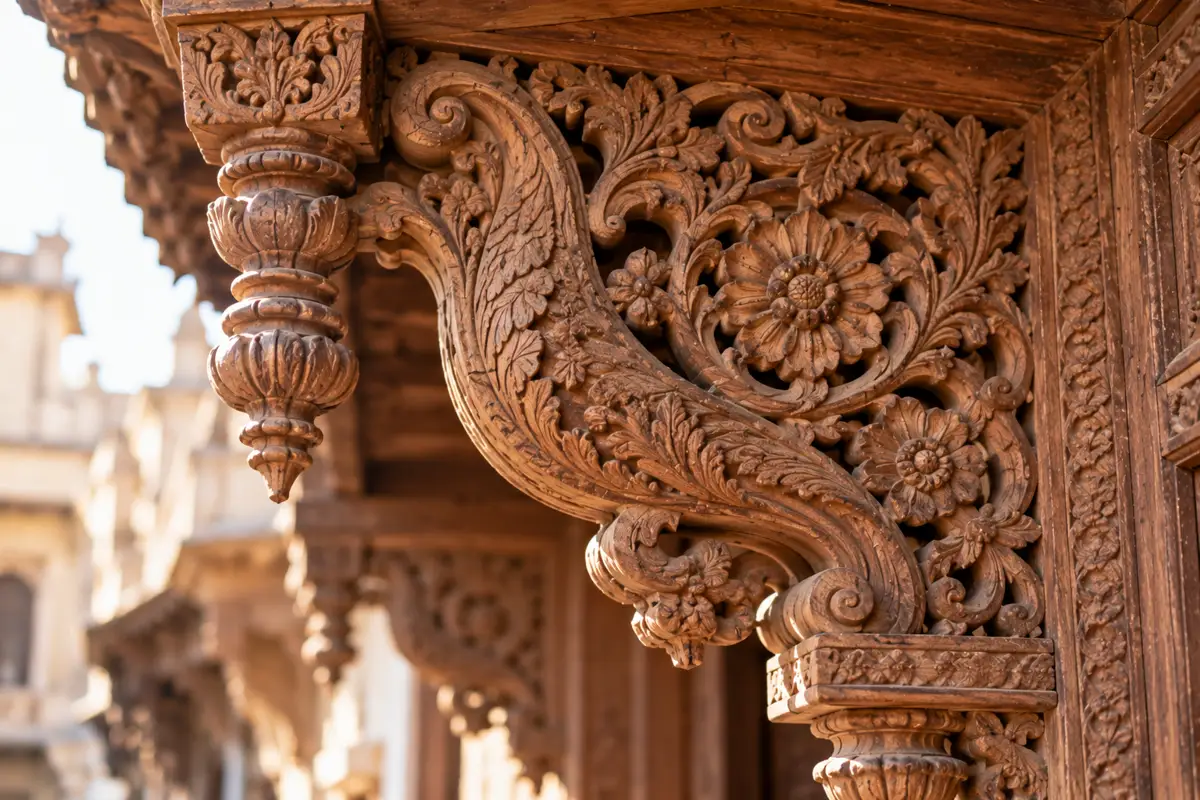
Teak was widely used: durable, stable and clean to carve.
The research behind it
CEPT University's Jay Thakkar, who co-founded the university's Design Innovation and Craft Resource Centre (DICRC), studied this tradition in depth. His book Naqsh: The Art of Wood Carving in Traditional Houses of Gujarat – A Focus on Ornamentation (CEPT, 2004) covers the tools and techniques used by craftsmen working within trade guilds, and classifies carved motifs by their aesthetics, their date, and their physical and symbolic relation to the house.
DICRC's later work has also documented carved interiors, such as a carved wall cabinet in a house in Siddhpur, alongside other crafts found in these homes: marquetry, etched glass, metal embossing, stucco and glass painting.
Why it still matters
Carving was never just decoration. It showed the status and identity of a family, marked thresholds and protected openings, and was made by craftsmen with deep knowledge of timber. Many of these houses have lasted well over a century because their timber was chosen and joined well. See our guides to teak and other furniture woods and wood joinery.
Using carved wood in contemporary interiors
Reclaimed pieces
Old doors, brackets, panels and window frames sometimes come onto the market as houses are rebuilt.
- Source responsibly. Ask where a piece came from; avoid buying from listed or protected buildings.
- Check for insects. Old timber can harbour borers and termites; have it inspected and treated (protecting wood from termites).
- Stabilise gently. Cleaning and consolidating old carving is specialist work; aggressive sanding destroys detail and patina.
Where carving works best
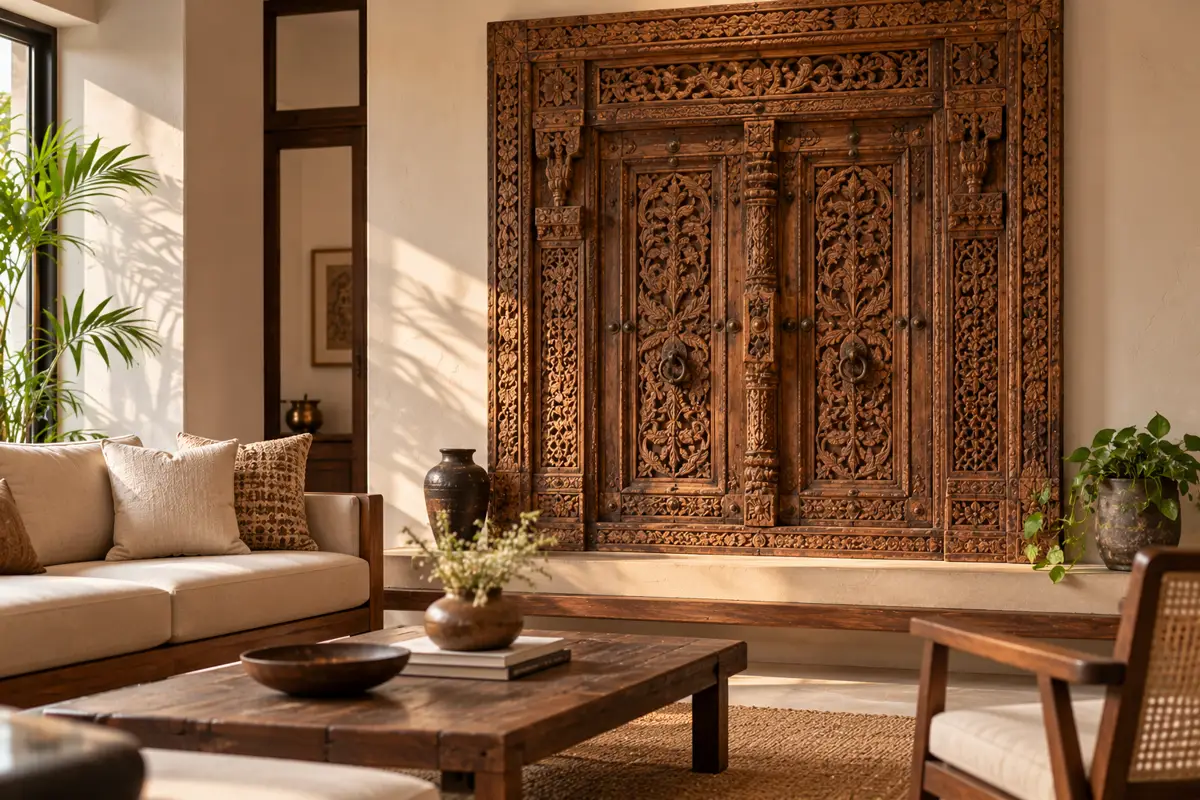
- A carved door as a headboard, a room divider or the entrance to a puja room.
- A bracket or panel mounted as art on a limewashed wall.
- A carved frame around a mirror or a niche.
- A jharokha-style window seat in a reading corner.
Let it breathe
One carved element in a calm room is more powerful than carving on every surface. Pair it with plain plaster, natural stone and simple furniture. See traditional Gujarati materials in modern homes.
Related reading
About us
Savistar's founders trained at CEPT University, Ahmedabad, and the studio works across Gandhinagar, Ahmedabad and beyond. We bring heritage elements into contemporary interiors with care. See our interiors portfolio, or talk to us about your home. (CEPT research is cited here as published work; it does not imply endorsement of our studio.)
Frequently asked questions
What is a pol in Ahmedabad?
A pol is a traditional housing cluster in the old walled city of Ahmedabad: a street or group of streets with a shared gateway, lined with attached houses, many with carved timber facades. The Historic City of Ahmedabad was inscribed as a UNESCO World Heritage Site in 2017.
Which wood was used for carving in Gujarat houses?
Teak was widely used for structural and carved elements in traditional Gujarati houses because it is durable, stable and carves cleanly.
How can I use old carved wood in a modern home?
As a feature: a carved door as a headboard or room divider, a bracket or panel as wall art, a carved frame around a mirror. Have reclaimed pieces checked for insects and treated, cleaned gently and stabilised by a professional, and keep the surrounding design calm so the carving stands out.
Where can I read about Gujarat’s wood carving?
Naqsh: The Art of Wood Carving in Traditional Houses of Gujarat by Jay Thakkar (CEPT, 2004) documents the tools, techniques and motifs of carved timber houses in Gujarat.
About the authors
Sachi and Haripriya founded Savistar in Gandhinagar in 2020 after training at CEPT University, Ahmedabad. They run the interior design studio and its furniture brand SAAG, and have delivered 500+ interior and furniture projects across India and abroad. More about the studio
More from the journal
All articles →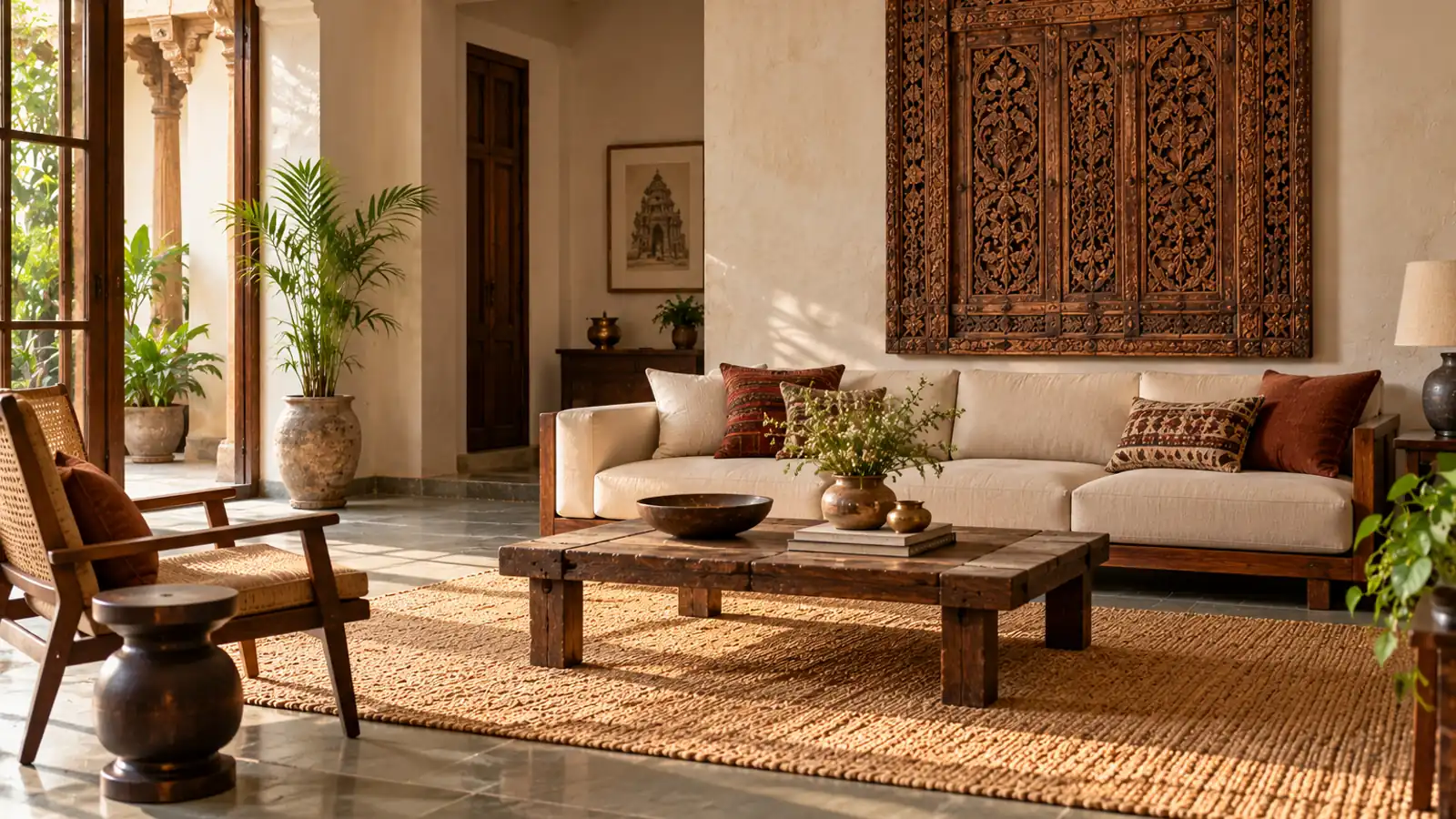 Interior designTraditional Gujarati Materials and Crafts in Modern Homes: Limewash, Stone, Lippan, Jaali and Textiles5 min read
 Interior designRenovating While Living at Home: How to Phase Interior Work With Less Dust, Noise and Stress5 min read
 Interior designHow to Brief an Interior Designer: What to Prepare Before the First Meeting5 min read