Custom furniture 6 min read
Protecting Wooden Furniture From Termites and Wood Borers in India
How subterranean termites, drywood termites and powder-post borers attack furniture, which woods resist them, how timber is treated, how to spot early signs, and what to do in an Indian home.


In short
Termites and wood borers are the main biological threats to furniture in India. Subterranean termites travel from the soil through walls and floors and eat wood from the inside; drywood termites live inside the timber itself; powder-post beetles bore through the starchy sapwood of many hardwoods, leaving small holes and fine powder. Protection works in layers: choose durable heartwood or treated timber and boards, dry it properly, design furniture to sit off the floor and away from damp walls, protect the building itself, and inspect regularly. No wood is completely termite proof, but these steps make attack much less likely.
- Heartwood of durable species such as teak resists termites far better than sapwood or less durable woods like mango and rubberwood.
- Preservative treatment of timber, guided by IS 401, and borer-treated plywood give non-durable woods protection.
- Kiln drying kills insects already in the wood but does not protect against future attack.
- Keep furniture slightly off the floor and away from damp walls, and fix leaks: termites need moisture.
- Mud tubes, hollow-sounding wood, small holes with powder, and discarded wings are early warning signs.
Know the enemy
Three groups of insects cause most damage to furniture in India.
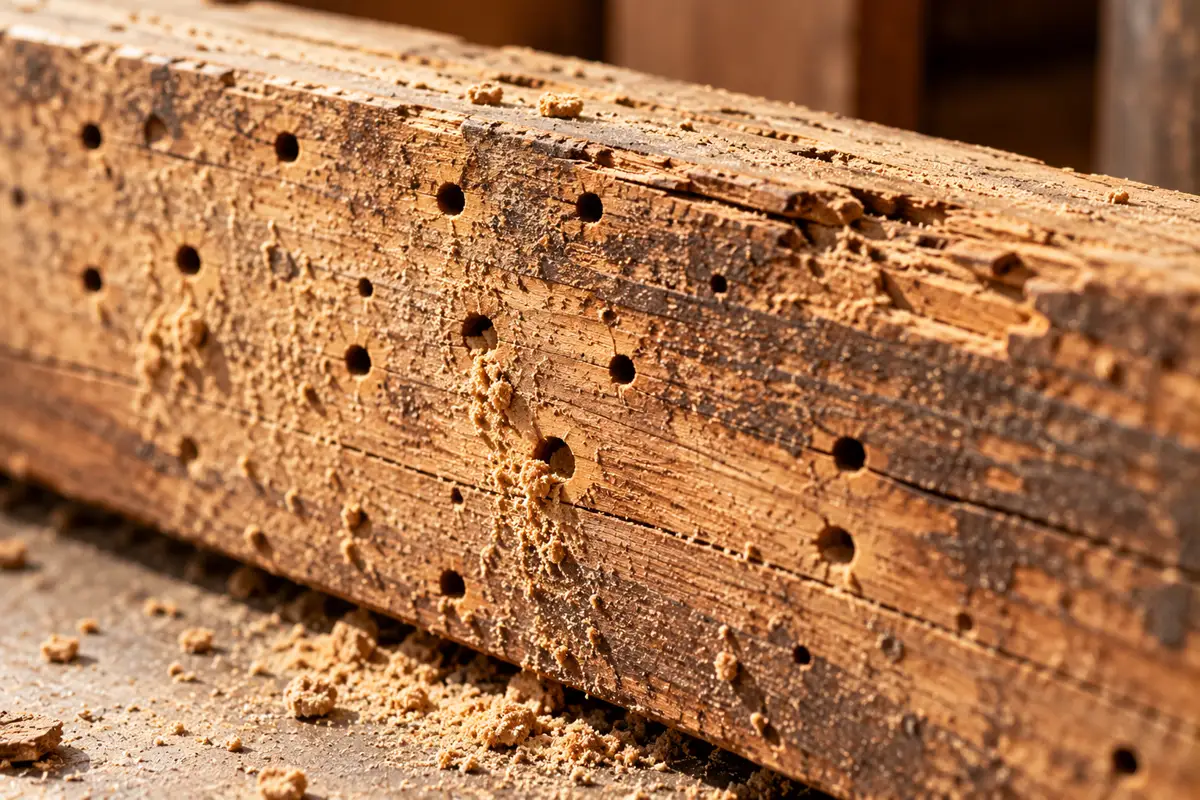
Subterranean termites live in colonies in the soil. They reach wood through cracks in floors and walls, often building mud tubes to stay moist and hidden, and eat wood from the inside out, leaving a thin outer shell. They are the most common and most destructive.
Drywood termites live entirely inside dry wood, without contact with the soil. They leave small piles of hard, pellet-like droppings.
Powder-post beetles (wood borers) lay eggs in the pores of timber. Their larvae tunnel through the wood, feeding mainly on the starch in sapwood, and emerge through small round exit holes, leaving fine flour-like powder (frass).
Choose wood that resists attack
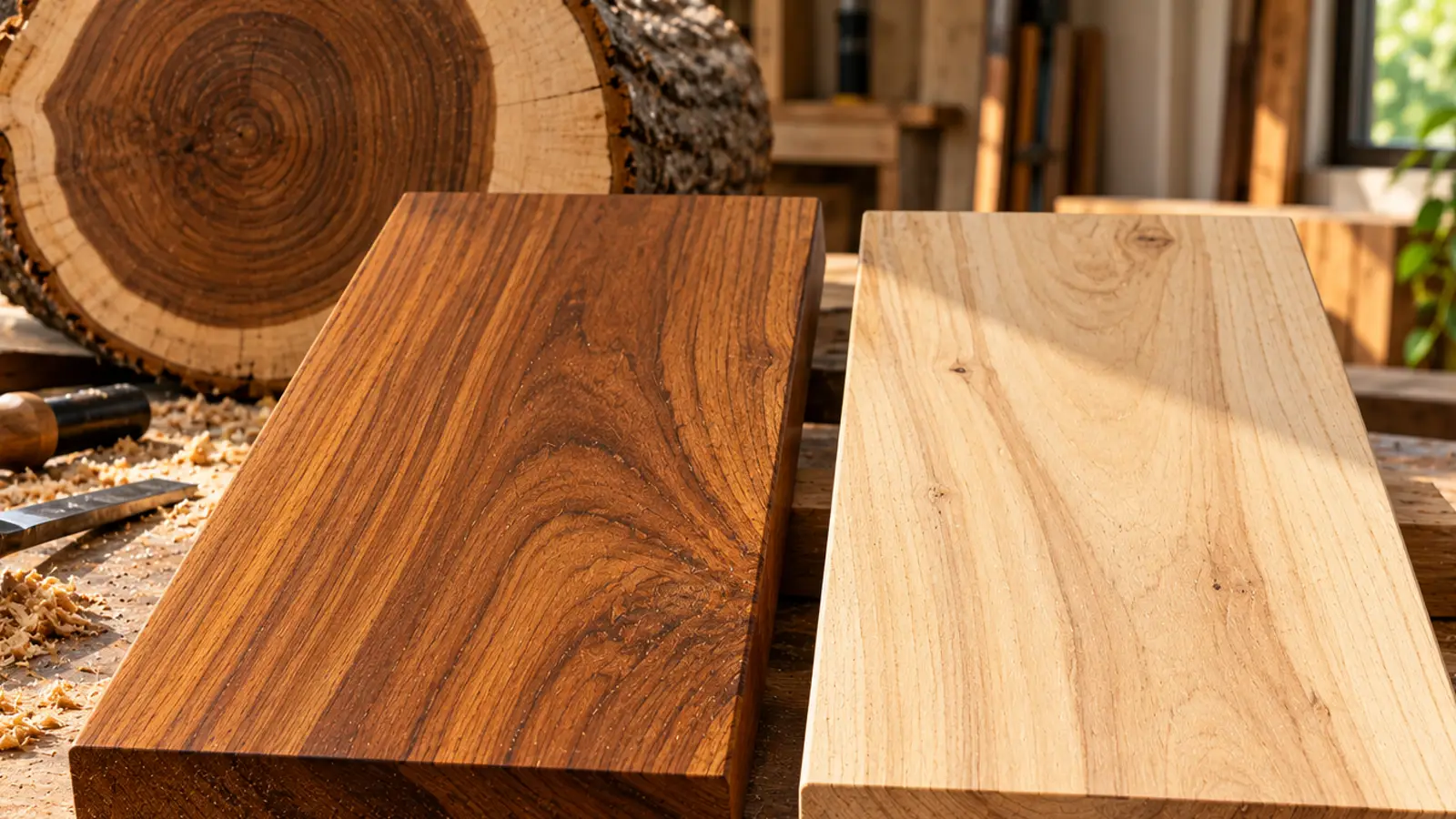
Natural durability lives in heartwood, the darker centre of the log. Some species carry compounds in their heartwood that insects and fungi avoid.
| Wood | Natural resistance |
|---|---|
| Teak heartwood | High |
| Sheesham heartwood | Moderate |
| Oak heartwood | Moderate |
| Mango, rubberwood, poplar | Low (needs treatment) |
| Sapwood of any species | Low (needs treatment) |
Our comparison of teak, sheesham, mango and oak covers these woods in more detail.
Treat what is not naturally durable
The Indian Standard IS 401 is the code of practice for the preservation of timber. It sets out preservatives and treatment methods suited to different uses and risks. For furniture, less durable timbers are commonly treated before they are worked, for example with boron-based preservatives for indoor use.
For boards, ask for plywood whose veneers are treated against borers and termites; many manufacturers offer this and state it on the sheet. See plywood grades explained.
Remember: kiln drying kills insects already in the wood but leaves no lasting protection (see kiln-dried wood).
Protect the building, not just the furniture
Subterranean termites come from the ground, so the building is the first line of defence. IS 6313 covers anti-termite measures in buildings, including pre-construction soil treatment. In an existing home, a professional post-construction treatment around the foundation and floor joints may be needed if termites are active.
Design and placement that help
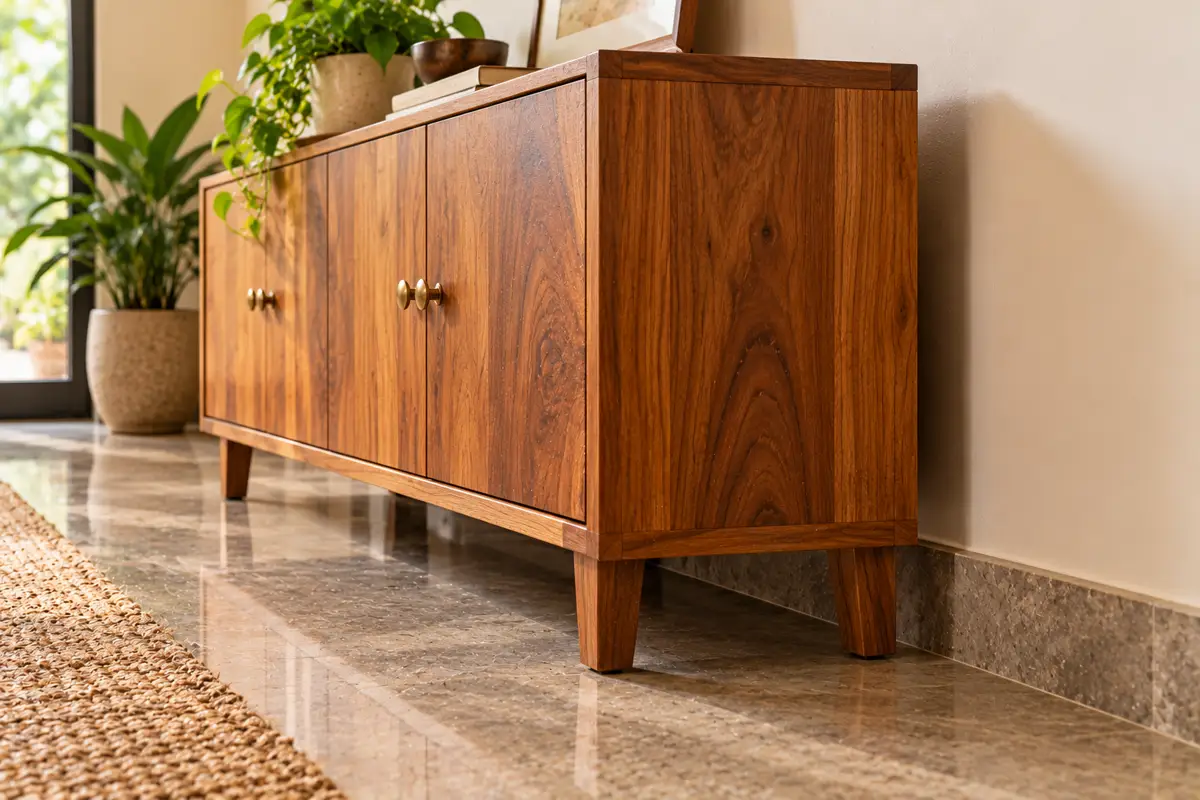
- Keep furniture off the floor. Legs or a raised plinth leave a gap you can see and clean under; solid bases sitting directly on the floor hide activity.
- Leave a gap from walls, especially external and bathroom walls that may be damp.
- Fix leaks and damp. Termites need moisture; a seeping pipe behind a wardrobe is an invitation.
- Avoid wooden contact with soil on balconies and terraces.
- Finish every surface, including backs and undersides, so wood is sealed. See finishes for solid wood.
- Don't store cardboard, old papers and firewood against walls or under beds.
Signs to check for
- Mud tubes on walls, skirting or furniture legs.
- Wood that sounds hollow when tapped, or gives way under pressure.
- Blistered or bubbling paint and laminate.
- Discarded wings near windows and lights, especially after the first rains.
- Small round holes with fine powder underneath.
- Tiny pellets on the floor below a piece.
A quick check of the backs and legs of wardrobes, beds and cabinets once or twice a year, and after the monsoon, catches most problems early.
What to do if you find them
- Do not just spray the visible insects; the colony is elsewhere.
- Move the piece slightly away from the wall and isolate it if you can.
- Call a licensed pest control professional to treat the furniture and the source.
- Have damaged structural parts repaired or replaced once the infestation is treated.
How we approach it
At SAAG we work with responsibly sourced, kiln-dried timber, and design pieces that stand properly off the floor. In interior projects we specify treated boards and keep joinery away from damp walls. Ask us about your home or furniture.
Frequently asked questions
Which wood is naturally termite resistant?
Teak heartwood is the best-known naturally resistant timber in India. Sheesham heartwood is moderately resistant. Sapwood of any species, and woods such as mango, rubberwood and poplar, have little resistance and need preservative treatment.
Does kiln drying make wood termite proof?
No. Kiln drying kills insects and larvae already inside the timber because the wood is held at high temperature, but it does not leave any protection behind. For resistance to future attack you need a durable species, preservative treatment, or both.
How do I know if my furniture has termites or borers?
Look for mud tubes on walls or furniture legs, wood that sounds hollow when tapped, blistered or crumbling surfaces, discarded wings near windows, and small round holes with fine powder (frass) beneath them, which indicates wood-boring beetles.
What should I do if I find termites in furniture?
Move the piece away from walls, avoid spreading infested material to other rooms, and call a professional pest control service to treat both the furniture and the building, because subterranean termites usually come from the soil and will return unless the source is treated.
Is plywood termite proof?
Not inherently. Many manufacturers treat plywood veneers against borers and termites, and this treatment is worth asking for. Untreated plywood, especially with light cores such as poplar, can be attacked like any other non-durable wood.
About the authors
Sachi and Haripriya founded Savistar in Gandhinagar in 2020 after training at CEPT University, Ahmedabad. They run the interior design studio and its furniture brand SAAG, and have delivered 500+ interior and furniture projects across India and abroad. More about the studio
More from the journal
All articles →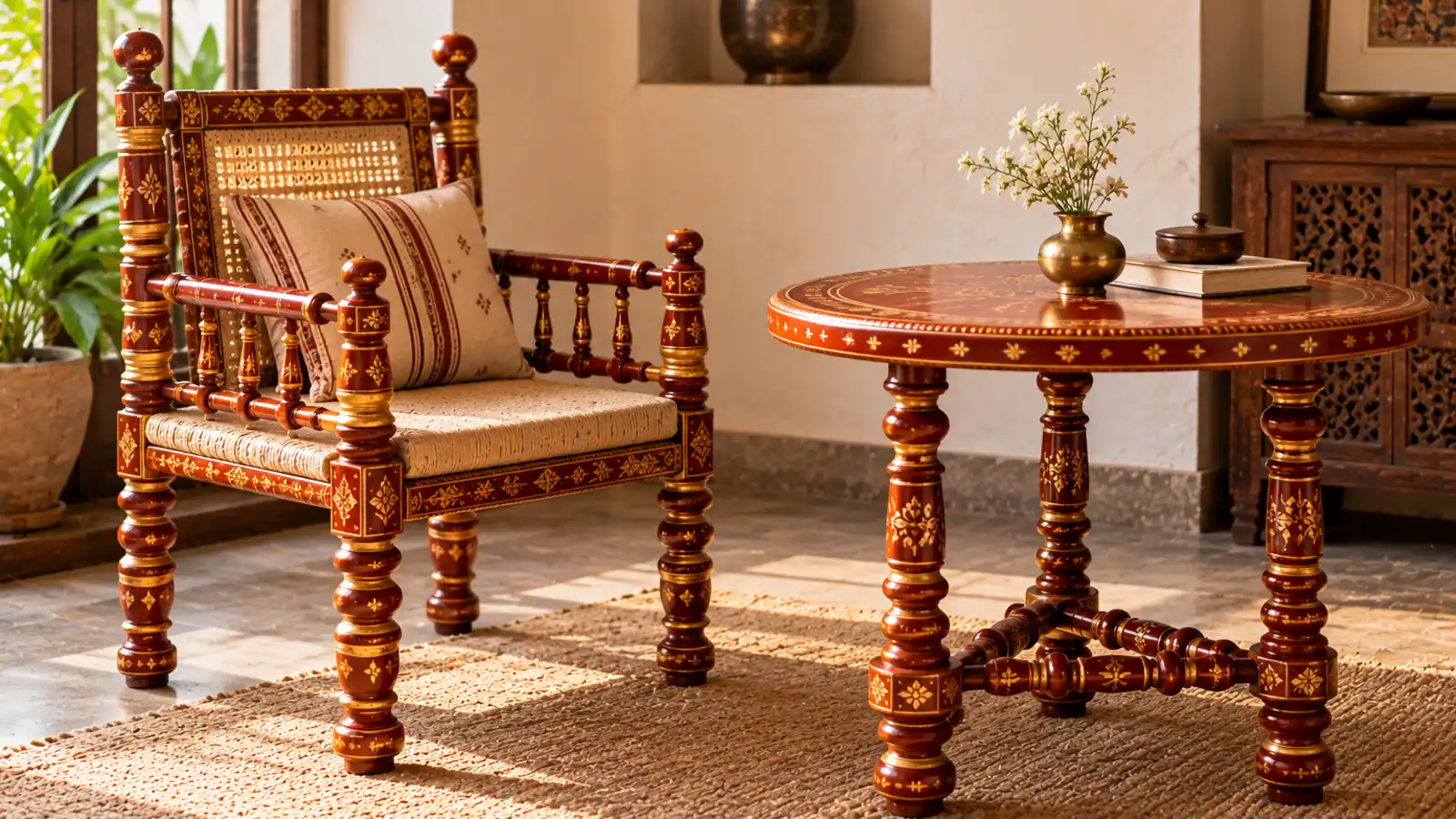 Custom furnitureSankheda Furniture: Gujarat’s Lacquered Teak and the Craft of Wood Turning4 min read
 Custom furnitureVernacular Furniture of Gujarat: Chests, Cradles, Swings and Charpoys, and What They Teach Modern Design5 min read
 Custom furnitureA Guide to Wood Joinery: Mortise and Tenon, Dovetail, Dowel and Knock-Down Joints5 min read