Custom furniture 8 min read
Teak vs Sheesham vs Mango vs Oak: Choosing Wood for Furniture in India
How teak, sheesham, mango wood and oak compare on look, strength, durability, termite resistance, movement and cost, and which wood suits beds, dining tables, sofas and outdoor furniture in Indian homes.


In short
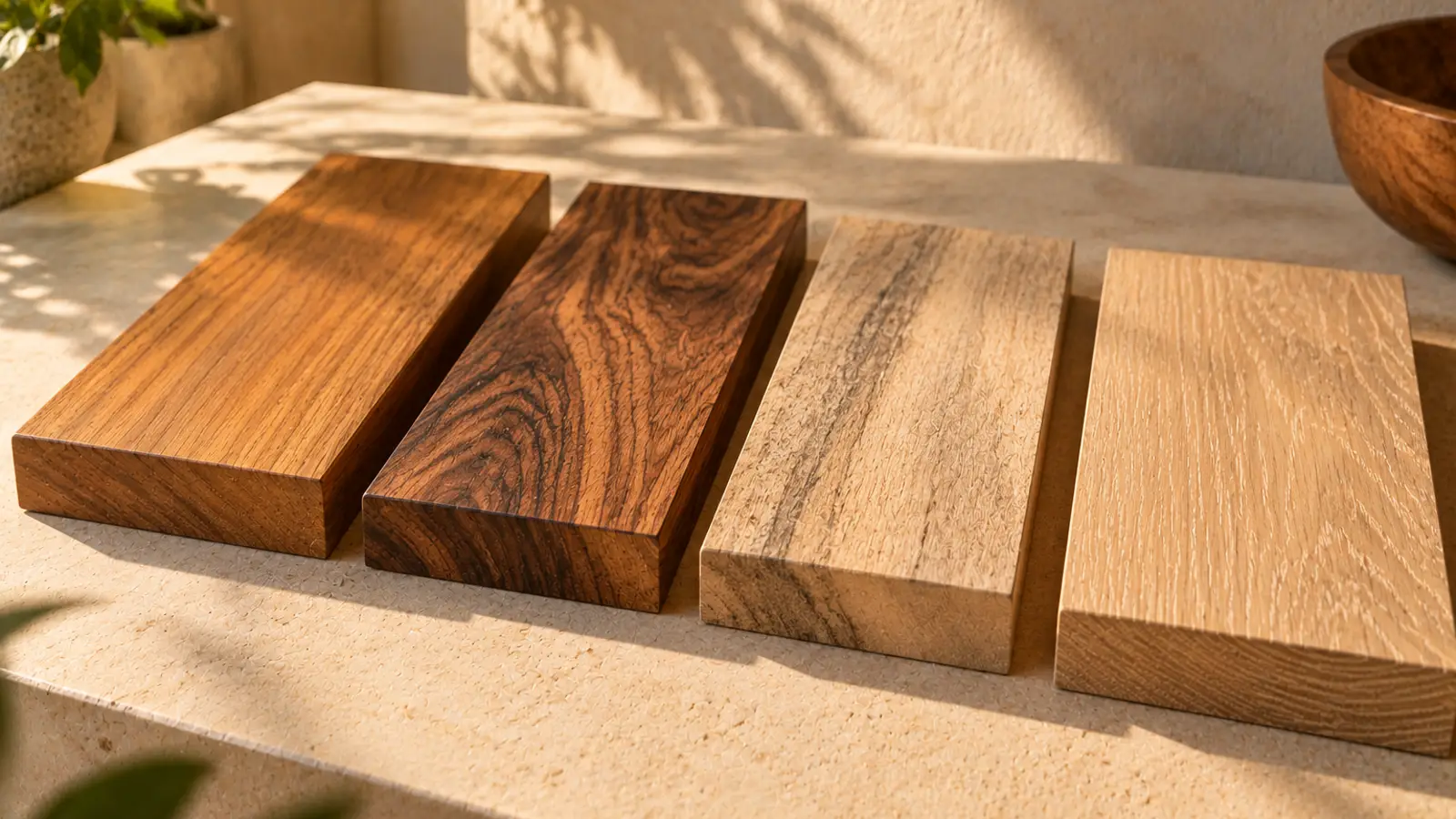
Teak, sheesham, mango and oak are the four solid woods most often offered for furniture in India. Teak is the benchmark: naturally oily, stable, and its heartwood resists termites and decay, but it is the most expensive. Sheesham (Indian rosewood) is dense, strong and boldly grained at a lower price, but needs good seasoning. Mango wood is affordable and attractive but softer and less durable, so it suits lighter-use pieces. Oak, mostly imported, is hard, light-coloured and has a distinctive grain. The right choice depends on the piece, the room and the budget, and on proper kiln drying more than on species alone.
- Teak heartwood is the most durable and stable of the four, and the most expensive; its natural oils help it resist termites, decay and moisture.
- Sheesham is hard and strong with striking dark grain, and good value, but must be well seasoned to avoid cracks.
- Mango wood is economical and handsome but softer and more prone to insect attack unless treated; use it for lighter-duty pieces.
- Oak is hard and pale with prominent grain; in India it is usually imported, which adds cost.
- Heartwood vs sapwood, seasoning and design matter as much as the species name on the quote.
The four woods at a glance
Most solid-wood furniture sold in India is made from one of four species. They differ in hardness, stability, durability and price, and each has places where it shines.
| Teak | Sheesham | Mango | Oak | |
|---|---|---|---|---|
| Botanical name | Tectona grandis | Dalbergia sissoo | Mangifera indica | Quercus species |
| Colour | Golden to medium brown | Brown with dark streaks | Pale, grey-brown streaks | Pale straw to light brown |
| Hardness | Medium-hard | Hard | Medium-soft | Hard |
| Stability once seasoned | Excellent | Good | Fair | Good |
| Natural durability (heartwood) | High | Moderate to high | Low | Moderate |
| Termite resistance | Good | Moderate | Poor without treatment | Moderate |
| Relative cost | Highest | Medium | Lowest | High (mostly imported) |
These are general characteristics of the species. Individual boards vary, and how the timber was cut, dried and finished makes a big difference to how a piece performs.
Teak
Teak has been the benchmark furniture timber in India for centuries, and it is still the wood many families think of first. It grows across central and southern India and South-East Asia, much of it today in managed plantations.
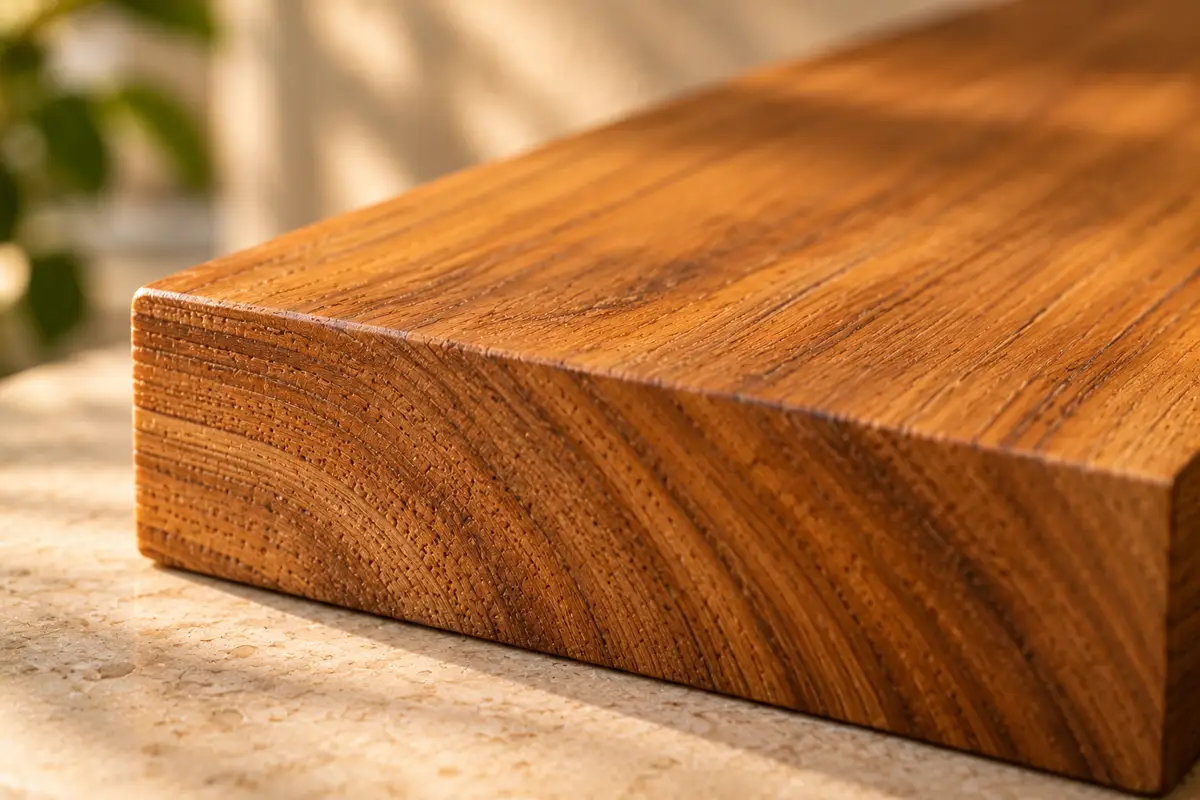
Why it is prized:
- Natural oils and silica. Teak heartwood contains oils that help it resist moisture, decay and termites, and give it a slightly waxy feel.
- Stability. Once seasoned, teak moves less with humidity than most hardwoods, so doors stay true and tops stay flat.
- Workability and finish. It machines cleanly and takes oil, polish and lacquer well. It is also the traditional timber for many Gujarati crafts, including Sankheda furniture.
Watch for: price, and the difference between heartwood (the durable, golden centre of the log) and sapwood (the pale outer band), which has none of teak's durability. Young plantation teak contains more sapwood and can be less stable than mature timber. Ask what you are getting.
Best for: dining tables, beds, doors, bathroom vanities, outdoor and semi-outdoor furniture, and pieces you expect to hand down.
Sheesham (Indian rosewood)
Sheesham, also called Indian rosewood, is a dense, strong hardwood with a striking grain that runs from golden brown to deep chocolate with darker streaks. It is widely used for solid-wood furniture across North India, and Rajasthan is a major centre for sheesham furniture making.
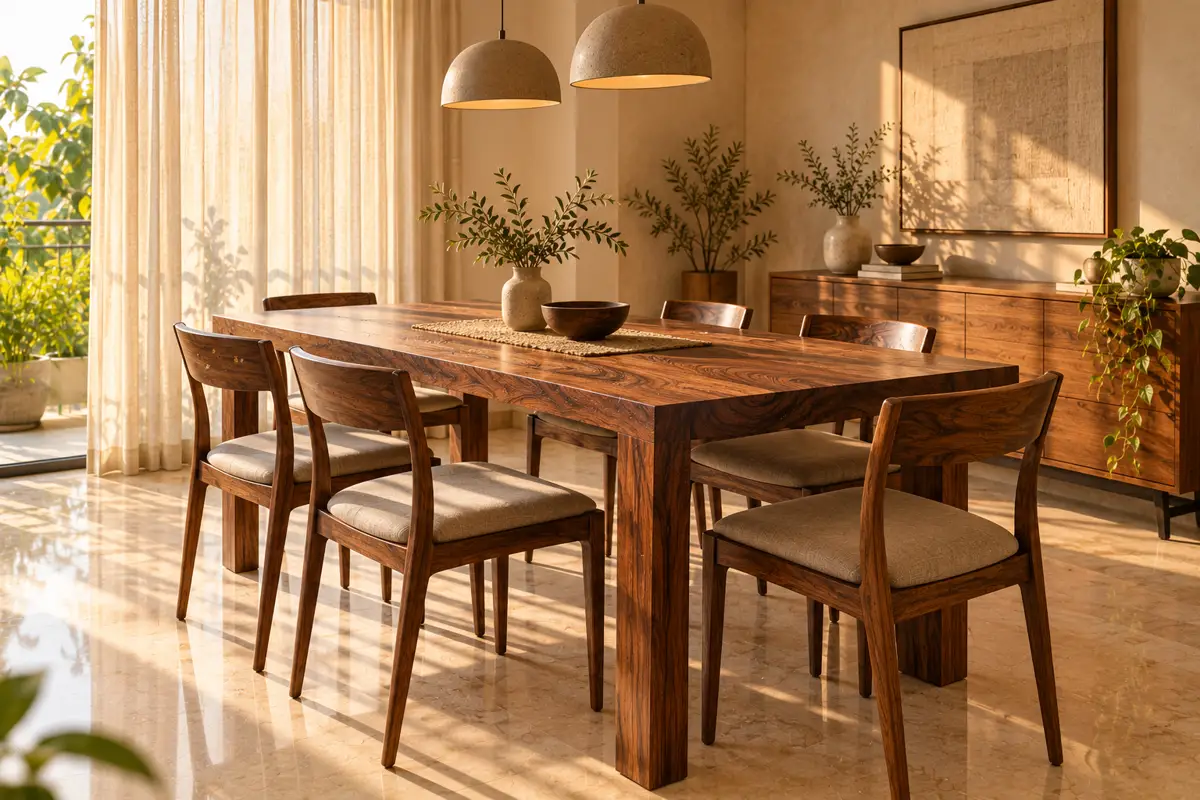
Strengths: high strength and hardness, excellent screw and joint holding, a rich look that needs no stain, and good value compared with teak.
Watch for: sheesham is prone to cracking and movement if it is not seasoned properly, so insist on kiln-dried timber (see why kiln drying matters). Its sapwood is pale and less durable, and colour varies from board to board, so expect variation across a set.
Best for: beds, dining tables and chairs, wardrobes, chests, and statement pieces where the grain is part of the design.
Mango wood
Mango wood comes from fruit trees that have stopped bearing and are felled. That makes it widely available and relatively economical.
Strengths: an attractive grain that can include grey, brown and sometimes spalted patterns, ease of working, and a lower price than teak or sheesham.
Watch for: mango is softer, so it dents more easily, and it is less durable. It is susceptible to fungal staining and insect attack unless it is properly dried and treated. It needs a good protective finish, and it is not a natural choice for outdoor use.
Best for: side tables, consoles, shelves, cabinets and decorative pieces, and budget-conscious projects where heavy daily wear is not expected.
Oak
Oak is hard, pale and has a pronounced open grain. Quarter-sawn oak shows distinctive silvery "ray fleck" figure. In India, oak is mostly imported (European and American white and red oak), which affects price and availability.
Strengths: hardness, strength, a light Scandinavian or contemporary look, and good stability once seasoned. White oak in particular is relatively resistant to moisture, which is why it has long been used for barrels and boats.
Watch for: cost and lead time for imported stock, and the tendency of oak's open pores to show dirt in light finishes unless they are well sealed.
Best for: contemporary dining tables, chairs, beds and shelving, and interiors with a light, minimal palette.
Other woods you will hear about
- Walnut (usually imported American black walnut): rich chocolate colour, superb for premium furniture and veneers, and expensive.
- Acacia: hard and affordable, often used in export furniture.
- Rubberwood: a light plantation timber common in ready-made furniture. It must be treated, as it is vulnerable to insects and fungus.
- Engineered alternatives: plywood, MDF and particle board, often veneered. See solid wood vs plywood vs MDF.
Species is only half the answer
Two tables in the same wood can perform very differently. What matters as much as the species:
- Heartwood or sapwood. Durability lives in the heartwood.
- Seasoning. Timber must be dried close to the moisture level of your home, or it will crack and warp (kiln drying explained).
- Treatment. Less durable species need preservative treatment against borers and termites (protecting furniture from termites).
- Design and joinery. Wide tops need to move; joints need to suit the load (a guide to wood joinery).
- Finish. A good finish slows moisture exchange and protects the surface (finishes for solid wood).
Which wood for which piece
| Piece | Good choices | Why |
|---|---|---|
| Dining table | Teak, sheesham, oak | Hard, stable top that takes a durable finish |
| Dining chairs | Sheesham, teak, oak | Strength at the joints |
| Bed | Sheesham, teak | Load-bearing frame, long life |
| Wardrobe carcass | Plywood with veneer | Large panels need stability; see wardrobe design |
| Side tables, consoles | Mango, sheesham, oak | Lighter duty, look matters most |
| Outdoor and semi-outdoor | Teak | Natural resistance to weather and insects |
How we work at SAAG
SAAG, Savistar's furniture brand, designs and builds bespoke solid-wood furniture in-house, with responsibly sourced, kiln-dried timber and documented quality control. Choosing the species is part of every commission, matched to the piece, the room and the budget. See our furniture portfolio or tell us what you would like made.
Frequently asked questions
Which is better for furniture, teak or sheesham?
Teak is more stable and more durable, especially against termites and moisture, and is the better choice for pieces exposed to humidity or used outdoors. Sheesham is denser, very strong and has a bolder, darker grain at a lower price, making it excellent for indoor beds, tables and storage when it has been properly seasoned.
Is mango wood good for furniture?
Yes, for the right pieces. Mango wood is attractive, easy to work and economical, but it is softer than teak or sheesham and more prone to insect attack and staining unless treated and well finished. It suits side tables, cabinets and decorative pieces better than heavy-use dining chairs.
Which wood is best for a dining table in India?
Teak and sheesham are the most reliable choices for a dining table because they are hard, stable when seasoned, and take a durable finish. Oak also works well. Whatever the species, the top must be kiln-dried and attached so it can move with the seasons.
How can I tell if furniture is real teak?
Real teak heartwood is golden to medium brown, feels slightly oily, has a straight to slightly wavy grain and a faint leathery smell when freshly cut. Pale streaks often indicate sapwood, which is far less durable. Ask the maker whether the piece is heartwood, where the timber came from, and whether it is solid wood or veneer on a board.
Which wood is the most termite resistant?
Of these four, teak heartwood has the best natural resistance to termites and decay. Sheesham heartwood is moderately resistant. Mango and the sapwood of any species are vulnerable and need preservative treatment. No wood is completely termite proof, so placement and treatment still matter.
About the authors
Sachi and Haripriya founded Savistar in Gandhinagar in 2020 after training at CEPT University, Ahmedabad. They run the interior design studio and its furniture brand SAAG, and have delivered 500+ interior and furniture projects across India and abroad. More about the studio
More from the journal
All articles →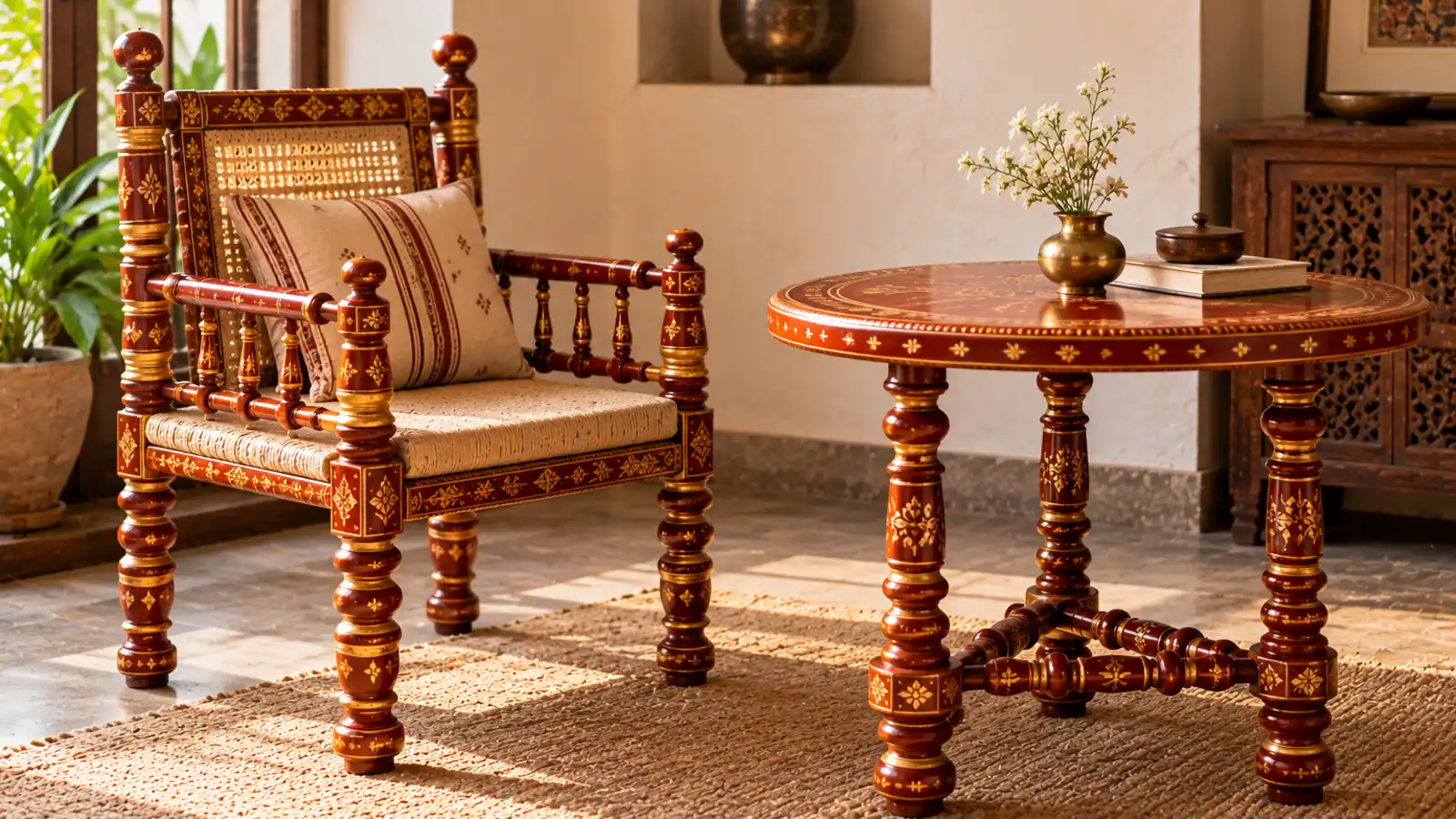 Custom furnitureSankheda Furniture: Gujarat’s Lacquered Teak and the Craft of Wood Turning4 min read
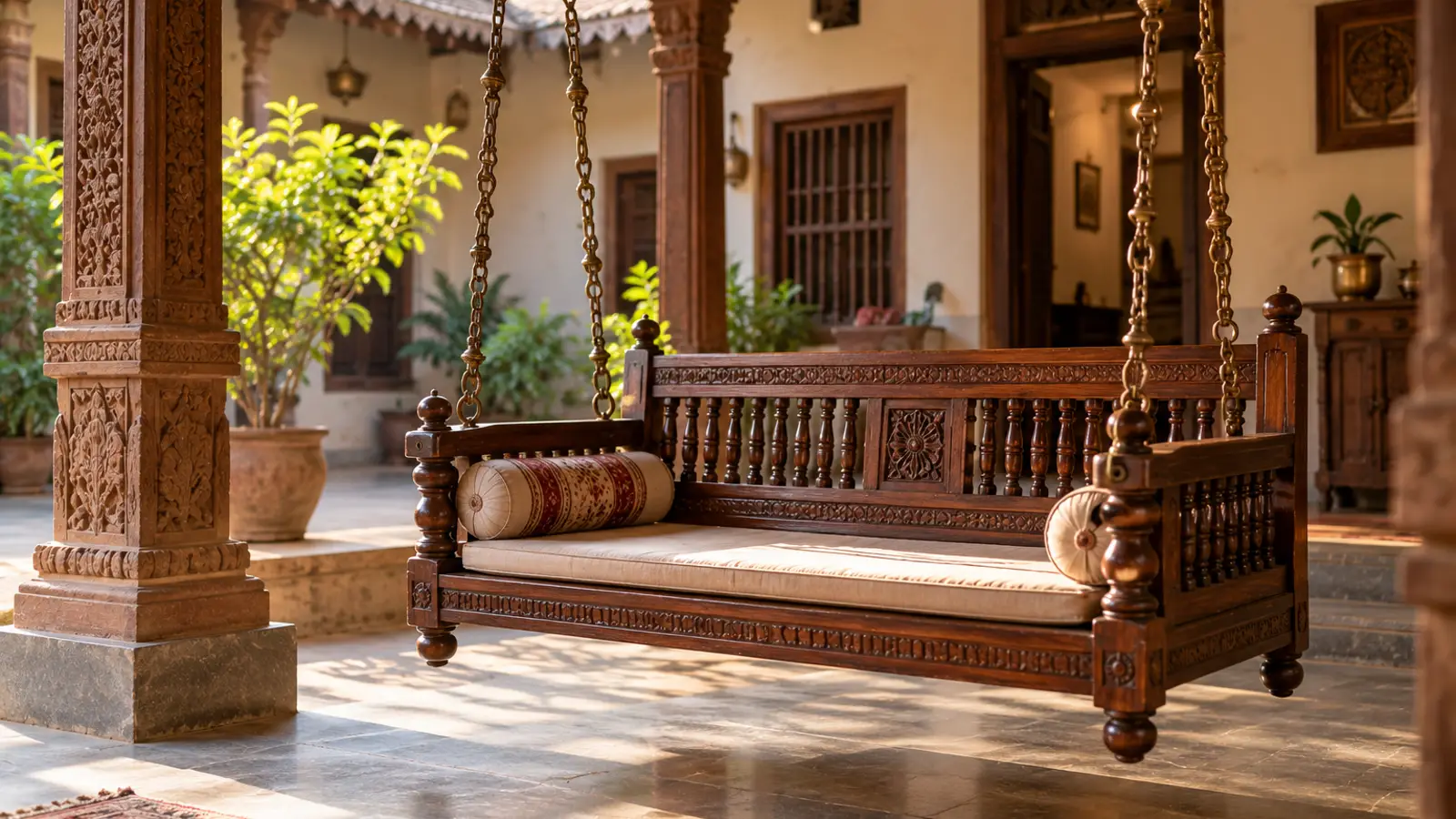 Custom furnitureVernacular Furniture of Gujarat: Chests, Cradles, Swings and Charpoys, and What They Teach Modern Design5 min read
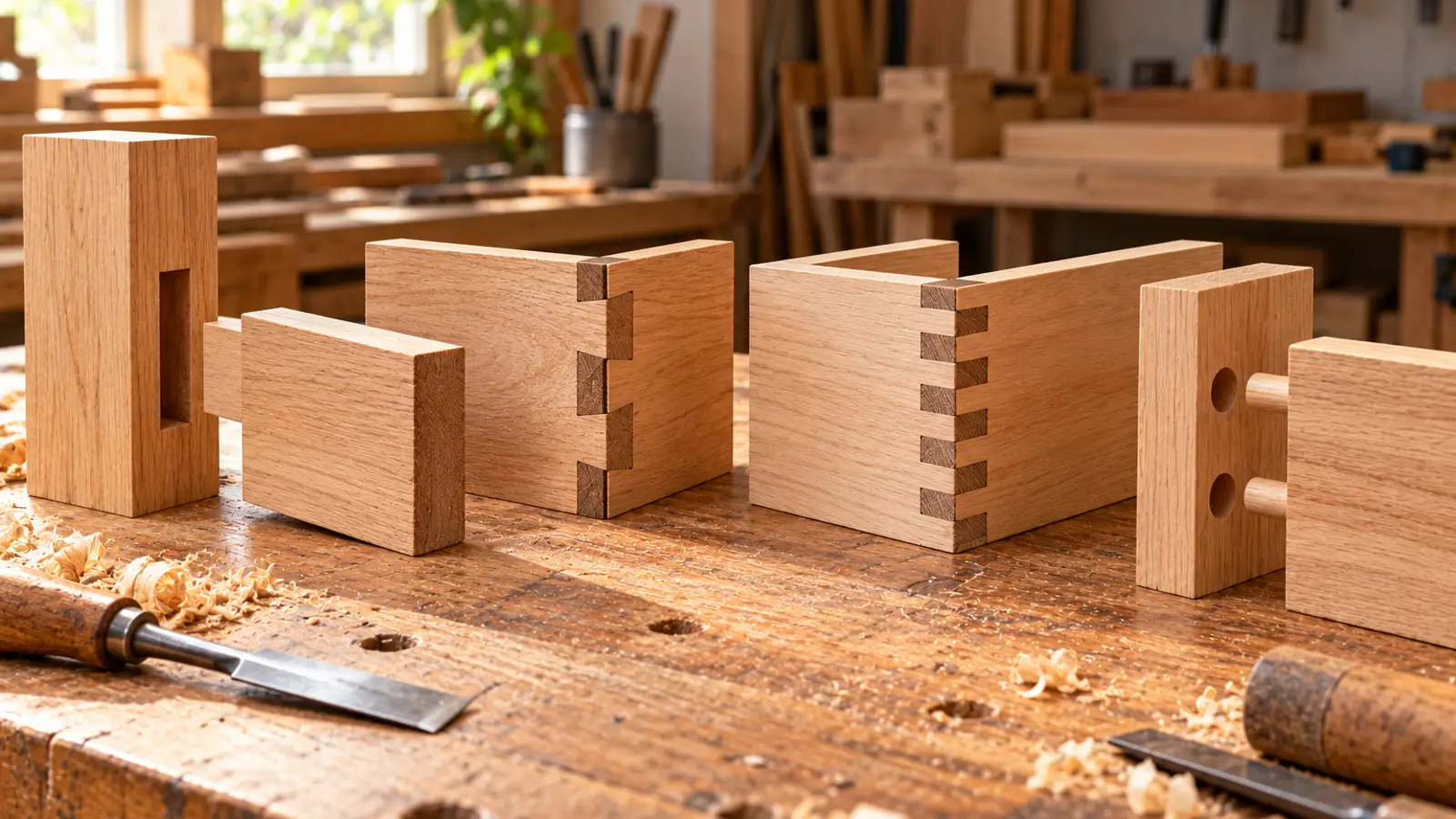 Custom furnitureA Guide to Wood Joinery: Mortise and Tenon, Dovetail, Dowel and Knock-Down Joints5 min read