Custom furniture 7 min read
Finishes for Solid Wood Furniture: Oil, Wax, French Polish, Melamine, Lacquer and PU Compared
How oil, wax, shellac (French polish), melamine, nitrocellulose lacquer and polyurethane finishes look, protect and age on solid wood furniture, and which finish suits dining tables, beds and heirloom pieces.


In short
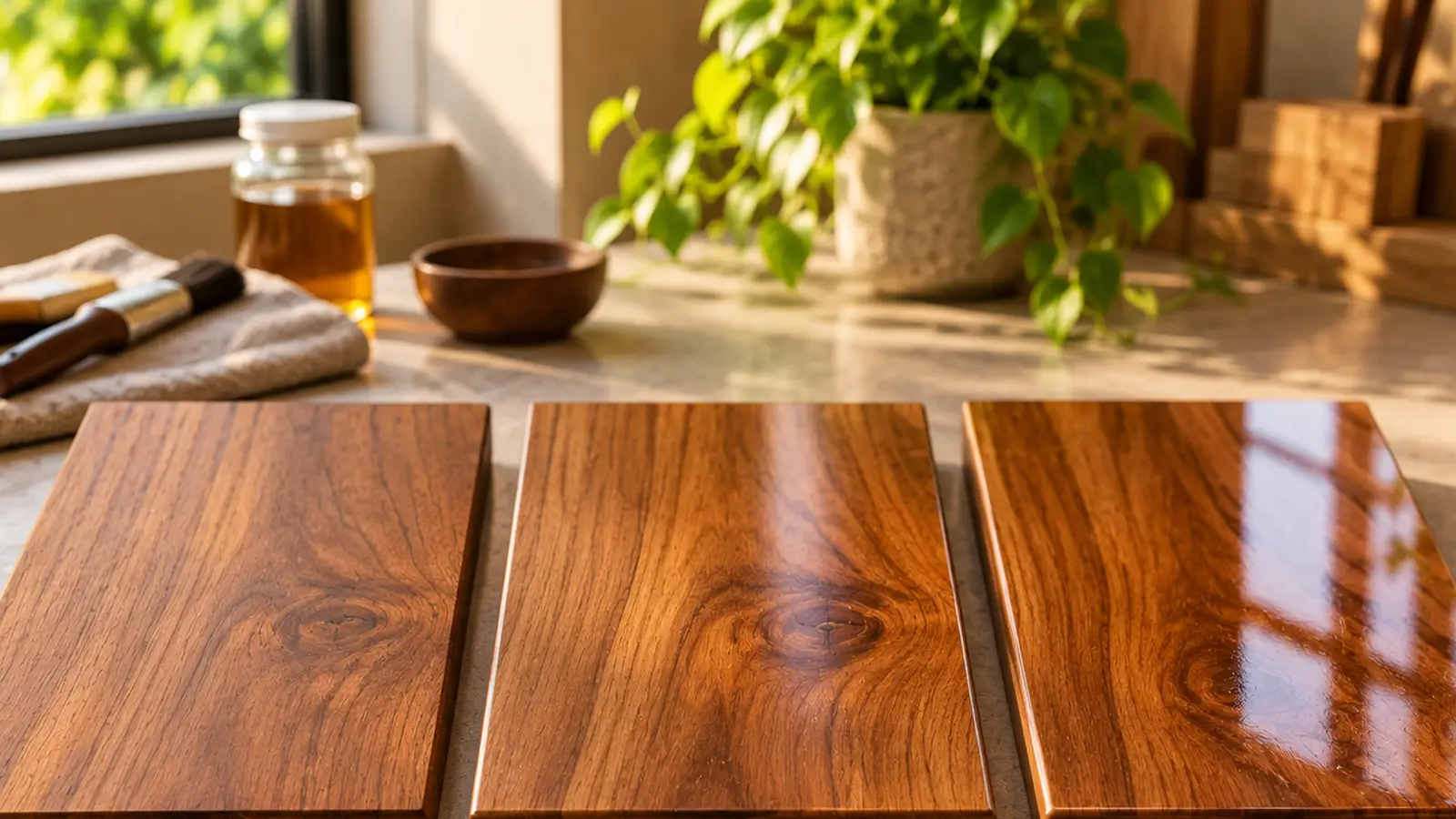
A finish protects wood from moisture, stains and wear, and decides how a piece looks and feels. Penetrating oils and hard-wax oils give a natural, matte, easily repaired surface with moderate protection. Shellac (French polish) gives a deep traditional gloss but is sensitive to water, heat and alcohol. Melamine polish is an economical, harder film common in India. Nitrocellulose lacquer dries fast and repairs well. Polyurethane (PU) forms the toughest, most water and heat resistant film, at the cost of a more "coated" feel and harder repairs. Dining tables usually want PU or a durable hard-wax oil; heirloom and display pieces suit oil or French polish.
- Oils soak into the wood and look natural; they need occasional re-oiling but are easy to repair locally.
- Film finishes (shellac, melamine, lacquer, PU) sit on top and protect better, but scratches and wear show in the film.
- PU gives the best resistance to water rings, heat and household chemicals, which is why it suits dining and work surfaces.
- French polish is beautiful and traditional but marks with water, heat and alcohol.
- Finish every surface, including undersides and insides, so the wood exchanges moisture evenly.
What a finish does
Bare wood absorbs moisture, stains and dirt, and is easily marked. A finish:
- Slows moisture exchange, so the wood moves less with the seasons (it never stops it entirely; see kiln-dried wood).
- Protects the surface from spills, heat and wear.
- Changes the look: deepens colour, adds sheen, or keeps the wood looking raw.
Finishes fall into two families. Penetrating finishes soak into the wood. Film finishes build a layer on top.
The finishes compared
| Finish | Type | Look | Water & heat resistance | Repairability | Typical use |
|---|---|---|---|---|---|
| Penetrating oil (linseed, tung) | Penetrating | Natural, matte | Low to moderate | Easy | Display pieces, chairs, accent furniture |
| Hard-wax oil | Penetrating + thin wax | Natural, satin | Moderate | Easy | Tables, beds, floors |
| Wax | Surface | Soft sheen | Low | Easy | Over other finishes, antiques |
| Shellac / French polish | Film | Deep gloss | Low | Good (blends in) | Antiques, heirloom and display pieces |
| Melamine | Film | Satin to gloss | Moderate | Fair | Economical furniture and veneer |
| Nitrocellulose (NC) lacquer | Film | Satin to gloss | Moderate | Good | Cabinetry, quick production |
| Polyurethane (PU) | Film | Matte to high gloss | High | Harder | Dining tables, desks, kitchens, high-use pieces |
Oils and hard-wax oils
Oils soak into the fibres and harden, enhancing the grain while leaving the surface feeling like wood. Modern hard-wax oils add a thin protective wax and are considerably tougher than traditional oils.
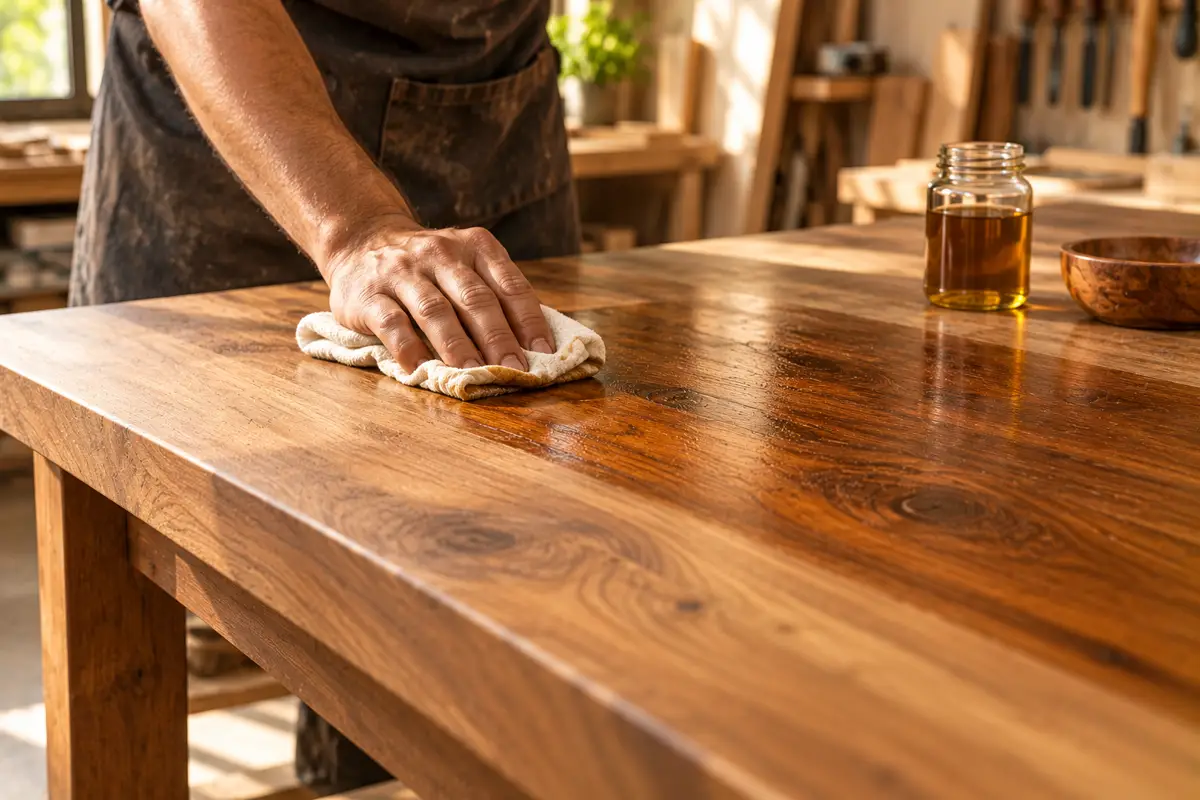
Pros: natural look and feel, no peeling, and scratches can be repaired by cleaning and re-oiling just that area.
Cons: less protection against water rings and hot dishes; needs periodic maintenance.
Shellac and French polish
Shellac is a natural resin dissolved in alcohol. French polishing applies many very thin coats with a cloth pad to build a deep, glowing gloss. It is the classic finish on antique Indian and colonial furniture.
Pros: unmatched depth and warmth, and it can be repaired and revived by a skilled polisher.
Cons: water, heat and alcohol leave white rings and marks. Best for display pieces and furniture that is not used for eating or drinking.
Melamine
In Indian furniture making, "melamine polish" is a widely used, economical film finish. It is harder than shellac and gives a smooth satin or glossy look.
Pros: cost and appearance.
Cons: moderate durability; it is more prone to white marks from water and heat than PU, and wears through faster on edges.
Nitrocellulose lacquer
NC lacquer is sprayed, dries very quickly, and builds a smooth film. Like shellac, new coats partly dissolve old ones, which makes repairs blend in well. It is less resistant to heat, solvents and water than PU. (In painted form it is the basis of what many call a "duco" finish; see laminate vs veneer vs PU vs duco.)
Polyurethane (PU)
PU cures into a hard, flexible film with the best resistance to water, heat, scratches and household chemicals of these finishes. It can be clear or pigmented and ranges from dead-matte to high gloss.
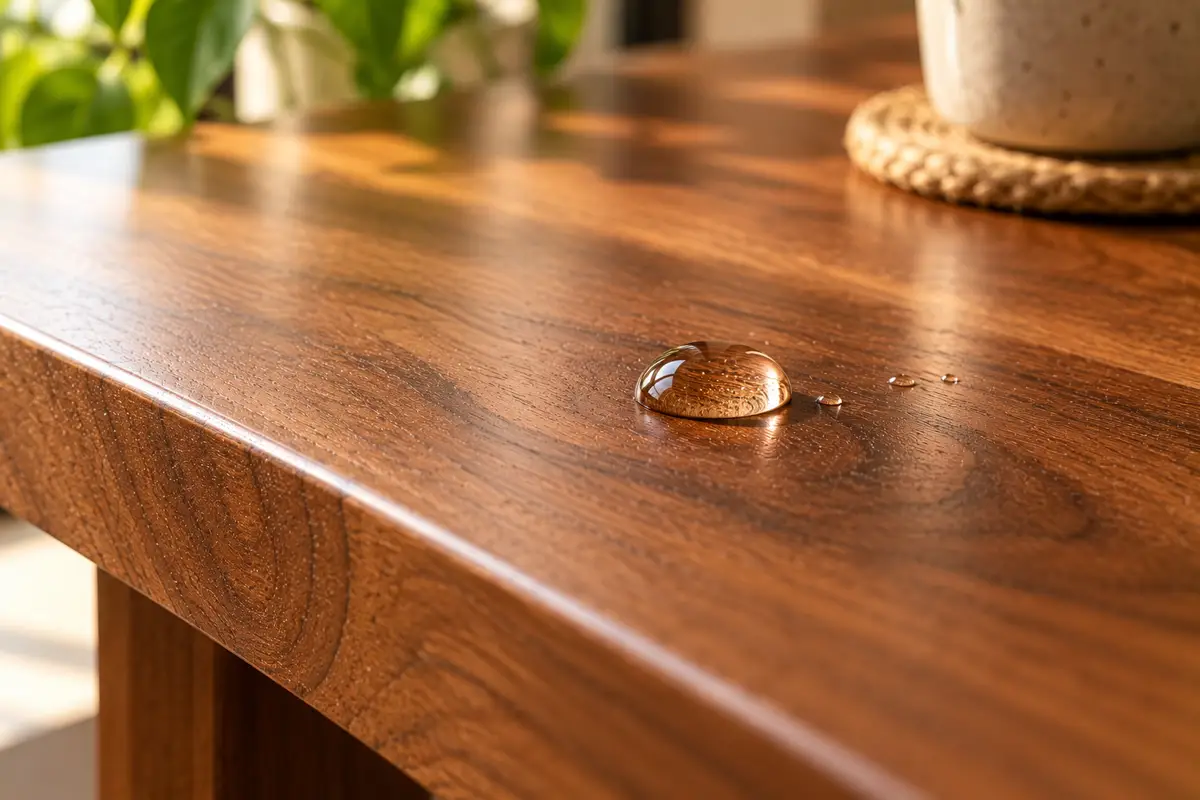
Pros: durability on surfaces used every day; dining tables and work surfaces stay looking new.
Cons: a slightly more "coated" feel than oil; spot repairs are difficult, and a damaged area often means refinishing the whole top.
Choosing a finish by piece
| Piece | Good choices | Why |
|---|---|---|
| Dining table top | PU (matte or satin), or hard-wax oil if you want a natural feel | Daily spills and hot dishes |
| Chairs and benches | Hard-wax oil or PU | Hands and wear on edges |
| Bed frame | PU, melamine or oil | Low wear; look matters most |
| Heirloom display chest | French polish or oil | Depth, tradition, repairability |
| Desks and work surfaces | PU | Abrasion and spills |
Good finishing practice
- Seasoned wood first. No finish saves badly dried timber.
- Surface preparation. Most of a finish's quality comes from sanding and grain filling before the first coat.
- Finish every face. Undersides and insides too, so both faces exchange moisture at the same rate and the piece does not cup.
- Let it cure. Many finishes feel dry in hours but reach full hardness only after days or weeks.
- Maintain it. Wipe spills, use mats under hot dishes, and dust with a soft dry cloth. See caring for wood furniture in the monsoon.
Finishing at SAAG
SAAG builds bespoke solid-wood furniture in-house, and the finish is chosen with each client for how the piece will be used. See our furniture portfolio, or tell us about the piece you have in mind.
Frequently asked questions
Which is better for furniture, PU or melamine polish?
PU (polyurethane) is harder and more resistant to water, heat, scratches and chemicals, so it lasts longer on surfaces that are used daily, such as dining tables. Melamine polish is more economical and looks good, but it is less durable and more likely to show white marks from water or hot dishes.
Is an oil finish good for a dining table?
A hard-wax oil can work well and looks beautifully natural, and small marks can be repaired by re-oiling the area. It needs more care than PU: wipe spills quickly and re-oil periodically. If you want a table you never have to think about, PU is the safer choice.
What is French polish?
French polish is a traditional technique of applying many thin coats of shellac, dissolved in alcohol, with a cloth pad, building a deep, glossy finish. It is admired on antiques and fine furniture but is easily marked by water, heat and alcohol.
Can a wood finish be repaired?
Oil finishes are the easiest: clean and re-oil the area. Shellac and lacquer can be blended in by a skilled polisher because new coats partly dissolve the old ones. PU is the hardest to spot-repair; a damaged area often means sanding back and refinishing the whole surface.
Is a wood finish food safe?
Fully cured finishes are generally considered safe for normal contact with food, but cutting boards and bowls are best finished with food-grade oils. Always let a finish cure fully, which can take days to weeks, before heavy use.
About the authors
Sachi and Haripriya founded Savistar in Gandhinagar in 2020 after training at CEPT University, Ahmedabad. They run the interior design studio and its furniture brand SAAG, and have delivered 500+ interior and furniture projects across India and abroad. More about the studio
More from the journal
All articles →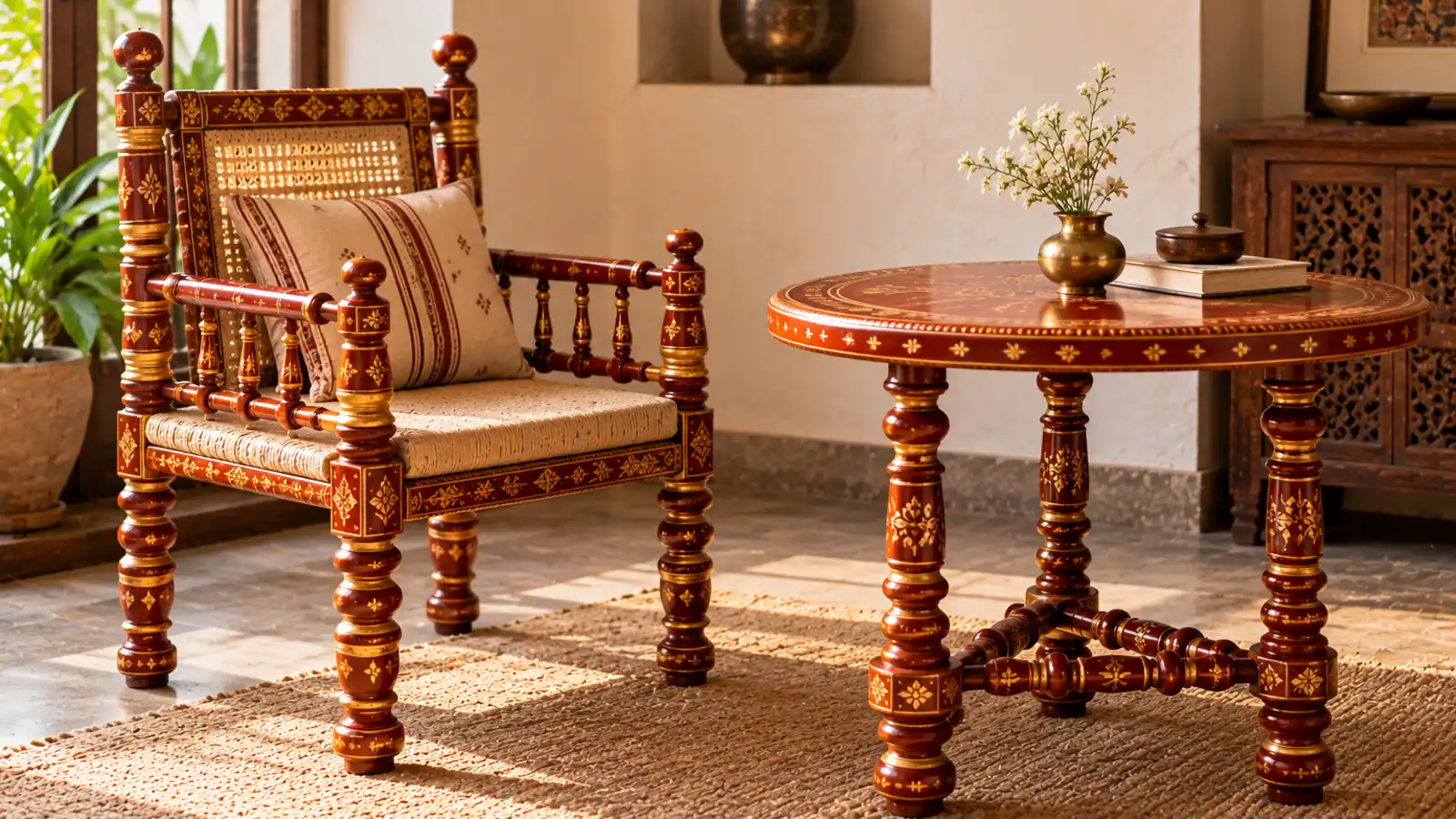 Custom furnitureSankheda Furniture: Gujarat’s Lacquered Teak and the Craft of Wood Turning4 min read
 Custom furnitureVernacular Furniture of Gujarat: Chests, Cradles, Swings and Charpoys, and What They Teach Modern Design5 min read
 Custom furnitureA Guide to Wood Joinery: Mortise and Tenon, Dovetail, Dowel and Knock-Down Joints5 min read