Custom furniture 4 min read
Sankheda Furniture: Gujarat’s Lacquered Teak and the Craft of Wood Turning
What Sankheda furniture is, how its lacquered teak pieces are turned, painted and polished, its GI status, how to recognise genuine work, and how to use it in a contemporary home.


In short
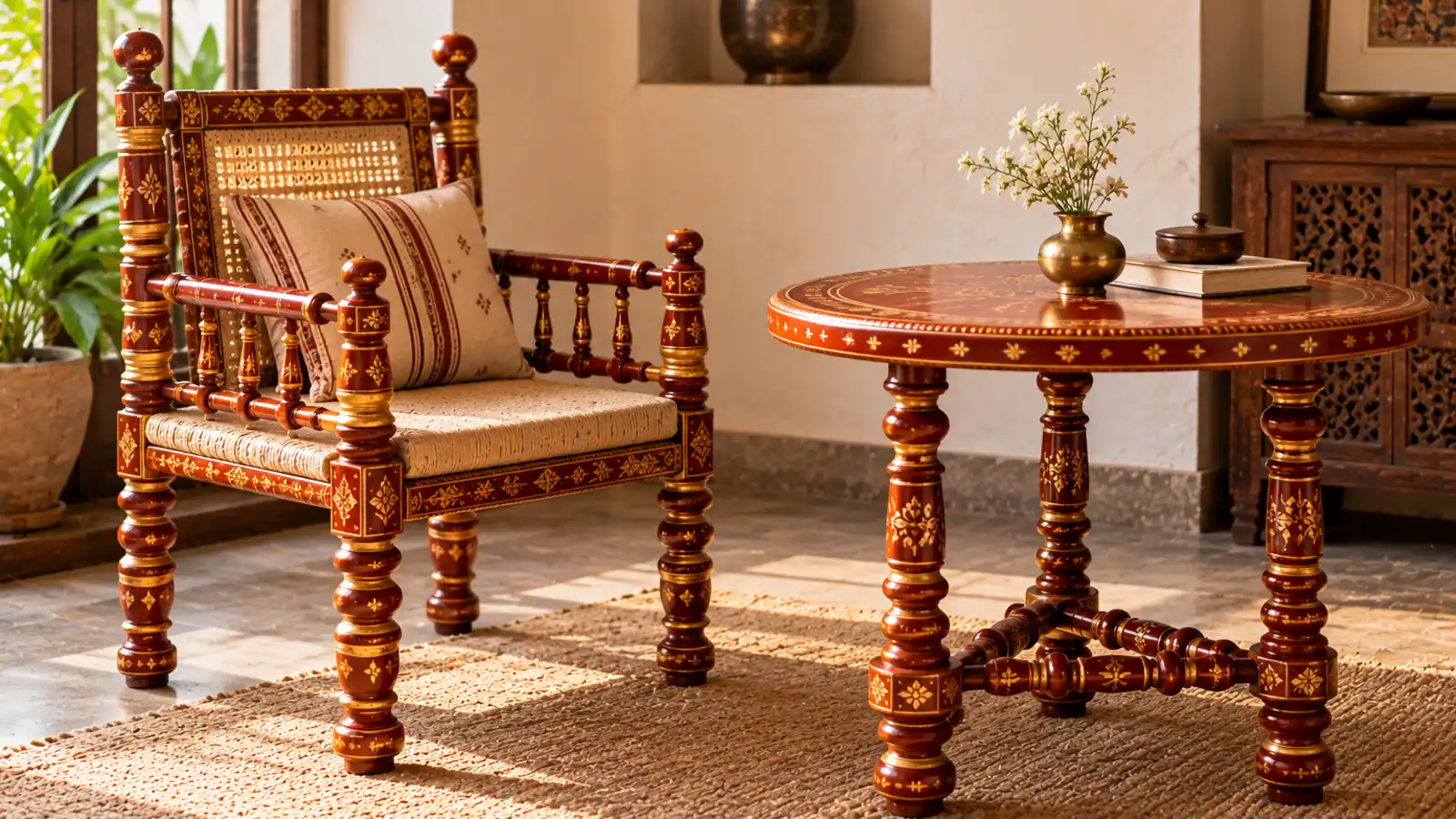
Sankheda furniture is the colourful lacquered teak furniture made in and around Sankheda, a town about 45 km from Vadodara in Gujarat. Its parts are turned on a lathe, decorated with painted and tin-foil patterns under transparent lacquer, and polished to a deep gloss, traditionally in maroon and gold. The craft is associated with the kharadi woodturning community, and Sankheda Furniture is registered as a Geographical Indication. In a modern home, one or two Sankheda pieces against a calm backdrop make a strong, joyful statement.
- Sankheda furniture is lacquered, turned teak from the Sankheda area near Vadodara in Gujarat.
- Its patterns are painted and laid in tin foil under transparent lacquer, then polished; maroon and gold are the classic colours.
- The craft is associated with Gujarat’s kharadi woodturners and is protected as a Geographical Indication.
- Genuine pieces are built from turned solid teak with hand-applied decoration.
- Used sparingly, Sankheda pieces bring colour and craft into contemporary interiors.
Colour, gloss and turned wood
Sankheda furniture is instantly recognisable: chairs, tables, swings and cradles in glowing lacquered teak, traditionally maroon and gold, with fine painted patterns that catch the light. It is made in and around Sankheda, a town about 45 km from Vadodara in eastern Gujarat.
A craft of woodturners
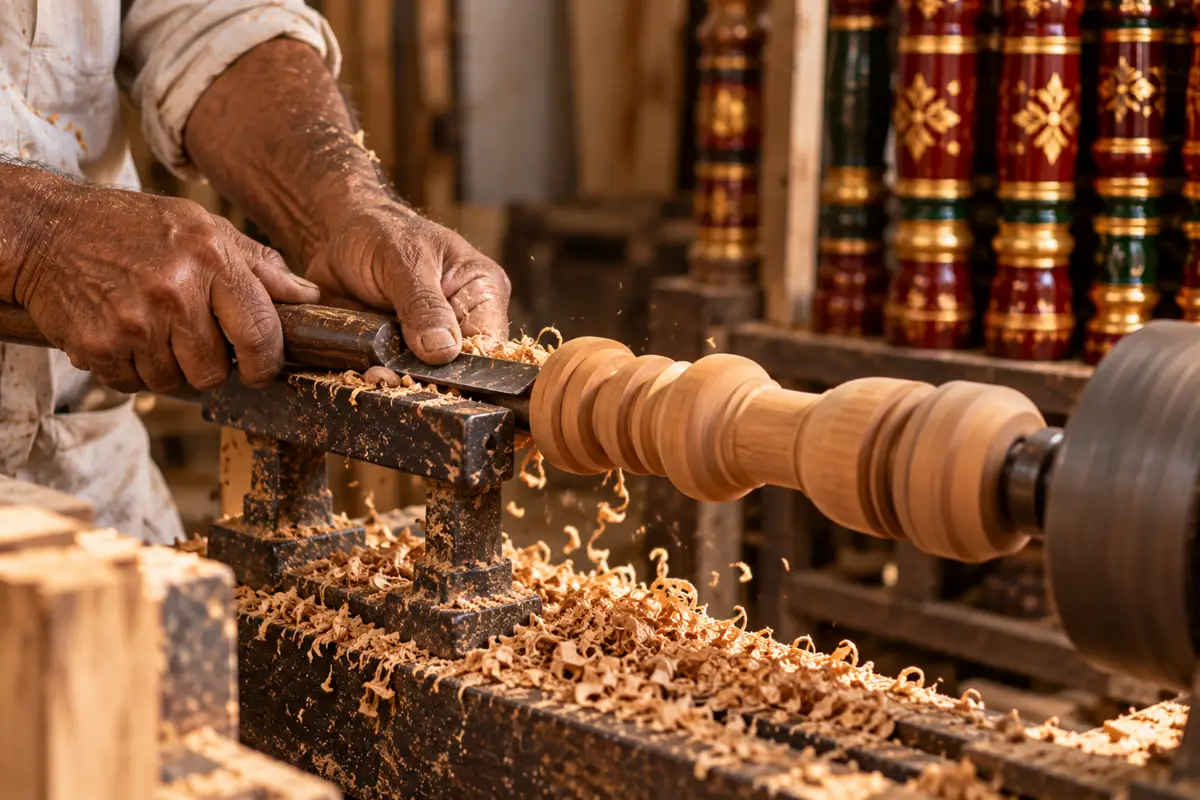
The craft is associated with Gujarat's kharadi, the woodturners, whose wider tradition of turned and lacquered furniture also includes cradles and charpoy legs documented by CEPT University's research (see vernacular furniture of Gujarat). Historical accounts trace Sankheda work back roughly two centuries, with teak traditionally brought from south Gujarat and finished pieces once traded through ports such as Surat and Khambhat.
How it is made
- Turning. Teak parts are shaped on a lathe into legs, rails and spindles.
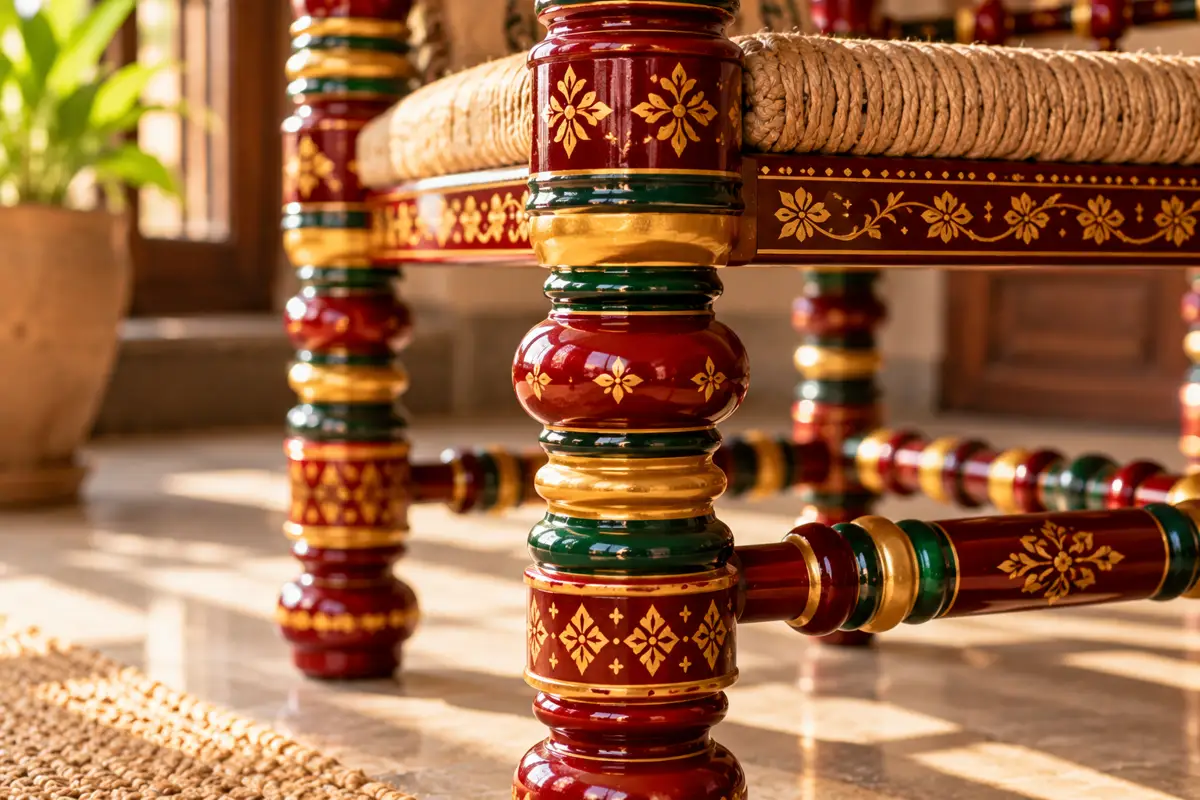
- Decoration. Patterns are painted, and tin foil is laid to create metallic designs.
- Lacquering. A transparent lacquer coat seals the decoration.
- Polishing. Surfaces are polished to a deep gloss, traditionally with a smooth stone such as agate.
- Assembly. Turned and lacquered parts are assembled into finished furniture.
Colours were originally made from natural materials; today a much wider range of pigments is used, so you will see black, blue, green, ivory, copper and silver alongside the classic maroon and gold.
Geographical Indication
Sankheda Furniture is registered as a Geographical Indication under India's Geographical Indications of Goods (Registration and Protection) Act, 1999. A GI recognises that a product's qualities and reputation come from its place of origin and the community that makes it.
Recognising genuine work
- Solid turned teak, not board with a printed or sticker finish.
- Hand-applied decoration with slight natural variation.
- Deep, even gloss over the pattern, not a thin coat.
- Solid construction at the joints.
- Buy from artisans, cooperatives or reputable sellers who can tell you where and by whom a piece was made.
Using Sankheda in a contemporary home
- One or two pieces, not a full set: a pair of chairs, a swing, a side table.
- A calm backdrop: limewash walls, natural stone, plain linen. See traditional Gujarati materials in modern homes.
- On a veranda or in a reading corner, where a swing or low chair feels natural.
- Out of strong direct sun, which fades lacquer over time.
Care
Dust with a soft dry cloth, wipe spills quickly, avoid solvents and abrasive cleaners, and keep pieces away from damp walls. See caring for wood furniture in humid months.
About us
Savistar's founders trained at CEPT University, Ahmedabad, and design interiors and bespoke furniture from Gandhinagar. We enjoy bringing Gujarat's crafts into contemporary interiors alongside SAAG furniture. See our furniture portfolio, or talk to us about your space.
Frequently asked questions
What is Sankheda furniture made of?
Traditionally teak. The parts are turned on a lathe, decorated with painted and tin-foil patterns under a transparent lacquer, and polished to a glossy finish before being assembled into chairs, tables, swings, cradles and other pieces.
Where is Sankheda?
Sankheda is a town in eastern Gujarat, about 45 kilometres from Vadodara.
Does Sankheda furniture have a GI tag?
Yes. Sankheda Furniture is registered as a Geographical Indication under India’s Geographical Indications of Goods (Registration and Protection) Act, 1999, which recognises it as a product tied to its place of origin.
How do I care for Sankheda furniture?
Dust with a soft dry cloth, keep it out of strong direct sunlight and away from damp walls, wipe spills quickly, and avoid harsh cleaners or solvents that can damage the lacquer. Lacquered surfaces can be restored by skilled craftspeople if they wear.
About the authors
Sachi and Haripriya founded Savistar in Gandhinagar in 2020 after training at CEPT University, Ahmedabad. They run the interior design studio and its furniture brand SAAG, and have delivered 500+ interior and furniture projects across India and abroad. More about the studio
More from the journal
All articles →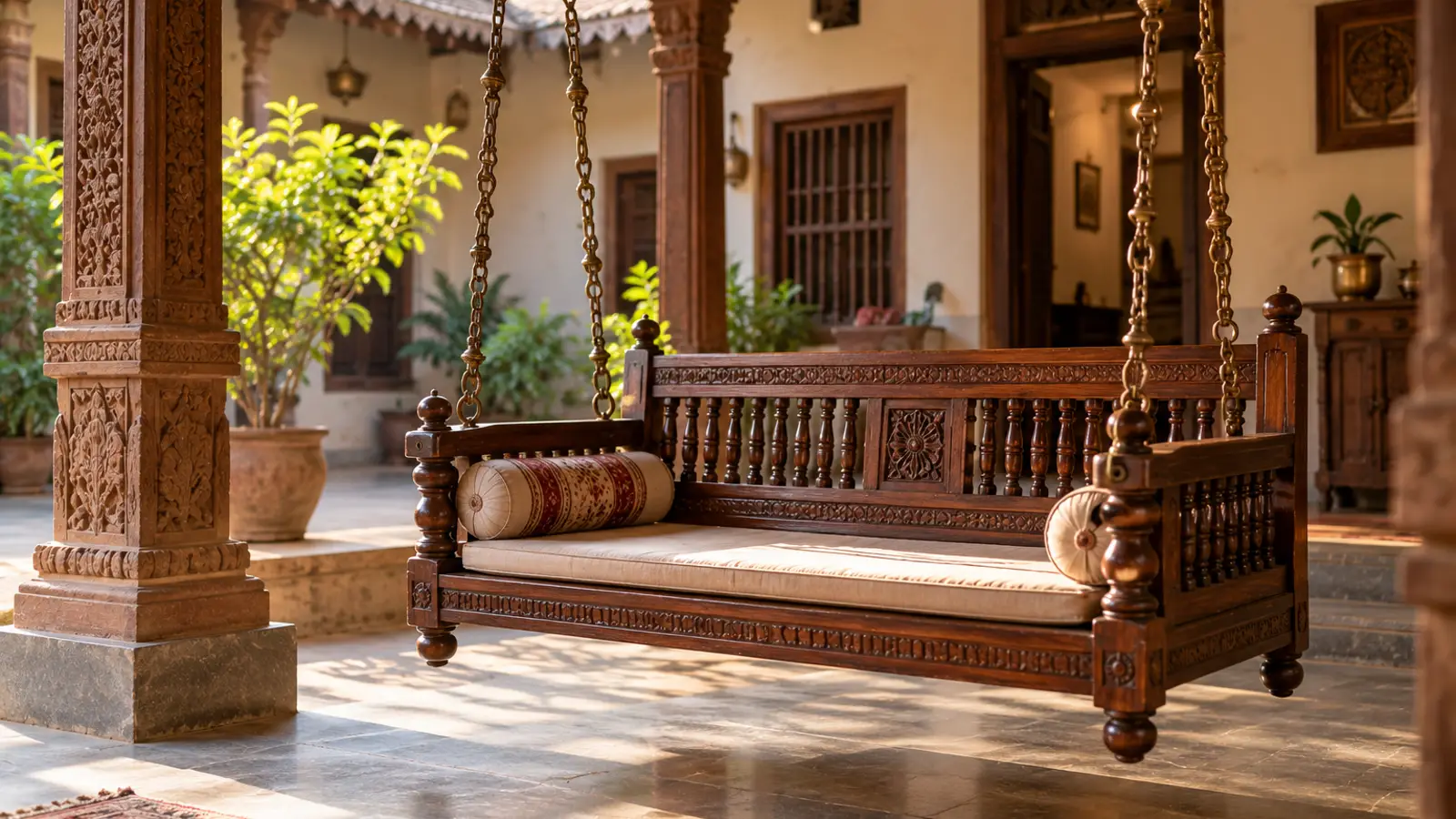 Custom furnitureVernacular Furniture of Gujarat: Chests, Cradles, Swings and Charpoys, and What They Teach Modern Design5 min read
 Custom furnitureA Guide to Wood Joinery: Mortise and Tenon, Dovetail, Dowel and Knock-Down Joints5 min read
 Custom furnitureShipping Furniture From India Abroad: Packing, ISPM 15, Customs and What Buyers Should Know6 min read