Custom furniture 4 min read
Caring for Wooden Furniture in the Monsoon and Humid Months
Why wooden furniture swells, sticks, grows mould and loses its shine in the monsoon, and simple ways to protect it: placement, ventilation, dehumidifying, cleaning, finish care, and what to do (and not do) when drawers stick.


In short
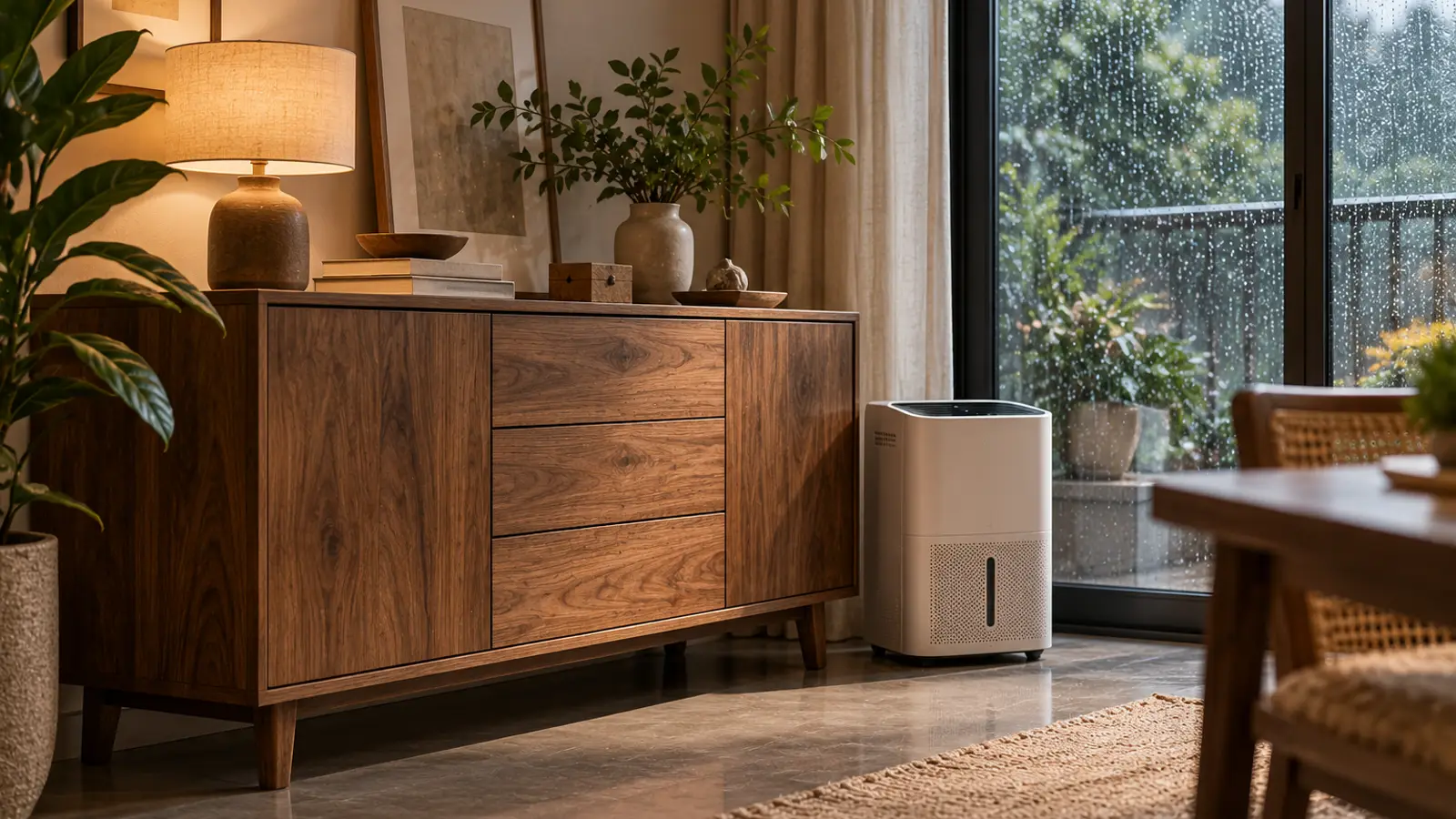
In the monsoon, wood takes up moisture from humid air and swells slightly, so drawers and doors stick, and damp corners invite mould and white bloom on polished surfaces. You cannot stop wood responding to the weather, but you can limit it: keep furniture a little away from walls and off damp floors, keep air moving, use a dehumidifier or AC in very humid rooms, wipe spills and condensation quickly, avoid plastic covers that trap moisture, and keep the finish in good condition. Do not plane or sand a sticking drawer in the rains; it will rattle once the air dries.
- Swelling in the monsoon is normal for wood; well-seasoned timber and good design keep it small.
- Air circulation and lower humidity prevent most problems; damp, still corners cause mould.
- Do not trim sticking drawers and doors in the wet season; they shrink back when it is drier.
- Wipe spills and condensation promptly and keep finishes maintained.
- Check the backs of wardrobes on external walls for damp and mould after heavy rain.
What humidity does to wood
Wood constantly exchanges moisture with the air. In humid months it takes some in and swells slightly across its width; in dry months, or in air-conditioned rooms, it gives moisture back and shrinks. This is normal, and furniture made from properly kiln-dried timber and designed to move stays well within comfortable limits.
Problems appear when humidity is very high for weeks, air is still, and moisture collects: sticking drawers, swollen doors, mould on backs and undersides, and white cloudy "bloom" on polished surfaces.
Placement
- Keep a gap from walls, especially external walls and walls shared with bathrooms, which can be damp.
- Keep furniture off wet floors. Pieces on legs or a raised plinth dry out after mopping; solid bases sitting on the floor stay damp.
- Away from open windows where rain can blow in.
Air and humidity
- Keep air moving. Ceiling fans and open doors between rooms help.
- Use a dehumidifier or AC in very humid rooms, particularly in coastal cities. Avoid swinging between very wet and very dry: gradual changes are kinder to wood.
- Ventilate wardrobes. Open them regularly in the rains, and use silica gel or other moisture absorbers inside. See our wardrobe design guide on ventilation.

Cleaning and the finish
- Dust with a soft, dry or barely damp cloth. Avoid soaking wood with water.
- Wipe spills and condensation immediately, including rings under glasses and plant pots.
- Keep the finish in good condition. A worn finish lets moisture in faster. Oil finishes can be refreshed; polishes may need professional attention. See finishes for solid wood furniture.
- No plastic covers. They trap moisture. Use breathable cotton if you must cover a piece.
Sticking drawers and doors
- Rub a little wax or a plain candle on drawer runners and the rubbing edges.
- Do not plane or sand sticking parts during the monsoon; once the air dries they will shrink and leave gaps.
- If a door rubs, its hinges may need adjusting rather than the wood trimming.
Mould and bloom
- Mould: dry the piece, wipe gently with a mild cleaner, dry again, improve ventilation, and look for a damp source.
- White bloom on polish: moisture trapped in or under the finish. Mild cases can be buffed out; persistent bloom needs a polisher.
After the monsoon
- Check backs and undersides of wardrobes and beds for damp, mould and insects (see protecting furniture from termites and borers).
- Let swollen pieces settle back before adjusting anything.
- Refresh oil finishes if they look dry.
Furniture made for Indian seasons
SAAG builds solid-wood furniture from kiln-dried timber and designs tops, panels and drawers to move with the seasons. See our furniture portfolio, or ask us about a piece.
Frequently asked questions
Why do wooden drawers stick in the monsoon?
Wood absorbs moisture from humid air and swells slightly across the grain. Drawer sides and fronts grow just enough to rub. When the air dries after the rains, they shrink back. Rubbing a little wax or a candle along the runners helps in the meantime.
How do I remove mould from wooden furniture?
Move the piece away from the wall to let it dry, wipe the mould with a cloth dampened with a mild solution (a little diluted vinegar or a gentle cleaner), dry it thoroughly, and improve ventilation. If mould keeps returning, look for a damp wall or leak behind it. Test any cleaner on a hidden spot first.
Should I cover wooden furniture with plastic in the monsoon?
No. Plastic traps moisture against the wood and encourages mould. If a piece needs covering, use a breathable cotton cloth.
Is it normal for a solid wood table top to develop a small gap or crack?
Small seasonal changes in width are normal. A crack that opens and closes with the seasons usually means the top is restrained and cannot move freely, or the timber was not seasoned enough. A furniture maker can check how the top is fixed.
About the authors
Sachi and Haripriya founded Savistar in Gandhinagar in 2020 after training at CEPT University, Ahmedabad. They run the interior design studio and its furniture brand SAAG, and have delivered 500+ interior and furniture projects across India and abroad. More about the studio
More from the journal
All articles →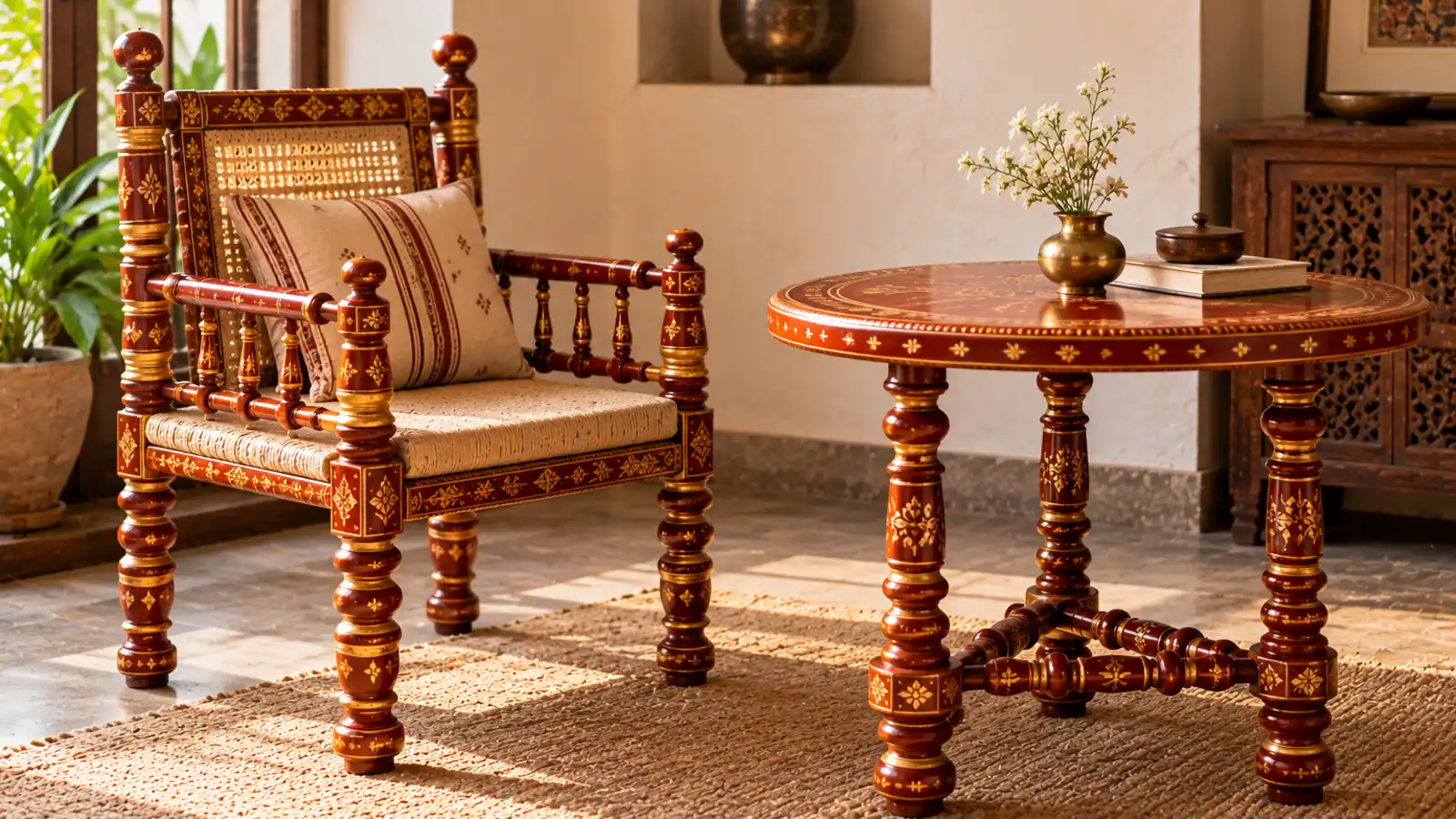 Custom furnitureSankheda Furniture: Gujarat’s Lacquered Teak and the Craft of Wood Turning4 min read
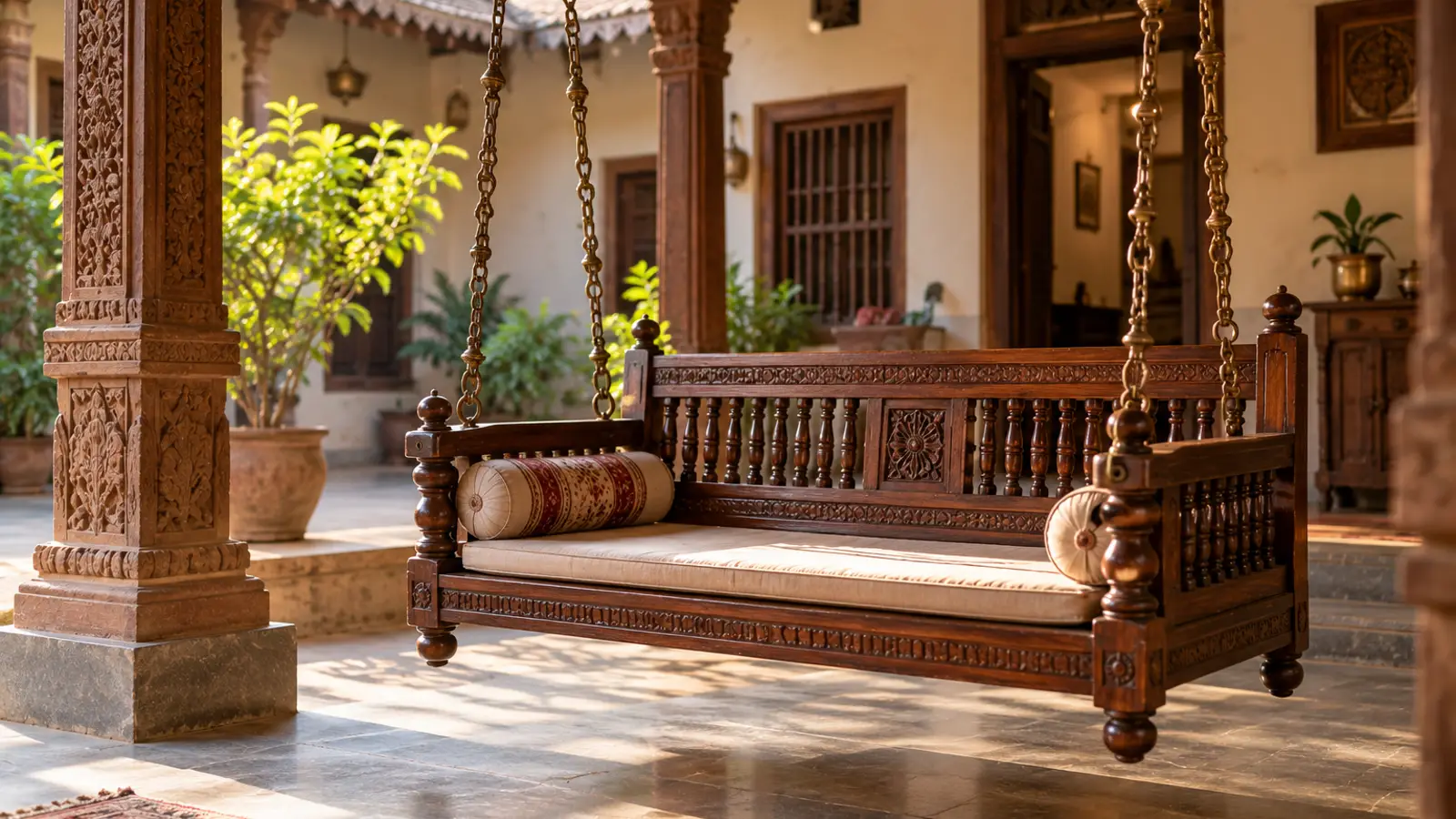 Custom furnitureVernacular Furniture of Gujarat: Chests, Cradles, Swings and Charpoys, and What They Teach Modern Design5 min read
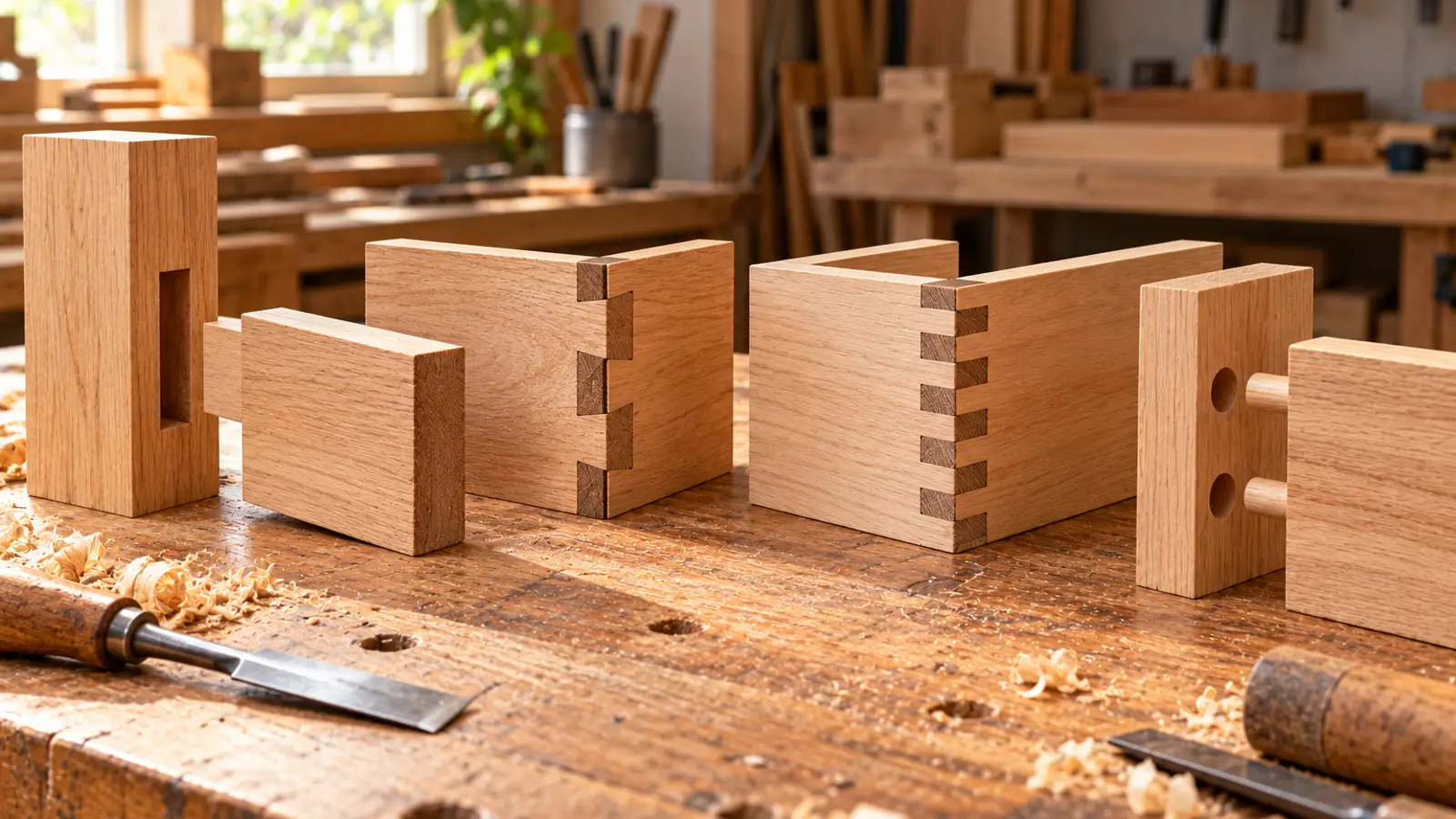 Custom furnitureA Guide to Wood Joinery: Mortise and Tenon, Dovetail, Dowel and Knock-Down Joints5 min read