Interior design 7 min read
Plywood Grades Explained: MR vs BWR vs BWP (Marine) for Kitchens, Wardrobes and Furniture
What MR, BWR and BWP plywood grades mean under Indian Standards IS 303 and IS 710, how the glue and core differ, which grade to use in kitchens, bathrooms and wardrobes, and how to check what you are buying.


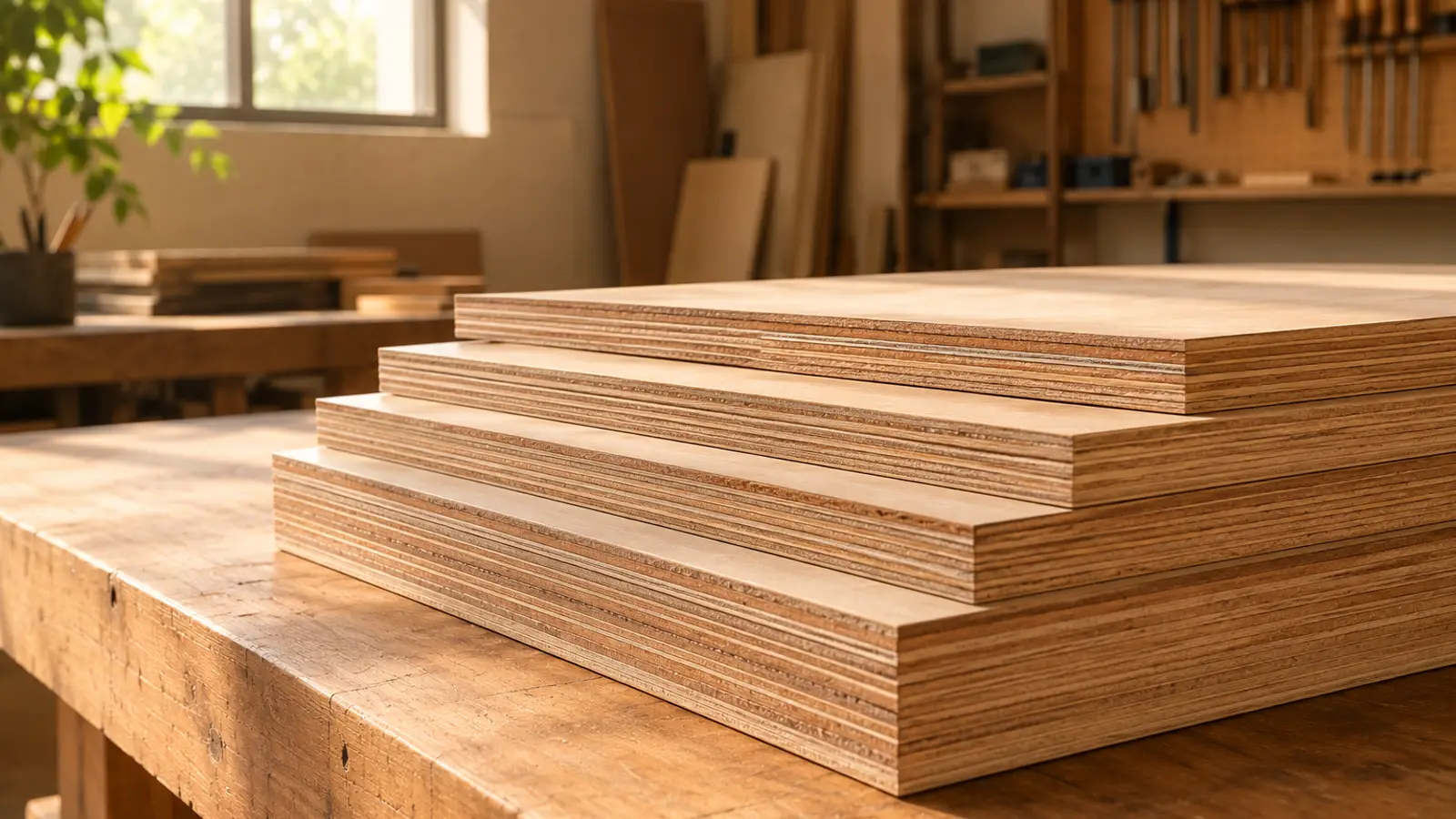
In short
Plywood in India is sold by grade, and the grade tells you mainly how well its glue resists water. MR (moisture resistant) is an interior grade bonded with urea-formaldehyde glue, fine for dry areas such as bedroom wardrobes. BWR (boiling water resistant) uses phenolic glue and suits kitchens and other areas that see occasional water. BWP (boiling water proof), sold as marine plywood under IS 710, uses fully waterproof phenolic glue and a dense, durable core, and is the safest choice for sink units, bathrooms and anywhere constantly damp. Grade, thickness, core species and an ISI mark matter more than brand names.
- MR grade (IS 303) is for dry interior use; its urea-formaldehyde glue weakens with sustained moisture.
- BWR grade uses phenol-formaldehyde glue and handles occasional wetting; BWP / marine (IS 710) is made for prolonged exposure to water.
- Under the sink and in bathrooms, use BWP and seal every edge; in wardrobes and bedrooms, good MR or BWR is usually enough.
- The core species matters: gurjan and other dense hardwoods hold screws and resist water better than light poplar cores.
- Check the ISI mark, grade, thickness and manufacturer details printed on each sheet, not just the brand.
Why plywood grades matter
Plywood is made by gluing thin sheets of wood (veneers) on top of each other with the grain of each layer at right angles to the one below. That cross-lamination is what makes it stable and strong in both directions. For a refresher on how it compares with solid wood and MDF, see solid wood vs plywood vs MDF.
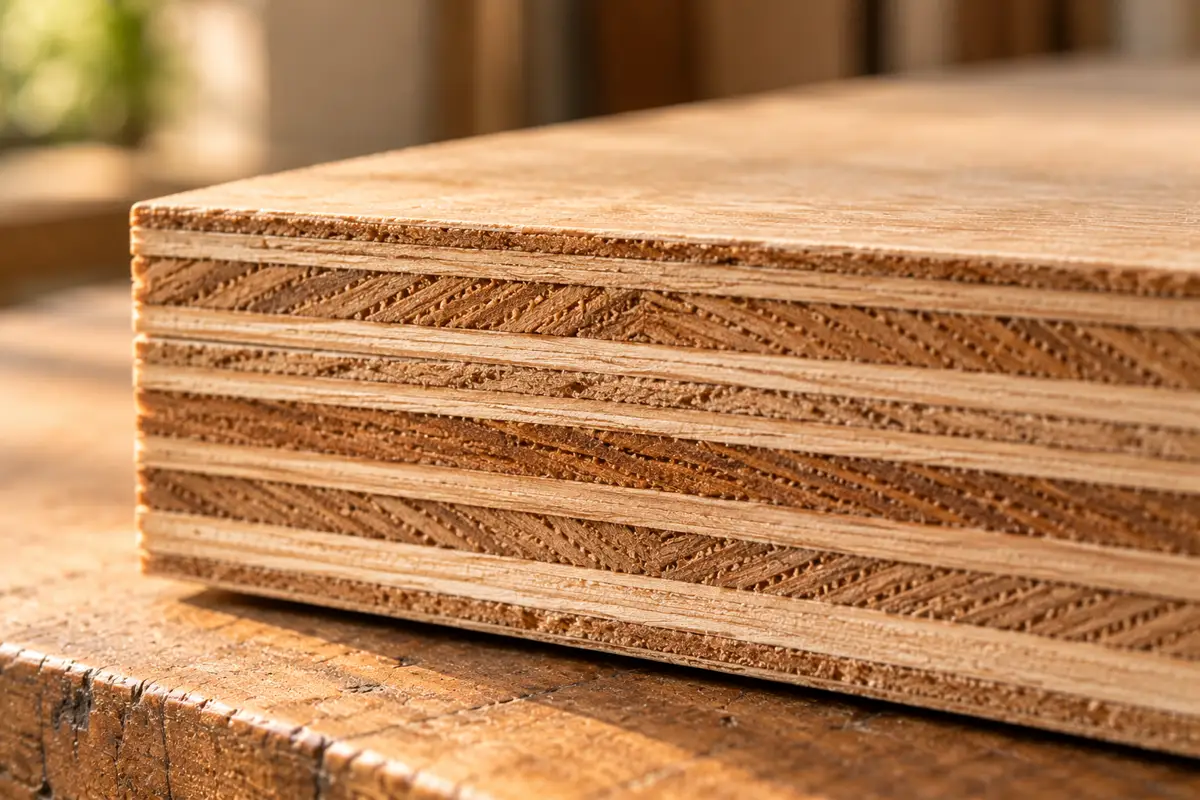
What separates one grade from another is mainly the glue and, at the top end, the quality of the veneers and core. The glue decides whether the layers stay together when the board gets wet. That is why the grade you choose should follow where the furniture will live.
The grades
| Grade | Standard | Glue | Water tolerance | Typical use |
|---|---|---|---|---|
| MR (moisture resistant) | IS 303 | Urea-formaldehyde | Humidity, no soaking | Bedroom wardrobes, TV units, dry storage |
| BWR (boiling water resistant) | IS 303 | Phenol-formaldehyde | Occasional wetting | Kitchens, utility areas, humid cities |
| BWP (boiling water proof) / marine | IS 710 | Phenol-formaldehyde, waterproof grade | Prolonged exposure | Sink units, bathroom vanities, semi-outdoor |
| Fire retardant | IS 5509 | Treated | As per base grade | Commercial spaces, escape routes, kitchens in offices |
MR grade is interior plywood. Its urea-formaldehyde glue copes with normal indoor humidity but weakens if it stays wet, so layers can separate (delaminate) under a leaking sink.
BWR grade uses phenolic glue, which is far more water resistant. It is the sensible default for most kitchen cabinets and for furniture in humid coastal cities.
BWP grade, commonly sold as marine plywood under IS 710, is the top of the range. It uses waterproof phenolic glue and also has stricter requirements on veneer quality, gaps and overlaps in the core. It is the safest choice for anything near constant water.
Grade names on invoices are sometimes used loosely, so check the standard printed on the sheet.
What the grade does not tell you
The core species
The inner veneers can be cut from different timbers:
- Gurjan and other dense tropical hardwoods give a heavier, stronger board that holds screws and hinges well and copes better with moisture. Marine plywood traditionally uses gurjan.
- Mixed hardwoods are common in mid-range boards.
- Poplar and eucalyptus cores are lighter and more economical. They are fine for many interior uses but hold screws less firmly and are less tolerant of water.
Thickness and construction
- 18–19 mm is standard for cabinet carcasses, shelves and shutters.
- 12 mm suits drawer sides and partitions.
- 6–9 mm is used for backs and drawer bottoms.
- Calibrated plywood is sanded to an even thickness, which makes for tighter joints and flatter shutters.
Treatment
Many manufacturers treat veneers against borers and termites. That is separate from the glue grade and worth asking about (see protecting furniture from termites).
Emissions
Formaldehyde-based glues release small amounts of formaldehyde. Many brands now publish emission classes such as E1 or E0 (lower is better). If indoor air quality matters to you, ask for low-emission boards, especially for bedrooms and children's rooms.
Which grade where
| Location | Recommended grade |
|---|---|
| Kitchen sink unit and dishwasher surround | BWP / marine |
| Rest of the kitchen | BWR or BWP |
| Bathroom vanity | BWP / marine |
| Bedroom wardrobes | MR or BWR (BWR in coastal humidity or on wet walls) |
| TV units, study tables, bookshelves | MR |
| Balconies and semi-outdoor storage | BWP with an exterior finish |
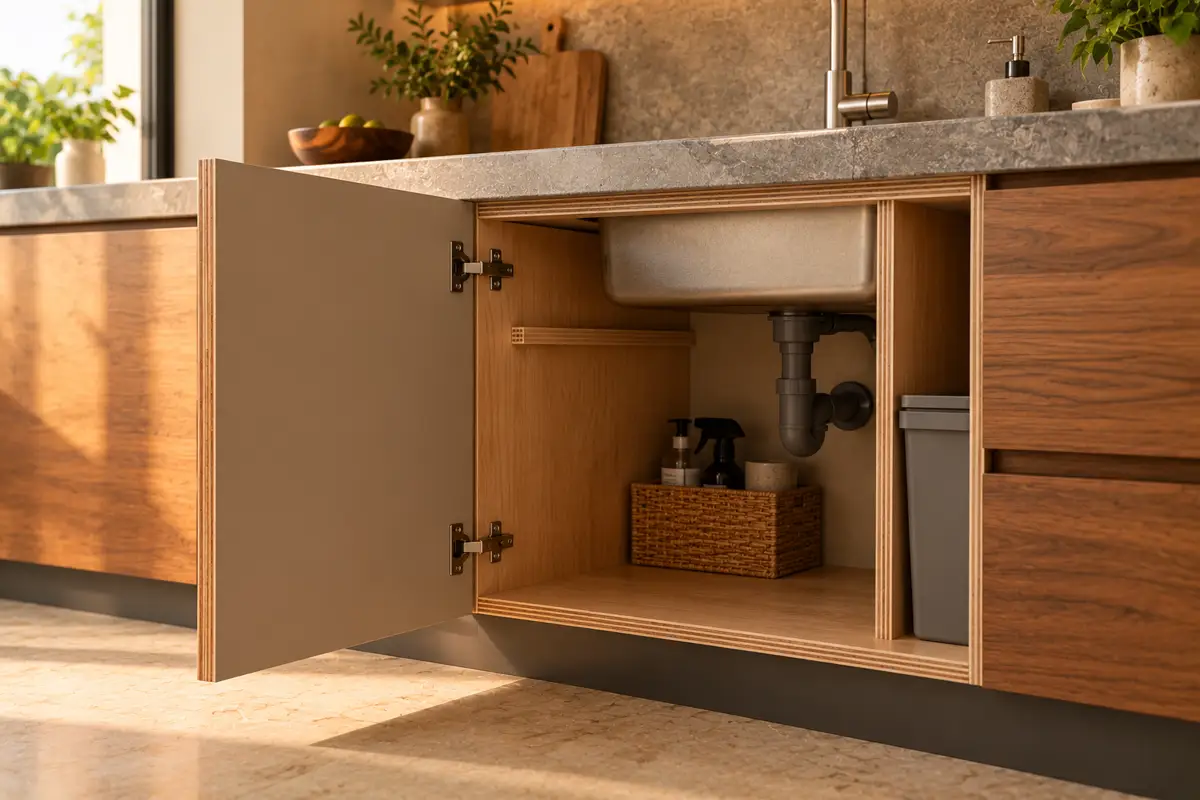
Edges are where plywood fails
Water rarely gets in through a laminated face. It gets in through cut edges, screw holes and joints. So:
- Seal every exposed edge with edge banding or laminate.
- Use a liner laminate on the inside faces of kitchen cabinets.
- Keep a gap, or use a waterproof plinth, at floor level where water is mopped.
- Fix leaks quickly: even marine plywood will swell if it sits in water.
The finish on top matters too; see laminate vs veneer vs PU vs duco.
How to check what you are buying
- Look for the ISI mark with the standard (IS 303 or IS 710) and the grade printed on the sheet.
- Check the thickness with a measuring tape or calipers at several points.
- Look at the edge: layers should be continuous, without large gaps or overlapping veneers.
- Ask for the core species and any borer/termite treatment.
- Make sure the grade on the sheet matches the grade in your quote and bill of quantities. Our guide to what a turnkey interior project includes explains how to read a BOQ.
How we specify plywood at Savistar
Board grade is one of the first lines we specify in any interior project, room by room, because a wardrobe and a sink unit need very different boards. If you are planning a kitchen, see our guide to modular kitchen layouts, or talk to us about your home.
Frequently asked questions
What is the difference between BWR and BWP plywood?
Both use phenol-formaldehyde (phenolic) glue, which tolerates water far better than the urea-formaldehyde glue in MR plywood. BWP, or boiling water proof plywood, is the higher grade: it is made to withstand prolonged exposure to water and, as marine plywood under IS 710, also has tighter requirements on the veneers and core. BWR is boiling water resistant and suits areas with occasional moisture.
Which plywood is best for a modular kitchen?
Use BWP (marine) plywood for the sink unit and any cabinet near water, and BWR or BWP for the rest of the kitchen. Seal all cut edges with edge banding or laminate, because water usually enters plywood through its edges.
Is MR plywood good for wardrobes?
Yes, good-quality MR plywood is commonly used for bedroom wardrobes and other dry interior furniture. In humid coastal cities, or for wardrobes on an external or bathroom wall, many designers specify BWR for extra margin.
Is marine plywood waterproof?
Marine plywood uses waterproof glue, so its layers will not separate when wet, but the wood itself still absorbs water and can swell, stain or rot over time if left wet. It needs a protective surface such as laminate, paint or polish, and sealed edges.
What does the ISI mark on plywood mean?
It shows the plywood is certified by the Bureau of Indian Standards against the relevant standard, such as IS 303 for general purpose plywood or IS 710 for marine plywood. The marking on the sheet should also state the grade and the licence details. Plywood without a clear grade and standard is a gamble.
About the authors
Sachi and Haripriya founded Savistar in Gandhinagar in 2020 after training at CEPT University, Ahmedabad. They run the interior design studio and its furniture brand SAAG, and have delivered 500+ interior and furniture projects across India and abroad. More about the studio
More from the journal
All articles → Interior designTraditional Gujarati Materials and Crafts in Modern Homes: Limewash, Stone, Lippan, Jaali and Textiles5 min read
 Interior designGujarat’s Wood Carving Tradition: Carved Houses of Ahmedabad’s Pols and How to Use Carving Today5 min read
 Interior designRenovating While Living at Home: How to Phase Interior Work With Less Dust, Noise and Stress5 min read