Interior design 6 min read
Cabinet Hardware Guide: Hinges, Drawer Channels, Lift-Ups and Handles for Kitchens and Wardrobes
How concealed hinges, soft-close drawer channels, lift-up mechanisms, pull-outs and handles work, what to check for load and finish, and how to choose hardware that lasts in Indian kitchens and wardrobes.


In short
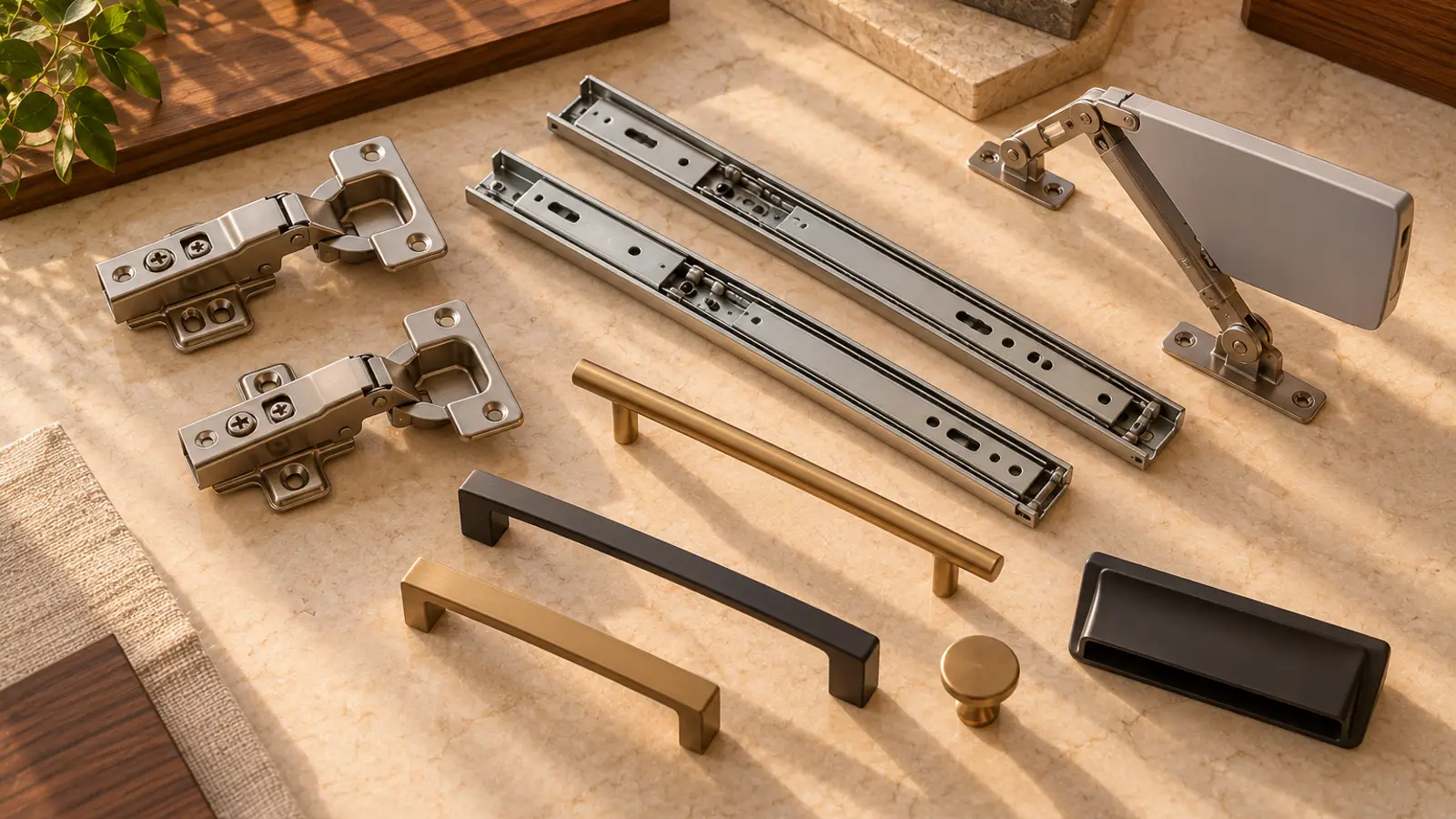
Hardware is a small part of a kitchen or wardrobe budget but decides how it feels every day and how long it lasts. Concealed (cup) hinges carry doors and come in full overlay, half overlay and inset versions, usually with soft-close. Drawers run on telescopic ball-bearing channels or on concealed undermount and box systems, rated by load and extension. Lift-up mechanisms, tall-unit pull-outs and corner systems make awkward space usable. Choose corrosion-resistant finishes for kitchens, match load ratings to what you store, and buy hardware from one reliable system so it adjusts and services easily.
- Concealed hinges are specified by overlay (how the door sits on the cabinet), opening angle and soft-close; heavier and taller doors need more hinges.
- Drawer runners differ in extension, load rating and whether they are visible; full-extension runners let you reach the back of a drawer.
- Kitchens need corrosion-resistant hardware; check the material and finish, not just the brand.
- Lift-ups, pull-outs and corner systems cost more but turn dead space into usable storage.
- Write make, model and load rating into the bill of quantities so the hardware you approve is the hardware you get.
Why hardware matters more than it costs
Hinges and drawer runners are opened thousands of times a year. When they are cheap or under-specified, doors drop out of line, drawers sag, and soft-close stops working long before the boards themselves wear out. Good hardware is a small share of a kitchen or wardrobe budget and one of the best value upgrades you can make.
Hinges
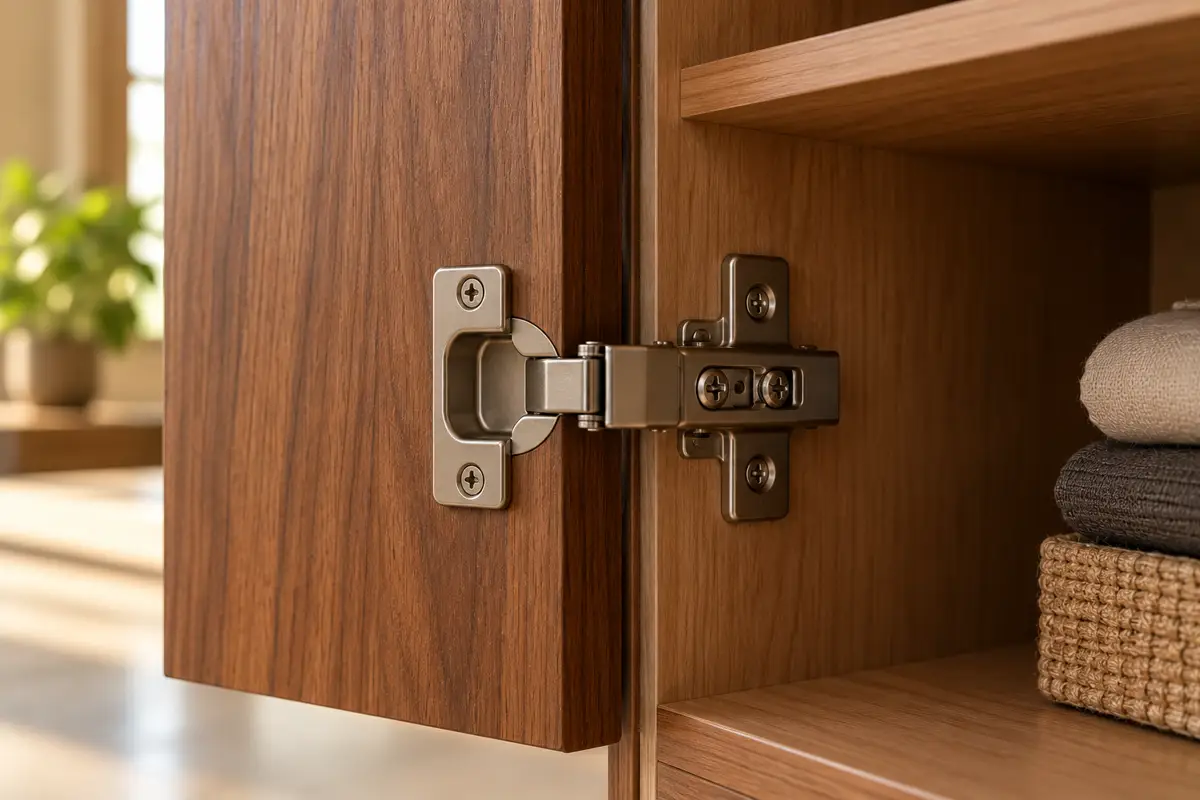
Most modern cabinets use concealed hinges, also called cup or European hinges. A round cup sits in a hole drilled into the back of the door, and an arm clips onto a mounting plate on the cabinet side. They are adjustable in three directions, so doors can be aligned after installation.
Overlay types:
- Full overlay: the door covers the full front edge of the cabinet side. The most common in modular kitchens.
- Half overlay: two doors share one central cabinet side.
- Inset: the door sits inside the opening, flush with the cabinet front, for a furniture-like look.
Opening angles: standard hinges open to roughly 95–110°. Wide-angle hinges open further, which helps with corner cabinets and internal drawers behind doors. Special hinges exist for corner, blind and glass doors.
Soft-close: a damper built into the hinge, or a separate one, slows the door as it closes.
How many: taller and heavier doors need more hinges. Wardrobe shutters often need three to five. Follow the manufacturer's chart for door height and weight.
Drawer runners
| Type | Visible? | Extension | Notes |
|---|---|---|---|
| Telescopic ball-bearing channels | Yes, on drawer sides | Usually full | Economical and strong; common in wardrobes |
| Concealed undermount runners | No | Full | Clean look, smooth soft-close |
| Metal box (tandem) systems | Drawer sides are part of the system | Full | High load, very smooth, premium |
| Roller runners | Yes | Partial | Basic, light loads only |
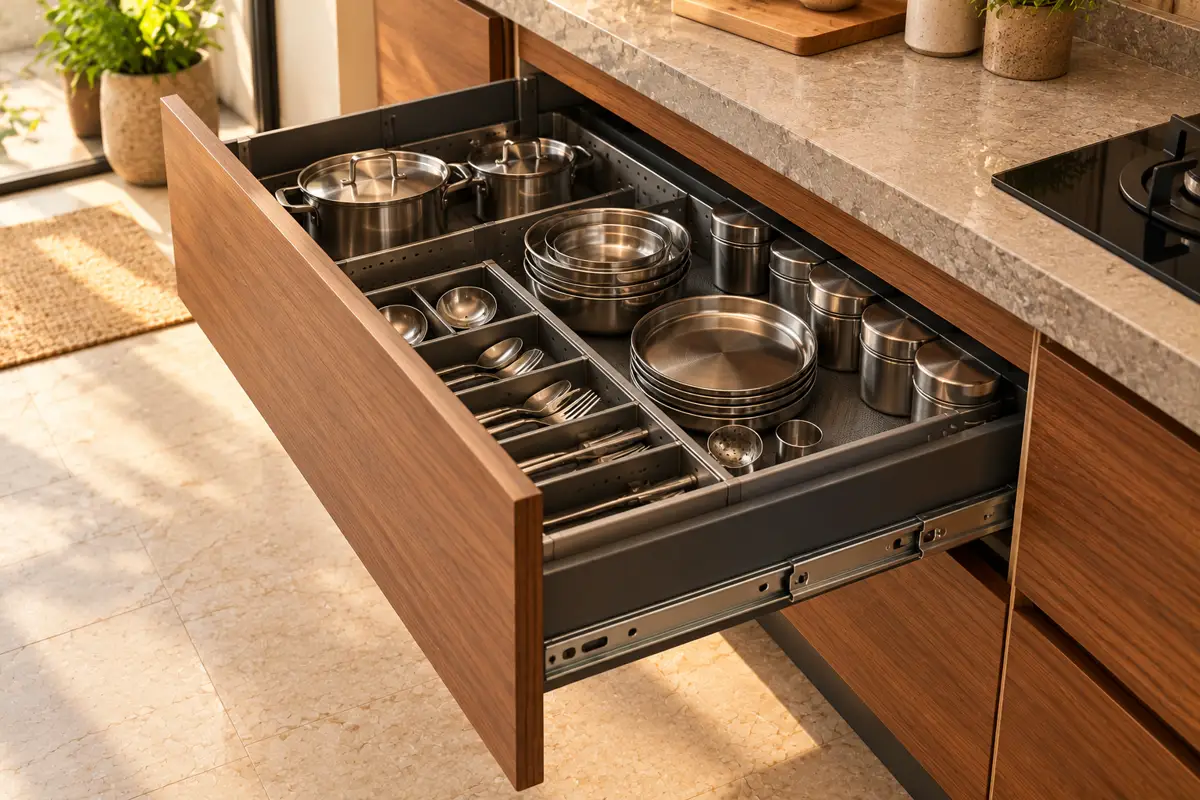
Full extension means the drawer comes all the way out so you can reach the back. Load rating is given per pair of runners. Kitchen drawers holding steel utensils, plates or grains can be heavy, so check the rating against what you plan to store, especially for wide drawers.
Lift-ups, pull-outs and corners
- Lift-up mechanisms for wall cabinets let doors swing or fold upward and stay open, so you are not ducking around open doors.
- Tall-unit pull-outs (pantry units) bring a full-height rack of shelves out to you.
- Corner solutions such as carousels and pull-out corner systems make blind corners usable.
- Wicker or steel baskets, bottle pull-outs, cutlery organisers and plate racks are common in Indian kitchens, where steel utensils and daily cooking need dedicated storage.
- Wardrobe fittings: pull-out trouser racks, tie and belt racks, pull-down hanging rails for high sections, and jewellery drawers. See our wardrobe design guide.
Handles and handleless options
- Handles and knobs: pick a size you can grip comfortably. Long bar handles suit tall shutters.
- Profile handles: aluminium sections fixed along the top or side edge of a shutter.
- Gola profile: a recessed channel along the cabinet that acts as a continuous pull, for a handleless kitchen.
- Push-to-open: a mechanism that opens a door or drawer when pressed. Clean-looking, but it does not combine with every soft-close system and can be opened by accident.
Materials and finishes
Kitchens are humid and see water, salt, steam and cleaning chemicals every day. Choose hardware with corrosion-resistant material and finishes, and avoid mixing low-cost unbranded fittings into an otherwise good system. In coastal cities, this matters even more.
What to write into your quote
- Make and model of hinges and runners, not just "soft-close".
- Overlay type and opening angle for hinges.
- Extension and load rating for runners.
- Every accessory (baskets, pull-outs, lift-ups) with its size.
- Warranty offered by the manufacturer and the installer.
The bill of quantities is the place for this; see what a turnkey interior project includes.
Hardware in our projects
In every Savistar interior project, hardware is specified alongside boards and finishes, because a well-made carcass deserves fittings that last. If you are planning a kitchen, start with our guide to modular kitchen layouts, or book a consultation.
Frequently asked questions
What is the difference between full overlay, half overlay and inset hinges?
They describe how the door sits on the cabinet. A full overlay door covers the whole front edge of the cabinet side. Half overlay doors share one cabinet side between two doors. Inset doors sit inside the cabinet opening, flush with the front. The hinge arm is cranked differently for each.
Are soft-close hinges and channels worth it?
For kitchens and wardrobes, usually yes. Soft-close dampers stop doors and drawers from slamming, which reduces noise and wear on joints and fittings. The cost difference is small compared with the life of the furniture.
Telescopic channels or tandem box drawers: which is better?
Telescopic ball-bearing channels are economical, strong and widely available, but visible on the drawer sides. Concealed undermount runners and metal box systems look cleaner, run more smoothly and often carry higher loads, at a higher price. For heavy kitchen drawers full of utensils, a concealed system with an adequate load rating is worth it.
How many hinges does a cabinet door need?
It depends on the door height and weight. Short kitchen doors usually need two, while tall wardrobe shutters typically need three to five. Hardware manufacturers publish charts relating door height and weight to the number of hinges, and these should be followed.
What is a gola profile?
A gola is a recessed aluminium channel fitted along the top of base cabinets (and sometimes tall units) that acts as a continuous finger pull, giving a handleless look without push-to-open mechanisms.
About the authors
Sachi and Haripriya founded Savistar in Gandhinagar in 2020 after training at CEPT University, Ahmedabad. They run the interior design studio and its furniture brand SAAG, and have delivered 500+ interior and furniture projects across India and abroad. More about the studio
More from the journal
All articles → Interior designTraditional Gujarati Materials and Crafts in Modern Homes: Limewash, Stone, Lippan, Jaali and Textiles5 min read
 Interior designGujarat’s Wood Carving Tradition: Carved Houses of Ahmedabad’s Pols and How to Use Carving Today5 min read
 Interior designRenovating While Living at Home: How to Phase Interior Work With Less Dust, Noise and Stress5 min read