Custom furniture 6 min read
Furniture Dimensions Guide: Standard Sizes and Clearances for Dining, Beds, Sofas and Desks
Standard heights, depths and clearances for dining tables and chairs, beds and Indian mattress sizes, sofas and coffee tables, desks, TV units and bar counters, and how to adjust them for the people who use them.


In short
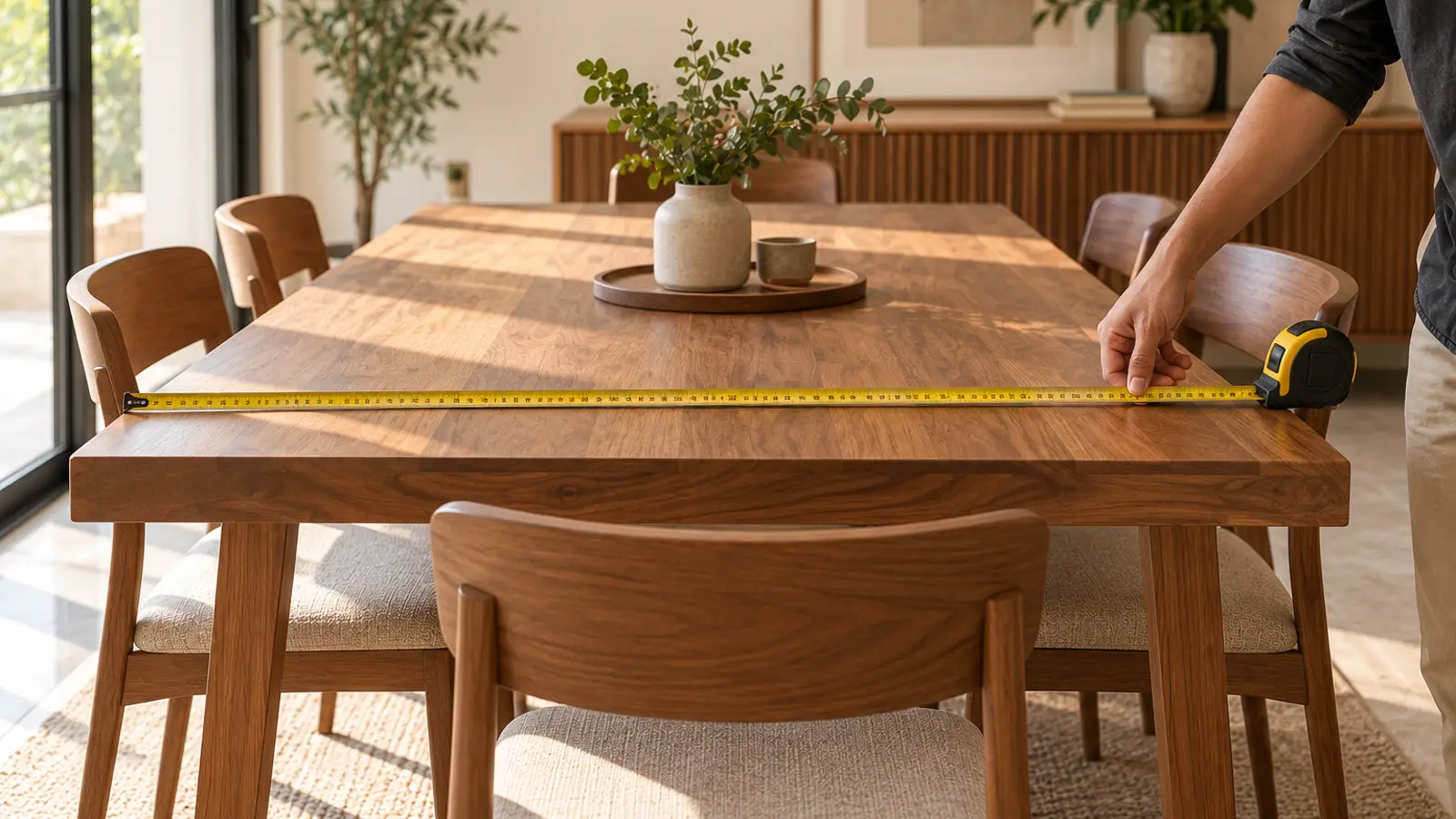
Comfortable furniture follows a few proportions. Dining tables are about 740–760 mm high with chairs about 430–460 mm to the seat, and each diner needs roughly 600 mm of table edge. Desks are about 720–750 mm high. Sofa seats are about 400–450 mm high with coffee tables at or just below seat height. Beds are sized around standard Indian mattresses (queen about 60 × 78 inches, king about 72 × 78 inches) with side tables near mattress height. Clearances matter as much as sizes: leave walkways of about 750–900 mm. Custom furniture lets you adjust these numbers to the people who use it.
- Table and chair heights work as a pair: about 280–300 mm between seat and table top suits most adults.
- Allow about 600 mm of table edge per diner, and 750–900 mm behind chairs to pull them out.
- Standard Indian mattresses are commonly queen 60 × 78 in and king 72 × 78 in; size the bed around the mattress.
- Coffee tables sit at or a little below sofa seat height and about 400–450 mm from the sofa.
- Standard sizes suit average adults; adjust for very tall or short users, elders and children.
Why proportions matter
A beautiful chair that is 3 cm too high for its table is uncomfortable every day. Most furniture comfort comes down to a few relationships: seat to table, seat to floor, reach and clearance. The numbers below are common starting points for adults; good custom furniture adjusts them to the people who will use it.
Dining
| Item | Typical size |
|---|---|
| Table height | 740–760 mm |
| Chair seat height | 430–460 mm |
| Seat to table top | About 280–300 mm |
| Table width | 850–1,000 mm |
| Edge per diner | About 600 mm |
| 4-seater (rectangular) | About 1,200 × 800–900 mm |
| 6-seater (rectangular) | About 1,800 × 900 mm |
| 8-seater (rectangular) | About 2,200–2,400 × 1,000 mm |
| Round 4-seater | About 1,000–1,100 mm diameter |
| Clearance behind chairs | 750–900 mm |
Check the table's apron (the rail under the top): it needs to leave thigh clearance above the seat.
Living room
| Item | Typical size |
|---|---|
| Sofa seat height | 400–450 mm |
| Sofa seat depth | 500–600 mm (deeper for lounging) |
| Sofa arm height | 550–650 mm |
| Coffee table height | 400–450 mm (at or just below seat) |
| Sofa to coffee table | 400–450 mm |
| Side table height | Near the sofa arm height |
| TV unit height | Low units around 400–500 mm, screen centre near seated eye level |
Bedroom
| Item | Typical size |
|---|---|
| Queen mattress (India) | 60 × 78 in (about 1,520 × 1,980 mm) |
| King mattress (India) | 72 × 78 in (about 1,830 × 1,980 mm) |
| Bed frame | Mattress size plus frame and a small allowance |
| Top of mattress | About 500–600 mm from the floor |
| Side tables | Near the height of the mattress top |
| Clearance around bed | 600–900 mm on the sides and at the foot |
| Wardrobe depth | About 600 mm (wardrobe design guide) |
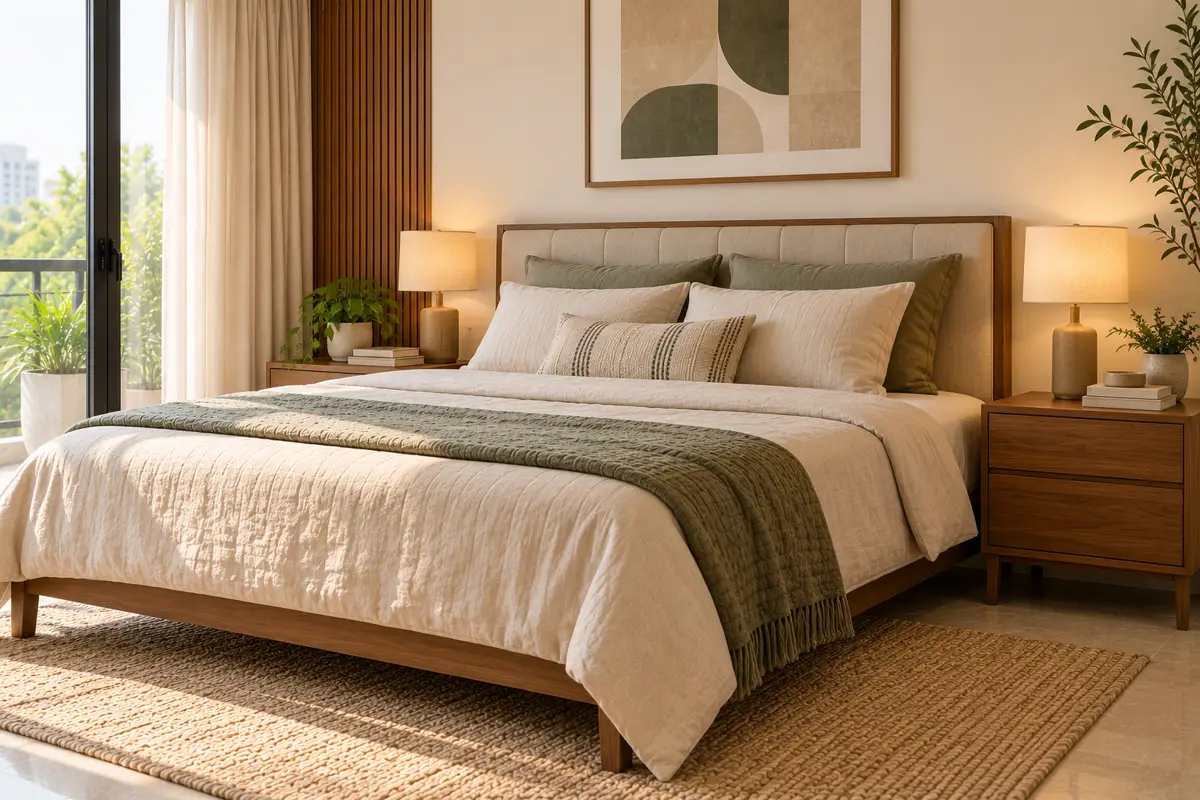
Always confirm the exact mattress size before a bed is made; brands vary.
Study and work
| Item | Typical size |
|---|---|
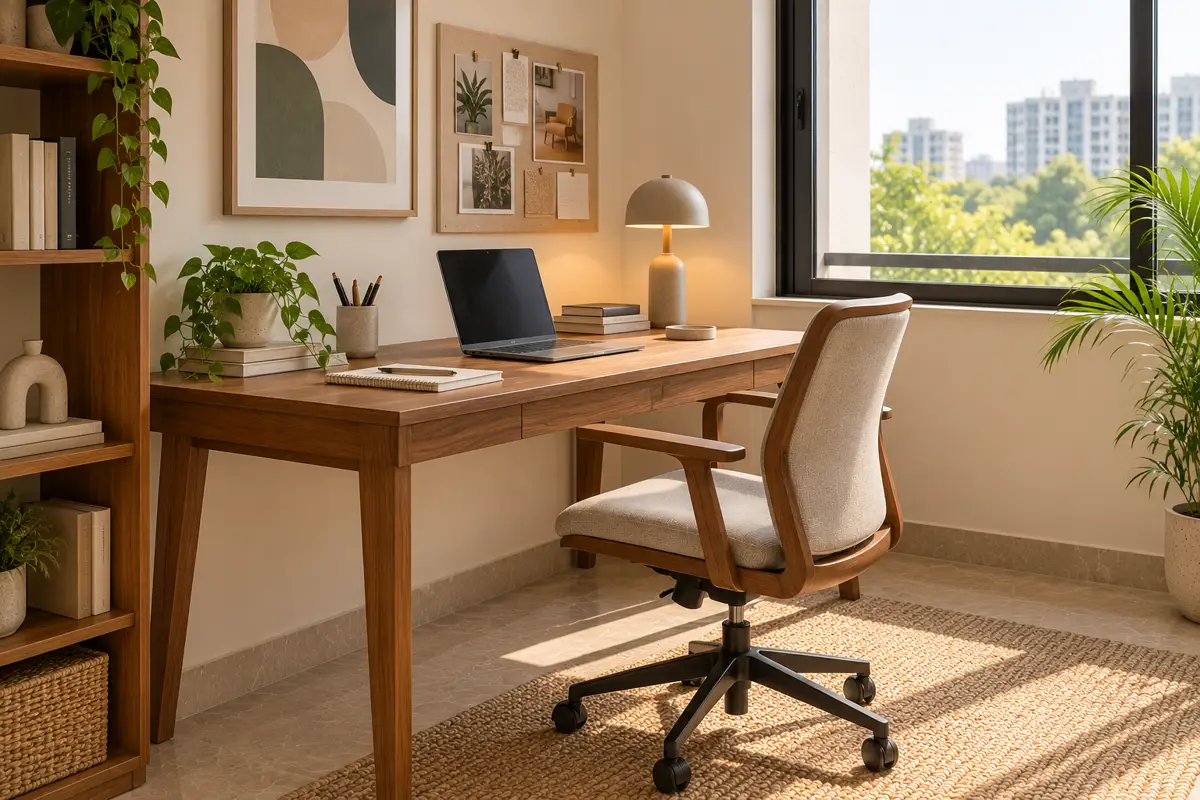
| Desk height | 720–750 mm |
| Desk depth | 600–750 mm (more for a monitor) |
| Desk width | 1,000–1,500 mm |
| Chair seat height | Adjustable, roughly 420–520 mm |
| Monitor | Top of screen near eye level, an arm's length away |
Bar and kitchen
| Item | Typical size |
|---|---|
| Kitchen counter | About 820–900 mm (kitchen layouts) |
| Breakfast counter (counter height) | About 900 mm, with stools about 600–650 mm |
| Bar counter | About 1,050–1,100 mm, with stools about 750 mm |
| Knee space under an overhang | About 250–300 mm |
Adjusting for real people
- Tall or short households: shift table and counter heights together, keeping the seat-to-top gap.
- Elders: slightly higher, firmer seats with arms make standing up easier; avoid very low sofas and beds.
- Children: a study desk and chair that can be adjusted as they grow.
- Accessibility: wider clearances for walkers and wheelchairs; knee space under tables and basins.
Clearances make or break a room
Even well-sized furniture fails if there is no room around it. Plan walkways of roughly 750–900 mm, check that doors and drawers open fully, and lay out every room at scale before buying or making anything. See planning a 2BHK interior.
Made to measure at SAAG
Because SAAG builds bespoke furniture in-house, sizes can be set for your room and the people who use it rather than for a catalogue average. See custom vs ready-made furniture, browse our furniture portfolio, or tell us what you need.
Frequently asked questions
What is the standard height of a dining table?
Most dining tables are about 740 to 760 mm (roughly 29 to 30 inches) high, used with chairs whose seats are about 430 to 460 mm high. The gap between seat and table top, about 280 to 300 mm, matters more than the absolute heights.
What is the size of a king size bed in India?
In India, king size mattresses are commonly 72 × 78 inches (about 1,830 × 1,980 mm), and queen size 60 × 78 inches (about 1,520 × 1,980 mm). Some brands also sell 72 × 75 and 60 × 75 inch sizes, so confirm the mattress before the bed is made.
How much space does a 6-seater dining table need?
A rectangular 6-seater is typically about 1,800 × 900 mm. Add 750 to 900 mm on every side where chairs are pulled out and people walk, so the room needs roughly 3,300 × 2,400 mm or more for comfortable use.
What is the right height for a study table?
About 720 to 750 mm suits most adults with an adjustable chair. For long hours at a laptop, a separate monitor at eye level and a chair that supports the lower back matter as much as the desk height.
How high should a coffee table be?
At or slightly below the sofa seat height, typically around 400 to 450 mm, so it is easy to reach from a seated position.
About the authors
Sachi and Haripriya founded Savistar in Gandhinagar in 2020 after training at CEPT University, Ahmedabad. They run the interior design studio and its furniture brand SAAG, and have delivered 500+ interior and furniture projects across India and abroad. More about the studio
More from the journal
All articles →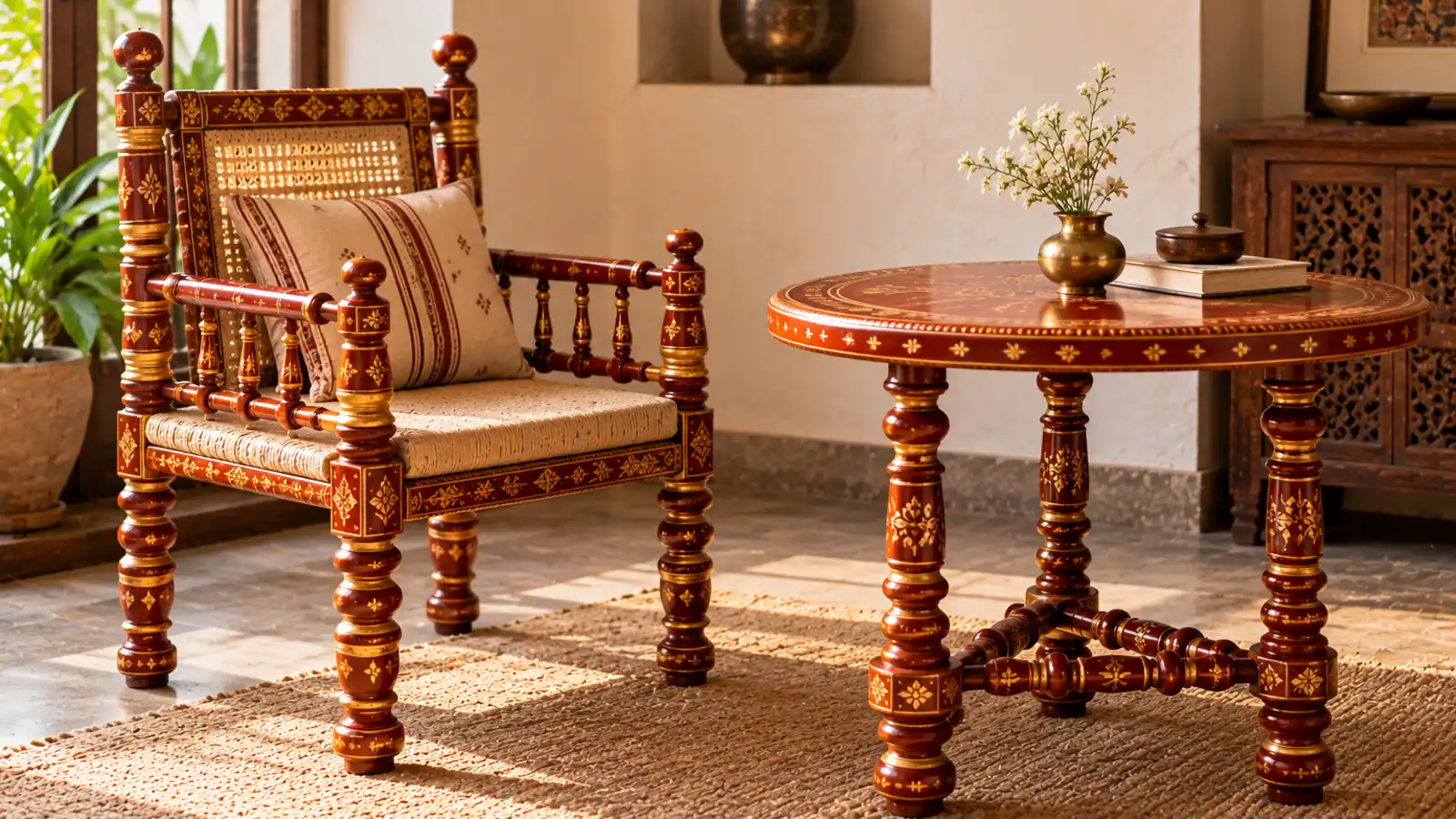 Custom furnitureSankheda Furniture: Gujarat’s Lacquered Teak and the Craft of Wood Turning4 min read
 Custom furnitureVernacular Furniture of Gujarat: Chests, Cradles, Swings and Charpoys, and What They Teach Modern Design5 min read
 Custom furnitureA Guide to Wood Joinery: Mortise and Tenon, Dovetail, Dowel and Knock-Down Joints5 min read